
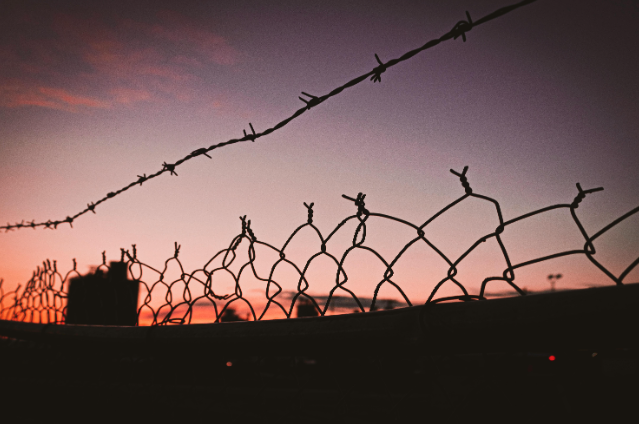
There are moments when borders stop being lines on a map and start becoming moral statements.
Who is allowed to move?
Who is allowed to hope?
And who is quietly turned away before they are ever seen.
For years now, Europe has shown itself to be a home of human rights, freedom, and dignity to date. Yet, at its borders, another story seems to unfold, one built on fences and silence. Migration, once spoken about in humanitarian terms, is now seen as a problem to be managed, even still, and contained.
What we are witnessing today is not just a policy change, but a shift in the very values we know to be true. The new walls of Fortress Europe are not always visible; many of them are written into diplomatic documents, signed far away from the people whose lives they alter forever.
The term Fortress Europe can refer to the European Union’s increasing use of restrictive migration policies, which are all aimed at reducing asylum seekers and migrants, especially from Africa and the Middle East, from reaching European soil.
Instead of putting its effort into safe entry routes or asylum processing, the EU has increasingly depended on externalization, which means partnering with non-EU countries to limit migrants long before they get to Europe’s borders. These suggestions often require financial aid and border surveillance in return for controlling migration flows.
In the coming years, this method has increased drastically, especially as political pressure within EU member states has developed. Migration is no longer talked about primarily as a human reality, but as a political problem.
What makes these policies so unsettling is not just about their effectiveness, but their cost in regard to ethics.
By changing border control to North African nations, the EU shifts itself from direct control while still benefiting from minimized arrivals.
Humanitarian concerns are pushed to the side in favor of numbers. Economic interests override moral accountability. And the language of “partnership” often masks power imbalances, where vulnerable countries are pressured into becoming Europe’s gatekeepers.
This strategy raises a difficult question:
Can a union built on human rights justify policies that knowingly expose migrants to abuse, detention, and invisibility?
In July 2023, the European Union signed a Memorandum of Understanding (MoU) with Tunisia, marking a major shift in the EU’s ever-changing migration initiative. The agreement was shown as a pragmatic recommendation to irregular migration across the Mediterranean, which occurred around cooperation, development aid, and security at the border. At its roots, the MoU aimed to limit migrant departures from North Africa to Europe by making sure Tunisia’s capacity was strengthened to control its borders.
On paper, the agreement was seen to be beneficial. The EU swore to provide financial support and assistance in making sure Tunisia’s struggling economy is not affected.
In doing so, Tunisia made a promise to make efforts against smuggling networks and prevent migrants from crossing into Europe.
The MoU also exposes a deeper contradiction within European migration policy. The EU positions itself as a global fighter for human rights. Asylum seekers are not permitted to reach European soil, where they would have the right to seek protection. Instead, they are weighed in environments where their dignity is far from secured.
This tension, however, exists between security all lie at the heart of the debate. The question is not whether or not migration needs management, but how far ethical compromise can go before it becomes systemic harm.
The EU–Tunisia MoU thus serves as a powerful case study of modern border governance. It demonstrates how migration control has shifted from walls and fences to contracts and funding, and how policies designed to reduce numbers can quietly erode the values they claim to defend.
In attempting to manage migration, Europe has revealed something deeper about itself: that borders today are not just geographical, but moral — and the cost of maintaining them is increasingly borne by those with the least power to resist.
As a writer, I find it outrageous to separate policy from the people. Migration is not a threat there, I say, it is a response we humans have to war, poverty, climate collapse, and survival.
The EU’s approach feels less like protection and more like avoidance. Instead of confronting global inequality, Europe builds distance. Instead of sharing responsibility, it delegates it.
Security without humanity becomes cruelty. And borders enforced without compassion lose their legitimacy.
The EU–Tunisia agreement reveals a broader truth: migration policies reflect who we value and who we are willing to forget. When human lives become bargaining tools, something essential is lost.
The new walls of Fortress Europe are not made of stone; they are made of decisions, political fear, and moral compromise, which are influenced politically. History will always remember not how Europe has protected its borders, but how it made the people standing outside them feel.
And the question that remains is rather uncomfortable:
What kind of future can be built on exclusion, silence, and outsourced suffering?
. . .
REFERENCES: