
There are books that entertain you, books that educate you — and then there are books that shake the ground beneath your feet.
Dalit memoirs belong to the last set.
The first time I came across the voice of a Dalit writer, I remember feeling a change in me. It wasn’t about the pain in their story; it was the way their words felt like. It had clarity, the courage that refused to be silenced. These were not narratives written for sympathy. They were acts of reclamation — fierce, brave, and unapologetically honest.
For centuries, caste has spoken about Dalits.
These memoirs finally permit Dalits to talk about themselves.
And that this is what makes them revolutionary.
For generations, Dalit voices were pushed out of India’s literary and social imagination. Their stories were either rewritten, softened, or erased by dominant caste narratives. What the world read as “Indian literature” was often literature from one social vantage point — polished, distant, and rarely reflective of the violence, humiliation, or resilience at the bottom of the caste hierarchy.
The arrival of the Dalit memoir changed all of that.
Suddenly, those who had been spoken for began speaking for themselves.
These memoirs didn’t just talk about suffering — they exposed the mechanisms of discrimination with a clarity no outsider could ever think about. They talked about the idea that only some groups could talk about what knowledge, dignity, or morality looked like. And most especially, they talked about the narrative from a society that had long distinguished them, even the right to be heard.
In the last few decades, Dalit autobiographies have become some of the most powerful texts in Indian literature — not just as personal stories, but as political acts. They force India to confront what it would rather forget. They prove that literature is not only about beauty or craft; sometimes, it is about truth-telling as survival.
What makes Dalit memoirs stand out from every other autobiographical tradition is that they are not written for praise, but rather, they are written for freedom.
These writers are not simply showing us what memories mean; they are trying to gain a space that caste society tried to deny them. In a world where Dalit experiences were often disapproved as “exaggeration” or “anger,” putting one’s life on print becomes a new gesture. It turns all shared pain into a record. It changes struggle into testimony.
And this is where their true authority lies:
Dalit memoirs change the role of storytelling.
Instead of scholars or upper-caste commentators trying to talk about what caste means, Dalit writers talk about it themselves — with their own truth and understanding.
To me, this is the soul of their cultural impact.
These works do not ask for a chance to exist; they demand to be seen. They question the narratives India tells about itself. And they make us remember what the very essence of literature is. It is shaped by who gets to speak, and who has historically been silenced.
Dalit memoirs challenge that imbalance by standing unapologetically in their truth.
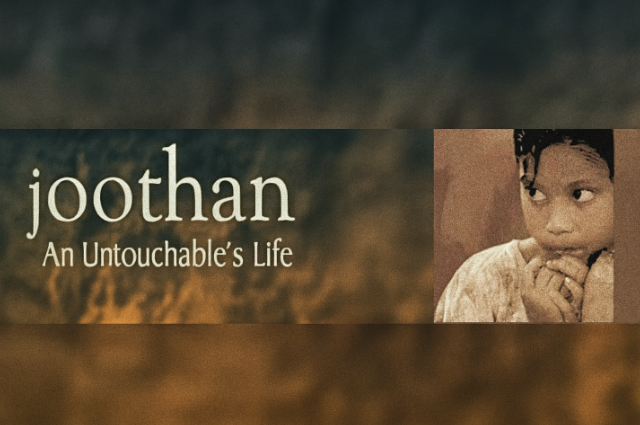
Few books have recentered Indian literary standards the way Omprakash Valmiki’s Joothan talked about it. Published in 1997, it was more like a confrontation. A struggle to challenge society that preferred the pain Dalits went through to remain unseen and in the shadows.
In Joothan, Valmiki writes with a knowing that is almost untouchable, because he makes the reader realise what caste actually looks like when it is lived, not just merely. He describes cleaning school grounds while other children learned in the classroom. He recalls teachers who humiliated him, neighbours who reminded him of his “place,” and a world that treated dignity as something he was not entitled to.
What makes this memoir extraordinary is that Valmiki does not soften anything. There is no case to see as heroic. Instead, he writes with Truth that forces India to face the cruelty that has been down in its structures.
The impact was, however, long-lasting. The book became an important read in universities — not necessarily because it was beautiful but because it stood out. It opened space for other Dalit writers and showed that their stories belonged at the centre, not the margins.
More importantly, Joothan shifted how society understood narrative authority. It proved that Dalit experiences did not need validation from upper-caste interpreters. They could speak with complete intention and ownership of their lived history.
Valmiki’s memoir to date is one of the most exceptional examples of how personal storytelling can become political resistance.
What makes Dalit memoirs unique is how they restructure the idea of who gets to talk about India’s story. For a long time, the country’s literature was majorly shaped by voices that only saw caste from the outside. But books like Joothan make us know that experiences form from their existence — it cannot be interpreted.
These memoirs do so much more than just description; they uniquely regain their dignity. They can turn private wounds into public memory. They don’t seek permission. They speak because they must.
Dalit memoirs are important because they tend to talk about the narrative to the people who were denied it for far too long. They make history and make space for voices that were once neglected. Their power is so much in what they tend to show — but in who finally gets to voice their opinions.
In the end, the rise of Dalit autobiographies is more than a literary change; it is a whole cultural phenomenon in its entirety. These stories talk about injustice and make us know that real versions of history come from those who lived it through and through. And as long as these voices continue to write, India can no longer pretend not to hear them.
References: