
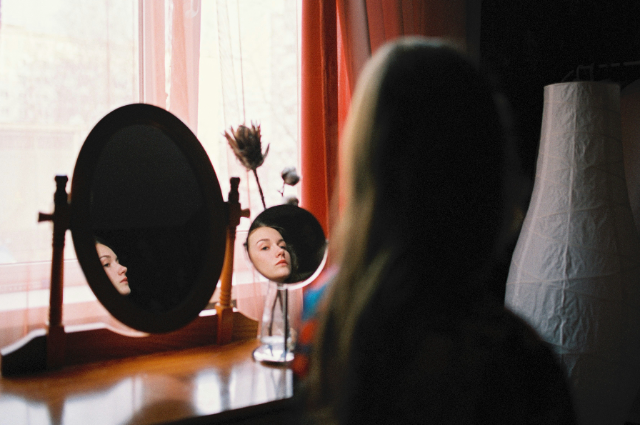
For most of my early years as a girl, I grew up believing that perfection was the price I had to pay to be loved, chosen, or seen by people and society. I felt I had to get everything right. Can you blame a little girl for wanting assurance from everything to the point of losing herself? Every step. Every decision. Every detail had to be calculated; if not, I wouldn’t be assured of my existence being “enough”. But what no one tells you is that perfection has a cost. A silent one. It drains you, shapes you, hardens you, and convinces you that “almost enough” is not enough.
This is the story of how I learned that perfection isn’t a requirement — and how becoming myself finally felt possible when I stopped trying to impress the world.
This article is about the journey of what perfectionism steals from us, why we become perfectionists, and the freedom that comes with choosing progress over perfection.
Studies show that quitting perfectionism is difficult. It’s like bringing an end to addiction—because, surprisingly, it can be likened to one. After all, it is observed that the world rewards perfectionists and people pleasers. In other words, we are not rewarded for saying No or aiming for “good enough.” But after a while, trying to do everything in the best way means you eventually don’t do anything well.
Research indicates that perfectionists are only able to see what is not in there and fail to appreciate and value what they already have, which is true. It tends to make us dissatisfied and unhappy with our situation. For a perfectionist, this is quite disturbing, because we are always driven by the notion of being “perfect” and therefore work tirelessly and sometimes see no results. Becoming aware of your behavior is key to the start of leaving behind perfectionism. It helped me realize a lot about myself. Not blaming oneself too for any mistake made is also important in escaping perfectionism. We are humans, and no one by nature is perfect, only the highest being, who is God.
Research by Clinical Orthopaedics and Related Research indicates that cases of perfectionism stem from anxiety, which has been linked to lower personal satisfaction and an increased risk of killing themselves. Indeed, perfectionists have a higher risk of anxiety disorders and depression. A life like this is riddled with fear and extreme caution. Creativity, joy, inspiration, and even productivity are, to a point, hindered when perfection is the only option. The research also talks about how successful people are less likely to be perfectionists, as the symptoms of perfectionism are more likely to stunt higher levels of success one might achieve.
This brings me to my upbringing, where I was always told to always “do the right thing” even when I knew I was putting my Best foot forward. This isn’t talked about enough. We sometimes drive ourselves to the point of breaking and thereby listening to what people and society say, thereby leading to comparison. It is in this state that we now become perfectionists because we fail to hear our own voices.
Nobody talks about the moment your life quietly reshapes itself — not with noise, but with a kind of internal exhale. Mine didn’t come with tears or shouting. It happened when I decided to sit with myself on a certain day. I told myself what no one could tell me because my thoughts were so loud that it made me exhausted from carrying versions of me I wasn’t satisfied with anymore.
Growing up, I always thought that being strong meant being perfect. Showing no weakness. I had to hold everything together, even when my hands were shaking. But what nobody says enough is that you can only hold pressure for so long before something inside you whispers, “Enough.”
That whisper was my breaking point. It was the day I realized that the world wasn’t actually asking me to be everything… I was.
I kept performing strength. I kept choosing silence. I realized I was drifting farther from the truest version of myself. But breaking didn’t destroy me — it revealed me.
It showed me what was mine and what was never meant to be my burden.
It showed me that survival mode is not a personality.
It showed me that perfection is just fear dressed up as discipline.
My breaking point taught me something life-changing:
You don’t become who you are by holding everything together.
You become her by finally letting the pieces fall, so you can rebuild with truth instead of pressure. That moment became the start of my becoming — not because life suddenly made sense, but because I finally allowed myself to.
What I realize took me years of learning and unlearning to get here. I’m deserving of all the love and rest. I don’t have to have everything figured out. The weight of the world’s expectations is not my cup of tea. I’m allowed to breathe. I don’t have to perform strength and be who I’m not just because the world tends to glorify people who are good at making themselves pleasing to the way the world sees them.
I decide now that I choose progress, I choose devotion— the kind that doesn’t demand I lose myself but rather makes me want to be better, softer, wiser, graceful, and more anchored in God.
Allowing yourself to be more flexible makes you enjoy every moment of life because you stop rushing every significant detail of your life. Letting things be okay just as they are, not because you seem to be lowering your standards, but because you’re finally realizing that raising compassion towards yourself is more important than being seen as “enough”.
I’m enjoying growth now — not just the results, but the becoming, because I believe every process is an integral part of our transformation. As an individual, to let things happen, you have to be willing to be kinder to yourself, not because you’re perfect, but because you finally understand that God’s grace was never built on perfection in the first place. There’s a saying I love, and it goes like this: “Rome wasn’t built in a day,” and so I need you to believe that you’re a work in progress.
I’m letting myself fully evolve… Immersing myself in the process of letting the rigid version of me melt into a woman who trusts God, trusts herself, and trusts the timing of her own becoming.
Progress really feels like freedom majority of the time.
And I now realize that I’ve always deserved that freedom.
If there is one thing perfectionism taught me, it’s that God doesn’t bless who you pretend to be — He blesses who you truly are. And the woman I am becoming doesn’t need perfection to be powerful. She needs honesty, softness, faith, and peace. I’m learning every day that becoming is a gift. And I’m finally ready to unwrap it slowly, imperfectly, beautifully.
References: