
There’s something profoundly surprising about the fact that our bodies are also with the entire ecosystems, little universes live inside of us. They are the bacteria, fungi, and organisms that all have the ability to change how we are able to feel, digest, and sometimes how we process things.
I can still recall how I learned about the microbiome that lived in the gut; the feeling was both thrilling and a little bit stinging. How can this thing so tiny have so much authority over our entire body? And also, why is it just now that we are realizing it?
Yet today, the conversation has changed tremendously. We’re no longer having conversations about “eating clean”. We’re now centered around conversations that talk about decoding bacterial patterns and designing personalized diet plans based on what dwells in our guts as humans.
Our wellness routine has actually entered a new era, one that is dominated by science, technology, and biology together.
But with every breakthrough comes a new question:
Are we moving toward a future where nutrition becomes truly personalized… or is this just the latest shiny wellness trend?
Over the last decade, health and wellness have shifted from broad, one-size-fits-all advice to something far more personal. Instead of being told to “eat healthy,” people now want to know exactly what their own bodies need and surprisingly, the answers are being searched for in the gut.
This is where the microbiome economy enters the scene.
Today, companies are promising that by allowing us to study the bacteria that live in the digestive system, they are able to design a nutrition plan that differs amongst all humans it’s not based on age group or your gender, nor lifestyle, but the microbiome one has. What used to be a special scientific topic is now an industry for all: whether at home, stool kits, personalized supplement subscriptions, AI diet recommendations, wellness apps, and even microbiome-based skincare.
At the center of it, they’ve developed a new kind of innovation called post-biotic therapy it is all about the idea that instead of taking fermented foods, people should feed their gut with very specific compounds based on their exact microbial makeup.
It sounds exciting and promising.
But it also brings about new arguments: How precise are these tests?
How much of this is real science… and how much is marketing?
Where does our private biological data end up?
This is the world you’re about to explore a world where your gut bacteria are treated like a blueprint for your future health.
As the microbiome economy grows, a new trend is taking center stage: post-biotic therapy. Unlike the probiotics everyone is used to, post-biotics don’t focus on adding new bacteria to the gut. Instead, they try to feed and influence the bacteria you already have almost like tailoring a diet to the personality of your gut.
And this is where things are actually interesting.
What was simple wellness advice before is now changing into accurate nutrition. People no longer want overall guidance like “eat more fiber.” They really need guidance with what fibers, foods, and nutrients their microbiome will respond best to.
But what nobody says enough:
These companies are promising personalized science… before the science is fully ready.
Most of these direct-to-consumer microbiome kits look scientific the sleek branding, the lab results, the personalized recommendations but the field itself is still young. Two people can take tests from the same company and still get conflicting diet advice months later. The gut is extremely complex, and many experts argue that the industry is moving faster than the evidence.
This is why post-biotic therapy sits in a strange space:
Part breakthrough, part experiment, part marketing machine.
And because everything feels personalized, it becomes very easy to trust the results emotionally, even when the scientific foundation is still building.
One of the most surprising examples of the microbiome economy in action is the rise of companies like ZOE, Viome, and Sun Genomics brands that ensure the provision of changing health by analyzing something as uncomfortable as a stool sample. What makes them intriguing is not just the philosophy but the emotional reassurance it’s backed up with: the idea that your body is unique and it definitely deserves a diet specifically for its biology.
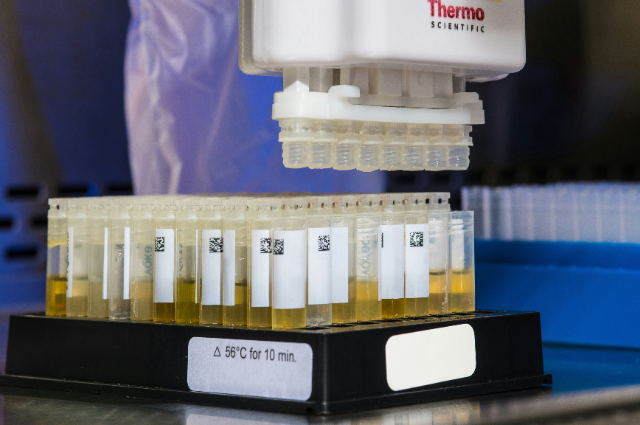
The journey usually begins with a simple kit. A customer orders it online, collects a stool sample at home, and mails it to the company’s sequencing lab. Weeks later, they receive a report filled with colorful charts, personalized meal plans, and rankings that label certain foods as “superfoods” for their gut and others as “not compatible.” In theory, it feels empowering like science finally understands you individually. In reality, it’s far more complex.
What these companies rarely highlight is how central data is to their entire business model.
When users interact with us and send in samples, they are not just purchasing a health service; they are distributing a massive private database of microbial information. This data is used to train algorithms, refine nutrition recommendations. Because most companies all operate in the space of wellness and not as medical providers, the legal protections that typically apply to medical data do not always extend to your microbiome information.
The idea that your body can be “decoded” brings a sense of clarity and control in a health landscape that often feels confusing. The problem is not the hope; it’s the illusion of precision.
This case study is powerful because it shows the tension at the heart of the microbiome economy: the promise of genuine scientific innovation tangled with the risks of overselling, over-collecting, and over-owning personal biological data. It reveals a wellness industry that is simultaneously futuristic and flawed, a space where personalized nutrition may very well be the future, but where the ethics of that future remain uncertain.
The microbiome economy represents a community of innovation that can exist alongside uncertainty. Personalized nutrition also reminds us to ask questions, and protect what is ours our data, our bodies, and our trust.
At its core, the assurance of gut-based diets is thrilling, but the journey, however, is still unfolding. As we tend to navigate the new frontier, balance curiosity with caution, and take into consideration: science can guide us, but mindful awareness keeps us grounded.
REFERENCES: