
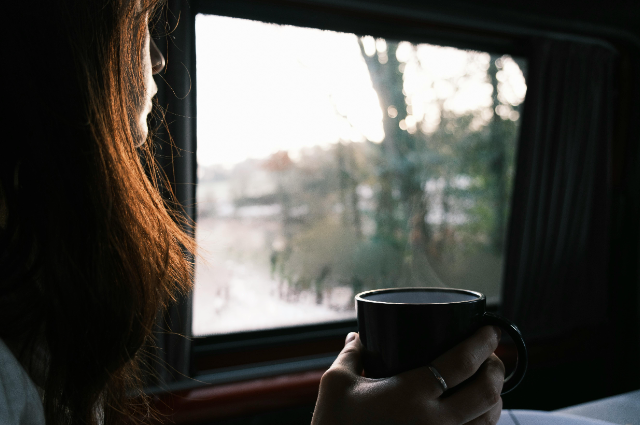
There was a time I thought life only rewarded the woman who moved fast.
The one who ticked boxes early. The one who could prove she was “doing something” every minute.
I didn’t realize how much of myself I was losing to the noise the pressure to become quickly, loudly, visibly.
But lately, I’ve been learning something softer.
Growth doesn’t always announce itself.
Healing doesn’t always clap.
Becoming doesn’t always look like movement.
Sometimes, the real transformation happens quietly in the moments no one sees, applauds, or measures. More women are stepping away from pressure culture and choosing a softer pace a kind of quiet confidence that isn’t rushed, loud, or meant to impress anyone.
I had the habit of rushing through everything and anything it included my goals, my healing, and even my happiness.
If something didn’t happen at the time I expected it, it would make me feel like I was already behind.
Comparison didn’t help me. It drained me for everything I had. Everywhere I looked, someone my age, someone out there was already achieving something bigger than what I could ever achieve; they posted their milestones and announced their next big step. And somehow along the line, everyone seemed to be moving faster than I was.
My Slow days made me so hesitant and inpatient.
Silence felt like I was failing in life.
I didn’t know how to rest because rest felt like laziness to me.
Without me realizing it, productivity became my be-all and end-all; it was now my identity.
If I wasn’t busy doing something, I didn’t feel like I was enough.
My friend, Britney Joseph, had faced a similar pattern. At the very peak of her YouTube career when the world expected her to go bigger and faster she quietly stepped away from the noise. Shocking right? But she did do that.
She wasn’t only affected by burnout alone; it was more so like the weight of the always performing had a toll on her, always being watched, always being “on.”
Instead of ignoring herself and continuing with her push through pressure, she chose a quieter, steadier life.
And somehow, her choice of choosing less made her more grounded in who she became. This act of hers only deepened her influence the more.
Her story made me reflect on my own journey, and I realized something I had never seemed to consider: that sometimes slowing down should be seen as an act of courage, not weakness. There I say.
A similar example exists beyond my circle — in the life of global influencer and entrepreneur Negin Mirsalehi. At the very peak of her career, when the world expected more from her, more visibility, she took a bold step back from the spotlight. Publicly, she shared her experience with burnout and the emotional exhaustion emotionally which arose from the constant performance online.
She chose a slower and more intentional form of living, instead of pushing through, one that had a great shift in reshaping her brand philosophy and personal life.
Her story proves something powerful:
Slow living doesn’t make you less successful.
It makes you more aligned.
It turns pressure into clarity.
And it shows that even women at the top need softness, space, and stillness.
Studies on Overstimulation say that this is when the brain gets too much information all at once, which can make it hard for one to focus, think clearly, or stay calm. Certain signs are when one feels annoyed, which makes them act in a confused state, and hence are unable to make decisions properly.
When one is overstimulated, it is actually an unpleasant experience. It might make you easily irritable and unconscious.
Overstimulation is not the same as regular stimulation. It is observed that People with attention deficit hyperactivity disorder (ADHD) are more likely to feel overstimulated, and as this happens, they tend to have strong emotional reactions emotionally resulting in anger or shutting down completely. These reactions happen because the brain can’t handle all the information at once.
Psychologists say that Slow living can be likened to an antidote that reconnects us to the basis of mindfulness. Mindfulness has been shown to decrease symptoms of anxiety and depression, and it improves attention and accelerates psychological flexibility of an individual. Slow living has its positive impact on cognitive function. It plays a role in memory retention, creativity, and self-reflection. When we are constantly changing tasks and multitasking, we tend to disrupt this mode of restoration of the brain, which can eventually lead to impaired decision-making and emotional regulation. This ability to experience thoughts and emotions mindfully is a precursor to long-term stability of one’s mental health and success. Slow living tends to create the space for this important emotional self-awareness. This can also improve our relationships with the people around us why because we live slowly now and hence are better able to listen and articulate ourselves, and are less likely to lack emotional intelligence.
My own shift actually happened in a small, quiet moment. I can still recall one very significant slow morning, I didn’t rush to check my phone, I just allowed myself to breathe.
For the first time in my life, I wasn’t trying to compare myself. Because the peace that came with understanding my life isn’t a competition was surreal. I am not trying to prove my existence by constantly performing.
And in that stillness, I observed how my whole mindset shifted. I felt a new peace settle into me.
I realized in that moment that:
Life doesn’t require you to make it meaningful.
Your worth should never be tied to speed.
And the majority of the time, growth hardly announces itself; it just whispers.Now, I’m learning to move with intentionality. In my patience and self-compassion with myself. To choose depth. To choose peace.
I know I’m building slowly, but now it is filled with a lot of intentionality.
And more than anything, I’m also learning that becoming is not a race. It's a quiet unfolding in the best way.
May you grow at your own pace and feel peace.
May your life stop feeling like a race and more like alignment.
May your becoming be gentle, steady, and fully yours to appreciate in the long run.
REFERENCES: