
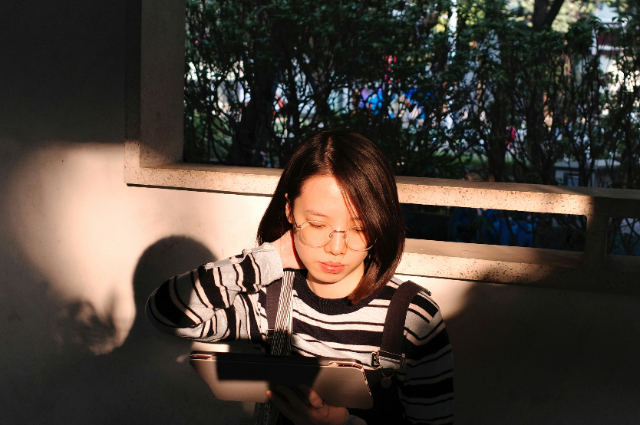
A time I thought softness was something life handed you when it finally became kind.
But the more I grew, the more I realized:
Softness is not given. Softness is built.
Built from boundaries you were afraid to set.
Built from honesty you once ran away from.
Built from choosing yourself even when it shakes your voice.
This is the story of how my life became soft — not because life changed first, but because I did.
Experts say that the reason behind socially prescribed perfectionism is that it has an element of pressure mixed with a sense of helplessness. Socially prescribed perfectionists, he considers, tend to feel that "the better they do, the better they’re expected to do.”
Clear problems with other-oriented perfectionism exist in that the tendency to demand perfection from some friends, family, co-workers, and others. It can be particularly damaging for relationships that are deeply intimate. They added that If you demand that your spouse be everything that is perfect, and you’re so demanding of that spouse, you can tell from that situation that problems in the relationship are going to arise.
Studies show that trauma can have a great effect on our sense of self-worth and identity, which then tends to lay the groundwork for beliefs about perfectionism. When harmful events are being endured, be it in relationships, it tends to create negative responses about one’s sense of self and identity. This can lead to mixed feelings that could stem from shame and guilt. Perfectionism can also arise as an attempt to prove one’s worthiness. It is seen that in most cases, individuals tend to glamorize themselves in accomplishments to make them feel validated. This constant need to always be perfect is what makes one lose their Sense of self and feel not good enough, and it is seen to be a recurring aspect in trauma. Instead of one to choose to heal, they become ignorant and repeat cycles that could affect generations to come in their bloodline. This feeling of shame or anxiety, and the urge to always want to be perfect to feel enough, is what causes it. If not taken care of could have a negative effect mentally on the individual. The cycle keeps repeating itself. And end up feeling stuck and inadequate.
Research on emotional maturity affirms that we become more mature with age. However, the road to emotional maturity is different in every individual. Some individuals may face hurdles along the way, while others may have a straight path them.
All things that happen in our childhood shape us, be it the experiences, relationships with our primary providers, and it is observed that our age, culture, and even gender can have a significant effect on our emotional maturity in more ways than one. Your childhood is one that sets the tone for the rest of your life. It is the very foundation for your physical, mental, and emotional maturity. And one important aspect of childhood is the relationships with the people we are closest to, and it is called an attachment relationship.
Psychologists say that when individuals write about their emotional experiences, it helps them process events that may be traumatizing by organizing thoughts that are chaotic and releasing any negative emotion tied to them. This has led to an increase in improved mental clarity and resilience. When dealing with stress or processing trauma, journaling is seen to have a scientifically proven tool for improving the mental health and well-being of an individual.
Studies show that setting boundaries is at times, easier said than actually practiced. For most of our lives, many of us were conditioned to be people-pleasers, to put other people first before ourselves, and ignore ourselves in the process. Unfortunately, this comes at the cost of jeopardizing our mental health. It is observed that without clear boundaries being put in place, we are more likely to be burnt out, more anxious, and more emotionally exhausted. We live in a society that glamorizes productivity and self-sacrifice, which makes it easy to want to give more of ourselves to people who do not deserve our time and affection. When we overcommit ourselves to people, friendships, work, or family, it can lead to burnout. Making sure that your boundaries are intact prevents us from constantly selling ourselves short and being pulled in directions that don’t favor our growth. Boundaries are integral to emotional self-care overall. When we establish boundaries regarding our emotional well-being, we’re less likely to internalize negative emotions and feel manipulated and drained emotionally. Individuals who have maintained healthy emotional boundaries are better equipped to regulate their feelings and respond in a healthier and aligned way to unfavorable situations.
I think the moment I realized everything had shifted for me happened on a beautiful evening when I admitted I was not feeling okay myself. I didn’t pretend. I was honest with myself and with someone I loved on the call, and instead of my casual “I’m fine,” I was honest to tell this person how I truly felt on the inside.
My voice shook. My honesty felt strange on my tongue.
But instead of pushing me away, they leaned in. They listened. They didn’t try to fix me or rush me. They just held space.
That night taught me something I had been running from for years: softness isn’t found in perfection — it’s found in honesty. Sometimes the most tender kind of strength is letting yourself be seen.
Softness isn’t passive. It’s a daily choice. A discipline.
Learn how to be patient with yourself —self-compassion majority of the time, builds more resilience than self-criticism ever will.
Protecting your peace will save you from a lot of chaos in small ways: the boundaries you stand on today will become confidence tomorrow.
Surrounding yourself with people who uplift you and don’t make you shrink yourself is also a great determinant.
And when you’re slipping into old ways of feel yourself slipping back into old patterns, breathe. You’re becoming, not performing. Growth often takes time; I learnt that the hard way, and none of it is wasted. You are a work in progress. Still evolving.
Let this season become the season you allow yourself to choose a softer way of living life — not because it magically became easier for you, but because you’re learning to choose and treat yourself with the gentleness you’ve always deserved.
May your days feel lighter, your heart feel in sync with your own body. And may you never forget that the soft life isn’t just given to you by the world. It’s something you build — quietly, patiently, beautifully.
If this piece found you at the right time, pass it on. Someone out there is learning softness, too.
REFERENCES:
- https://www.apa.org
- https://existentialpsychiatry.com
- https://www.attachmentproject.com
- https://childmind.org
- https://www.mentalhealthctr.com