
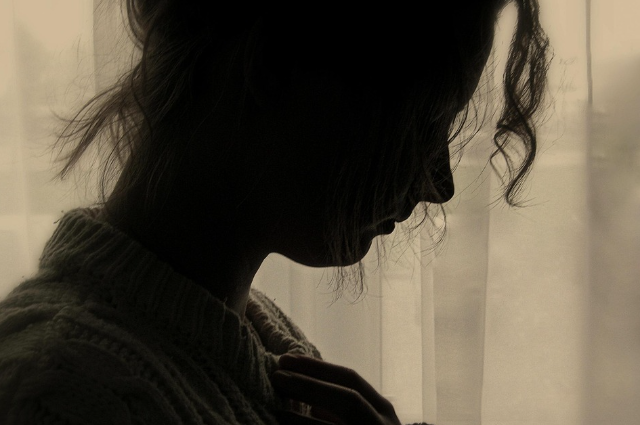
Image by Daria Głodowska from Pixabay
There are some things women learn not to say out loud.
And it’s not because they lack the words, but because words can sometimes cost one a fortune.
Silence, as I’ve grown to realise, is not always emptiness. Sometimes it is protection, and sometimes it is the only manner in which one can fully articulate themselves when speaking feels unsafe. In many lives of women, especially those curated by control or deep emotional pressure, silence is a way of shielding oneself from the world rather than allowing oneself to surrender to it.
Literature has often celebrated loud resistance, the moment a woman finally speaks, rebels, or breaks free. But what about the years before that moment? The quiet days. The swallowed truths. The careful pauses. Those moments rarely look heroic, yet they carry the full weight of lived experience.
This is why stories told through what is not said matter so much. They make us know that healing does not always come with clarity, and strength itself does not always shout to make itself known. Sometimes, it looks like holding it together even while confused. Sometimes, it looks like observation. And sometimes, it looks like silence that refuses to disappear quietly.
This piece reflects on how women’s literature treats silence not as absence, but as meaning, as a narrative force that reveals trauma, power, and resistance in its own quiet way.
Women’s lives have often been curated by what they were permitted to say, and more importantly, what they endure in silence. Silence has been used as a tool socially: a way to maintain order and preserve power structures that benefit a few while making many feel uncomfortable. For women, most especially, speaking up has become hard; it has carried all forms of risks, emotional and sometimes physical.
In literature, this realisation has made a tradition of female characters whose inner worlds are different and appear distorted compared to their outer worlds. Their silence is often the result of family systems where authority was the base or cultural norms that equate obedience with virtue.
Modern feminist literary criticism has challenged the idea that empowerment must always be confrontational. Instead, it asks us to pay close attention to the forms of resistance that are sometimes subtle, like the unsaid thought, the withheld response, and the internal refusal.
Having a good knowledge of silence as context, rather than absence, makes readers feel more deeply with the narratives of women. It changes the focus from asking why she didn’t speak up. What made her silence necessary in the first place? In doing so, literature now becomes not just a reflection of women’s oppression, but a space where the intricacies of endurance and quiet struggle are finally put into consideration.
This article takes the narrative that silence in women should not be read as weakness or absence of agency. Instead, it states that silence often is seen as a deliberate form of withdrawal, a way women conform to and protect their inner selves when speaking openly because they would be punished for being authentic.
In many patriarchal contexts, voice is often controlled. Women who speak are labelled disruptive, disrespectful, or immoral. Within such systems, silence becomes a strategy of survival rather than compliance. Choosing when not to speak can be an assertion of control in environments where speech is policed. It is a refusal to perform emotional labour, explain pain, or justify existence.
From a literary perspective, this niche angle challenges dominant readings that equate empowerment only with vocal rebellion. It invites readers to consider quiet endurance, emotional withdrawal, and internal narration as meaningful political acts. The unsaid becomes so powerful as it reveals how oppression operates, especially among women.
By reclaiming the narrative that silence seems to hold, this piece situates women’s silence as a broader framework of feminist withdrawal. It argues that power does not always announce itself; sometimes, it survives in stillness and the decision to remain free inwardly even when outward freedom is neglected.
An intriguing case study of silence as withdrawal can be seen in the work and life of Elena Ferrante, the Italian novelist who has chosen to be anonymous throughout her literary career since she started.
Ferrante’s refusal to reveal her identity has often been framed by the media as really mysterious. However, her silence aligns with the conscious act of control in a literary culture that frequently neglects women writers more for their personal lives than their profession. By withholding her physical identity, Ferrante talks about the expectation that women must be visible and explainable to be legitimate by society's standards.
In her essays, particularly Frantumaglia, Ferrante strongly talks about anonymity, which allows the work to stand on its own, free from the pressures of gendered interpretation by others.
Literarily, Ferrante’s novels have a rather audacious call about this resistance. Her female characters often internalise their struggles, choosing emotional withdrawal rather than confrontation, like the men often tend to show. Their silence mirrors the withdrawal placed upon them by patriarchy and domestic expectation, yet it also becomes a space for inner clarity. What they do not say, however, carries as much weight as what they can articulate.
Ferrante’s case more so talks about the silence as an intentional strategy rather than a limiting factor. By choosing not to speak publicly, she has control of the narrative, proving that power does not always need visibility to exist the majority of the time. Her success challenges the expectation that empowerment must be public, reinforcing the idea that restraint itself can be radical.
Personally, Ferrante’s choice resonates so much because it changes the narrative we seem to have about women's empowerment. Society teaches women that to be strong and constantly perform for approval. But what if strength could be quiet? Silence can be seen as a tool, instead of a trap.
Power isn’t always about being in control; sometimes it’s about being intentional with how and the manner you choose to articulate your words.
Choosing when to speak is as important as the words we finally learn to release.
Withdrawal fosters clarity and inner freedom.
Quiet strength is a presence re-established. Women like Ferrante show us that we don’t always need to be seen in public eyes to be powerful, or vocal to be heard. Sometimes, the most life-changing act is to preserve your voice and light until the moment it matters most to the world. In silence, we find autonomy and a space to become ourselves fully.
. . .
References: