
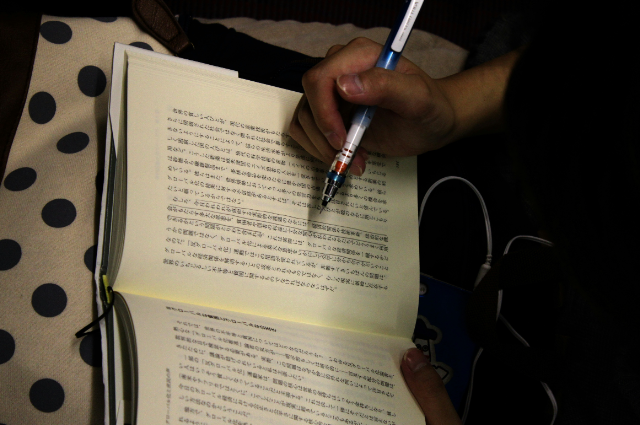
There’s a quiet tension running through publishing right now a question that sits between good intentions and hard choices. Sensitivity readers are hired to protect readers from harm and to help authors avoid careless erasures of other people’s lives. But lately those same gestures of care have sparked fierce debates: who gets to change a story, and at what cost to the imagination that birthed it?
This article sits in that space. I want to hold space for both truths: that literature can sometimes be painful, and that creativity needs space to flourish. Now here’s the thing: it’s not whether or not sensitivity readers should be present; it’s how they should be engaged in the work ethic and how balanced their power should be with an author’s voice.
Experts say sensitivity readers are more present as a consultancy resource to offer an authentic perspective regarding how marginalization affects characters, settings, and world-building. They provide feedback that an author can either accept, reject, or question. Making use of this feedback, authors can improve the representation of work so that readers who have lived these experiences can avoid any harm and enjoy themselves, and be comfortable while reading their books. In most cases, sensitivity readers depend on their specialty and the manuscript itself. Topics centered around this could be about race, LGBTQ experiences, disability, and other fields relating to their best interest.
As recently as February 2023, it was announced in Puffin Books that several of Roald Dahl’s classic children’s novels would be re-released with appropriate language. The publisher also mentioned the changes were introduced after “extensive sensitivity reviews” to provide the books with safety when being read by children and could be enjoyed by “all young readers” without harmful descriptions. Edits were made to words relating to body image, mental health, race, and gender.
But the public reaction was immediate and divided. Prominent authors, including Salman Rushdie, criticized the revisions as “absurd censorship,” arguing that modifying a dead author’s voice risks erasing historical context. PEN America also expressed concern about making “large-scale changes” that go beyond responsible editing.
After some days, Puffin announced a reversal of course and announced it would publish just two versions of the book: it would be in two parts, the original text and the revised text. This change, however, highlighted the ethical dilemma at the center of the debate: how to protect young readers while still engaging an author’s original voice.
In 2020, American Dirt was released, and it was seen to have promoted an authentic story about a Mexican woman fleeing cartel violence. But it was observed shortly after publication that the novel faced criticism from Latino writers and activists who argued that the book contained very harmful and inappropriate stereotypes, amongst which were cultural inaccuracies. The publisher was being questioned about the fact that they had not consulted more Latino sensitivity readers during the editing process.
This misunderstanding grew large enough that the publisher canceled the author’s planned book tour. It was argued too amongst the Commentators, saying that while sensitivity readers can catch misrepresentation early, relying on them too late would make matters escalate and lead to publicity fallout.
There’s a real concern that keeps coming up whenever writers talk about sensitivity readers: the fear of losing their voice. And I understand it. Creativity has always flourished on freedom, experimentation, and the courage to say something bold, even when it’s not seen to be perfect.
But the moment sensitivity notes start feeling like long pages of rules instead of reviews, it makes writers doubt their potential. They start questioning every line, every character, every cultural detail, not because it’s harmful, but because it might “offend someone somewhere.”
And that’s where the tension sits.
There’s a thin line between guiding a writer and policing their imagination, and when that line blurs, sensitivity readers end up feeling like quiet gatekeepers. Not intentionally, but through the pressure the system creates around them. The Dahl controversy showed how edits made to “protect readers” can easily shift into something that feels like censorship, especially when the author is no longer alive to defend their voice.
I think the fear is simple:
When a creative voice is shaped too heavily by external approval, the writing loses the very thing that makes it human.
Let’s see things from this view: literature doesn’t live in a vacuum. The stories we read tend to shape how we see people, cultures, and entire communities. And when a book contains harmful stereotypes, the effect isn’t just “creative freedom,” it becomes real harm.
This is where sensitivity readers become important. They help writers notice the blind spots we all naturally have. They catch the small details that might misrepresent a culture, or language that reinforces old biases, or moments that could unintentionally hurt the people being written about.
So while some people see sensitivity readers as limitations, many see them as protectors in my own “safeguards”. They aren’t trying to restrict creativity; they’re trying to prevent any more harm.
There has to be a balance between guidance and authorial freedom.
Yes, sensitivity readers should provide writers with the assistance to see what they might have missed, not rewrite the story into something unpleasant. I mean, we are all humans, and no one is perfect. And authors too should remain open to any form of correction without feeling superior to make their voice “lead” just to be in tune with a cultural norm.
To me, the healthiest space in literature is a middle ground where:
Sensitivity readers offer perspective
Authors maintain final authority
Publishers prioritize dialogue instead of control
And the story remains true to the person who wrote it
When this balance exists, everyone wins the writer, the communities represented, and the readers who want honest, responsible storytelling.
For me, I believe sensitivity readers are very much needed, come to think of it, but their power should have limits so as to exercise equality. They should not dictate the narrative just because they want to feel heard. Writers should feel genuinely supported, and not monitored. And any final changes should come from the author’s intuition, not fear of “what ifs”. Literature remains one of the strongest voices when guided, not silenced.
In conclusion, the ethics of literary sensitivity reading should not be seen as a battlefield between who’s right or wrong; it should be seen as a conversation that seeks to bring about balance in the lives of people. Stories tend to shape how we see ourselves and the people around us, and hence deserve the space to exercise freedom. The publishing world will forever continue to blossom beyond imagination, and so will the systems that are made to protect readers and writers. Truth remains: literature flourishes more when we allow space for honesty and growth. And finding that equilibrium will keep storytelling alive, relevant, and deeply human.
REFERENCES: