
Introduction: The Day the Sky Went Silent
On the afternoon of December 5, 1945, the air over South Florida held no hint of impending tragedy. At 2:10 p.m., five Grumman TBM Avenger torpedo bombers lifted off from Naval Air Station Fort Lauderdale, their engines droning steadily as they turned east toward the Atlantic. The flight, designated Flight 19, was part of a routine Navy training exercise—a standard navigation and bombing drill designed to prepare aviators for postwar service. The men aboard were not novices. Many were combat veterans of World War II, which had ended only three months earlier. There was nothing unusual about the mission, nothing to suggest that it would become one of the most famous aviation disappearances in history.
Yet within hours, routine gave way to confusion. Radio transmissions from the flight leader, Lieutenant Charles Carroll Taylor, began to signal distress. Compasses appeared unreliable. Landforms looked unfamiliar. “I don’t know where we are,” one voice admitted over the radio. As daylight faded, the messages grew fragmented and faint, punctuated by uncertainty and indecision. Ground controllers and nearby pilots attempted to guide the squadron home, but the instructions were either misunderstood, unheard, or acted upon too late. Soon, communication ceased altogether.
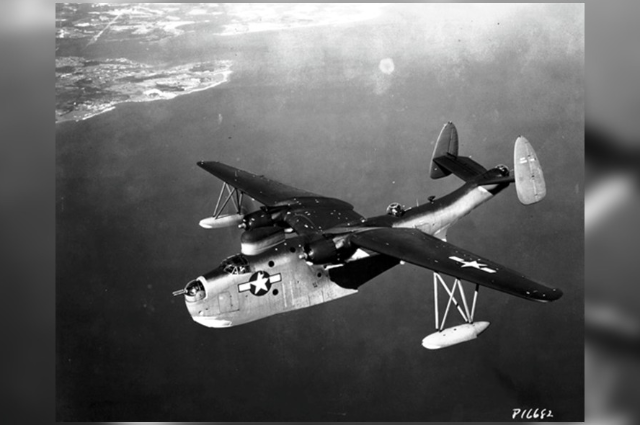
The mystery deepened that evening when a Navy patrol seaplane—a Martin PBM Mariner—was dispatched to search for the missing Avengers and vanished as well. In a single night, six aircraft and twenty-seven men were lost without a confirmed trace. Despite one of the largest air-sea searches ever conducted along the Atlantic coast, no wreckage, no bodies, and no definitive answers were ever found.
Flight 19’s disappearance would later become inseparable from the legend of the Bermuda Triangle, a region said to swallow ships and planes without explanation. Over time, speculation eclipsed evidence, and myth overwhelmed methodical inquiry. But stripped of superstition, the story of Flight 19 is not one of the supernatural. It is a human story—shaped by the limits of mid-20th-century aviation, the pressures of decision-making under uncertainty, and the powerful cultural impulse to turn tragedy into legend.
Setting the Stage: Aviation, War, and the Post-WWII Climate
The disappearance of Flight 19 occurred at a moment of profound transition for the United States Navy and for aviation as a whole. World War II had ended in September 1945, leaving behind a massive air fleet and tens of thousands of trained pilots. Combat operations had ceased, but training had not. Naval air stations across the country continued to run intensive programs designed to retain readiness, evaluate personnel, and convert wartime aviators into peacetime instructors and reservists. South Florida, with its open skies and proximity to the Atlantic, was a major hub for these exercises. Flights like the one undertaken by Flight 19 were considered routine—so familiar that their risks were often underestimated.
Technologically, however, naval aviation was still navigating its own limitations. Pilots relied heavily on magnetic compasses, dead reckoning, paper charts, and radio bearings—tools that demanded constant cross-checking and a clear understanding of geography. Instrumentation varied between aircraft, and compass errors were not uncommon, particularly over open water where visual reference points were scarce. Radar, though used during wartime, was not widely available for tracking individual training flights, and there was no real-time positional monitoring. If a pilot became disoriented and radio communication faltered, ground controllers had few means to locate an aircraft with precision.
The Atlantic environment compounded these vulnerabilities. Off Florida’s coast, weather could shift quickly, with sudden squalls, heavy cloud cover, and poor visibility. The powerful Gulf Stream flowed northward just offshore, capable of rapidly carrying debris—or survivors—far from any estimated crash site. From the air, the ocean presented a deceptive uniformity: a vast, reflective surface that blurred depth perception and made islands difficult to identify, especially under stress or fading light.
Beyond technology and environment, the psychological atmosphere of 1945 also played a role. The public was emerging from years of total war, accustomed to stories of heroism and loss. Aviation symbolised both triumph and danger—a marvel of modern engineering that had won the war, yet remained unforgiving of error. At the same time, society was stepping into an uncertain technological future marked by jet aircraft, radar, and atomic power. Against this backdrop, unexplained disasters carried an outsized emotional weight. When Flight 19 vanished, it did not simply register as an accident; it resonated as a troubling reminder that even in peacetime, modern technology could fail spectacularly—and without explanation.
The Mission: What Happened on December 5, 1945
The assignment given to Flight 19 on December 5, 1945, was officially designated Navigation Problem No. 1, a standard U.S. Navy training exercise routinely flown from Naval Air Station Fort Lauderdale. The objective was straightforward: five Grumman TBM Avenger torpedo bombers would depart the base, fly east approximately 56 miles to a set of shallow bombing targets known as Hens and Chickens Shoals near Bimini in the Bahamas, conduct practice bombing runs, then continue north over the Bahamian islands before turning west and returning to Florida. Under normal conditions, the triangular route would take about two hours and forty minutes and posed little challenge for experienced aviators.
The flight was led by Lieutenant Charles Carroll Taylor, a 28-year-old naval aviator who served as the instructor for the mission. Taylor was no novice; he had logged more than 2,500 flying hours, including combat experience in the Pacific Theatre during World War II. The remaining pilots were students or recently qualified aviators, accompanied by radiomen and gunners, some of whom were still teenagers. While several had wartime flying experience, they were accustomed to operating under the direction of an instructor and relied heavily on Taylor’s leadership and navigational judgment.
Flight 19 took off at 2:10 p.m. in clear weather, with good visibility and calm seas. The bombing phase of the exercise was completed without incident. Trouble began during the return leg. At approximately 3:45 p.m., Taylor radioed that something was wrong. He reported that his compasses were not functioning properly and that he was uncertain of the squadron’s position. Crucially, he expressed the belief that the flight was over the Florida Keys, far south of its actual location. This misidentification would become the central error of the day.
Other pilots in the formation expressed confusion but deferred to Taylor’s authority. Soon after, Lieutenant Robert Cox, a flight instructor in the area, intercepted the radio traffic and recognised the inconsistency in Taylor’s assessment. Cox attempted to guide Taylor northward, explaining that the setting sun should be on his left wing if he was heading toward the Florida coast. Taylor briefly acknowledged the advice but soon insisted that he knew where he was and declined further assistance.
From Fort Lauderdale, ground controllers tried repeatedly to redirect the squadron westward—toward the mainland and safety. However, radio communication was inconsistent. The frequency was congested, transmissions overlapped, and the Avengers’ radios were weakening as the flight moved farther offshore. As daylight waned, the pilots faced increasing difficulty distinguishing land from sea, particularly under growing cloud cover and intermittent rain squalls.
Fuel became an escalating concern. The Avengers carried enough fuel for several hours, but repeated course changes and extended flight time steadily eroded their margin of safety. By around 4:45 p.m., Taylor stated that the flight would turn north to ensure it was not over the Gulf of Mexico. Later, he indicated they would fly west until they reached land or ran out of fuel. Yet at 6:04 p.m., Taylor made a fatal decision, ordering the formation to turn east once more—away from Florida and deeper into the Atlantic—believing they had not gone far enough in that direction.
As darkness fell, ground stations could still hear fragments of radio exchanges among the planes, though direct contact was nearly impossible. The last known transmission, received at 7:04 p.m., came from one of the student pilots attempting to reach Taylor. No reply followed. Shortly thereafter, Flight 19 disappeared from all communication, leaving behind only static, fading hope, and a mystery that would endure for decades.
The Disappearance: Search, Rescue, and the Second Aircraft Lost
When Flight 19 failed to return to Naval Air Station Fort Lauderdale by early evening, the situation rapidly escalated from concern to crisis. Initial assumptions among base personnel were that the squadron was merely delayed or temporarily disoriented—an expectation shaped by the routine nature of the mission and the belief that the pilots would eventually sight the Florida coastline. As radio contact deteriorated and darkness fell, those assumptions gave way to alarm. By nightfall, the U.S. Navy had begun what would become one of the largest search-and-rescue operations ever conducted along the Atlantic seaboard.
Over the next several days, the Navy deployed an extraordinary array of resources. More than 300 aircraft, including patrol bombers, training planes, and Coast Guard aircraft, scoured thousands of square miles of ocean. Naval vessels, merchant ships, and Coast Guard cutters joined the effort, forming sweeping search patterns across the Atlantic, the Gulf Stream, and parts of the Gulf of Mexico. Search crews reported numerous sightings—oil slicks, floating debris, flares, even life rafts—but none could be conclusively linked to Flight 19. Each hopeful report ultimately ended in disappointment.
The tragedy deepened on the night of December 5 when a Martin PBM-5 Mariner patrol seaplane, dispatched from Naval Air Station Banana River, also vanished. The Mariner, carrying 13 crew members, was en route to the area of Flight 19’s last known position when it abruptly dropped off radio contact. Around the same time, a nearby tanker reported seeing a sudden burst of flame rising high above the water—an observation consistent with the Mariner’s reputation as a volatile aircraft, nicknamed “the flying gas tank” due to its large fuel load and history of onboard explosions. No wreckage was ever found, and the crew was presumed lost at sea.
Despite the scale and intensity of the search, the absence of physical evidence remains one of the most haunting aspects of the case. Several factors explain this void. The Gulf Stream, flowing swiftly northward just offshore, could have carried debris far from the crash site within hours. The Atlantic’s depth in the search area reaches thousands of feet, beyond the recovery capabilities of 1940s technology. Rough seas, nighttime ditchings, and possible midair explosions further reduced the chances that floating wreckage would remain intact or visible.
Search-and-rescue procedures in 1945 were also inherently limited. There was no satellite tracking, no emergency locator beacons, and no real-time radar coverage of training flights. Position estimates relied on last-known radio bearings and manual calculations, which were often imprecise. Once darkness fell and fuel was exhausted, the Navy was effectively searching a moving, featureless ocean with incomplete information.
By December 10, after five days of exhaustive effort, the official search was called off. Twenty-seven men were gone, leaving behind unanswered questions—and a mystery that would soon outgrow the tragedy itself.
The Official Investigation: Reports, Revisions, and Unresolved Questions
In the immediate aftermath of Flight 19’s disappearance, the U.S. Navy moved quickly to determine what had gone wrong. With no wreckage, survivors, or flight recorders to examine, investigators were forced to rely almost entirely on radio transcripts, eyewitness testimony from ground personnel, and recollections from pilots who had intercepted the squadron’s distress calls. This absence of physical evidence profoundly shaped both the tone and conclusions of the inquiry.
The initial Navy assessment, completed in early 1946, placed primary responsibility on the flight leader, Lieutenant Charles Carroll Taylor. Investigators concluded that Taylor had become disoriented and misidentified his location, mistakenly believing he was flying over the Florida Keys rather than the Bahamas. According to the report, this error influenced every subsequent decision, including his choice to repeatedly change course and ultimately fly east, away from the safety of the Florida coast. In one of the most controversial passages, a senior naval officer suggested that Taylor had experienced “something akin to a mental aberration,” a phrase that quickly drew criticism for its speculative and accusatory tone.
This conclusion deeply unsettled the families of the lost aviators, particularly Katherine Taylor, the flight leader’s mother. A schoolteacher in Texas, she was devastated by the suggestion that her son’s judgment alone had doomed the flight. Refusing to accept the Navy’s findings, she began an energetic campaign to challenge the report. Katherine wrote letters to naval officials, interviewed witnesses in Florida, and pressed for congressional attention, arguing that inadequate communication, delayed rescue efforts, and flawed assumptions had played a significant role. Other families quietly supported her efforts, though few pursued them as publicly or persistently.
Testimony from surviving officers added complexity to the narrative. Lieutenant Robert Cox, the pilot who first recognized that Flight 19 was lost, testified that he had requested permission to take off in a standby aircraft to search for the squadron but was denied. Ground officers defended the decision, claiming that launching additional planes without a precise fix might complicate radio traffic and worsen confusion. Air controllers acknowledged that radio frequencies were congested and that not all transmissions may have reached the pilots, raising doubts about whether Flight 19 received clear, consistent instructions to fly west.
Another unresolved issue involved the reliability of the TBM Avenger’s compass systems. While Taylor reported compass failure, other pilots did not explicitly confirm complete instrument malfunction. Historians and aviation experts have since noted that compass deviation was a known issue in the aircraft, particularly over open water and under stress, but not to a degree that would normally disable both primary and backup compasses simultaneously. Whether the instruments failed, were misread, or were overridden by Taylor’s assumptions remains uncertain.
Under mounting pressure, the Navy revisited the case. In 1947, a corrections review board amended the original findings, removing explicit blame from Taylor and replacing it with a carefully worded conclusion: Flight 19 was lost due to “causes or reasons unknown.” This revision acknowledged the investigative gaps and the impossibility of definitive conclusions.
Even so, controversies linger. Portions of the investigation records remained sealed for years, and discrepancies between different versions of radio transcripts fueled suspicion. To some, these inconsistencies suggested bureaucratic caution; to others, they hinted at a desire to quietly close an embarrassing case. What remains clear is that the official investigation, constrained by its era and circumstances, answered fewer questions than it raised—leaving Flight 19 suspended between documented error and enduring uncertainty.
The Natural Explanations: What Most Likely Happened
When the disappearance of Flight 19 is stripped of later mythmaking and examined through the lens of aviation science and historical context, a coherent and largely non-mysterious explanation emerges. Most aviation historians and naval analysts agree that the loss of the squadron can be attributed to a cascade of natural and human factors, none of which were extraordinary on their own but proved fatal in combination.
At the centre of this explanation is navigational error. Lieutenant Charles Taylor’s belief that the squadron was flying over the Florida Keys, rather than the Bahamas, was a critical mistake. From the air, especially under stress, low cloud cover, and fading daylight, the island chains of the Bahamas can resemble the Keys in shape and spacing. If Taylor believed he was south of Fort Lauderdale when he was actually east of it, his instinct to fly north and then east made sense—within his flawed mental map. Once this assumption took hold, subsequent decisions reinforced the error, a classic case of confirmation bias in high-stress navigation.
Taylor’s claim that both his compasses were malfunctioning has long fueled speculation. Technically, a total compass failure in all five aircraft was unlikely. However, partial compass deviation was a documented issue in TBM Avengers, especially when electrical systems, metal components, or radio transmissions interfered with readings. Even a modest deviation—combined with turbulence, fatigue, and stress—could undermine a pilot’s confidence in his instruments. Importantly, once a pilot begins to distrust navigational tools, he may rely more heavily on visual cues, which over open water are notoriously unreliable.
Weather conditions, while not extreme, further complicated the situation. Contemporary reports indicate intermittent squalls, scattered cloud layers, and deteriorating visibility as the afternoon wore on. Over the ocean, cloud reflections and changing light can create powerful optical illusions, flattening the horizon and making it difficult to distinguish sea from sky. As sunset approached, these effects intensified. The absence of clear landmarks meant that even experienced aviators could lose spatial orientation, particularly when flying in formation and deferring to a single leader’s judgment.
Fuel depletion was the inescapable consequence of these compounded errors. The Avengers carried sufficient fuel for the planned mission with a limited reserve. Every additional course correction and extended flight minute reduced the margin for recovery. By early evening, the pilots were openly discussing the possibility of ditching at sea, indicating their awareness that fuel was running critically low. The most probable scenario is that the aircraft exhausted its fuel supply and descended into the Atlantic in darkness.
Although the TBM Avenger was capable of ditching, such landings were perilous under ideal conditions and especially dangerous at night in rough seas. While the aircraft were equipped with inflatable life rafts, successful deployment depended on controlled descent, calm water, and crew coordination—none of which could be guaranteed. Even if some crew members initially survived, exposure, waves, and separation would have dramatically reduced survival time.
The Gulf Stream provides a compelling explanation for the absence of debris. Flowing at speeds of up to four knots, the current could have dispersed wreckage rapidly across vast distances, sinking or scattering evidence before search teams arrived. Combined with the depth of the Atlantic in the estimated crash zone—often exceeding several thousand feet—recovery was effectively impossible with 1940s technology.
Finally, the search itself faced insurmountable challenges. Position estimates were imprecise, the search area enormous, and nighttime conditions unforgiving. Even today, with advanced sonar and submersibles, aircraft lost at sea can remain undiscovered for decades.
For aviation experts, the disappearance of Flight 19 does not require exotic explanations. It represents a tragic convergence of human error, environmental factors, and technological limits. The mystery endures not because the event defies logic, but because the ocean keeps its secrets—and because uncertainty leaves room for imagination to take root.
The Birth of a Legend: How Flight 19 Fuelled the Bermuda Triangle Myth
For nearly two decades after its disappearance, Flight 19 remained largely a tragic footnote in naval aviation history—discussed in official records, remembered by families, and occasionally referenced in news retrospectives. Its transformation into a global mystery began in the early 1960s, when writers searching for patterns in unexplained maritime losses found in Flight 19 the perfect narrative seed.
The pivotal moment came in 1964, when journalist Vincent Gaddis published an article titled “The Deadly Bermuda Triangle” in Argosy magazine. In it, Gaddis outlined a loosely defined region of the western Atlantic—stretching from Florida to Bermuda to the Caribbean—where ships and aircraft had allegedly vanished under strange circumstances. Though mariners had long regarded the area as treacherous, Gaddis gave it a dramatic name and a unifying mythology. Flight 19 featured prominently in his account, portrayed not as a navigational accident but as an inexplicable disappearance, stripped of the messy ambiguities found in official Navy reports.
The legend expanded dramatically with Charles Berlitz’s 1974 bestseller, The Bermuda Triangle. Berlitz, already famous for his writings on paranormal phenomena, framed Flight 19 as the definitive case of supernatural intervention. He suggested causes ranging from magnetic anomalies and time warps to extraterrestrial abduction, often relying on misquoted radio transcripts or secondhand anecdotes. One notorious example was Berlitz’s false claim that Taylor reported seeing “something that looks like outer space,” a line that never appeared in official records. Despite—or because of—these liberties, the book captured the public imagination, selling millions of copies worldwide.
Mass media amplified these ideas. Sensational headlines in popular magazines, television documentaries, and radio talk shows emphasized mystery over method. The disappearance of both Flight 19 and its rescue aircraft in the same region lent the story an eerie symmetry that was irresistible to storytellers. Few cases offered such a complete narrative: trained military pilots, clear weather, routine mission, vanished without a trace. In contrast, many other losses cited in Bermuda Triangle lore involved storms, distress signals, or recovered wreckage—details that complicated the myth.
Flight 19 became the poster case because it embodied uncertainty. There were radio transmissions but no survivors, investigations but no wreckage, explanations but no proof. This vacuum invited speculation. Moreover, the pilots’ youth and wartime service added emotional gravity, transforming technical failure into a tragic enigma.
The broader cultural climate of the Cold War further fueled the legend. The 1950s and 1960s were decades of nuclear anxiety, UFO sightings, and rapid technological change. Radar, rockets, and space exploration blurred the boundary between science and science fiction. In this atmosphere, the idea that aircraft could vanish into unknown dimensions felt disturbingly plausible. Flight 19 became a symbol of humanity’s vulnerability in an age that promised mastery over nature but delivered new uncertainties.
By the time sceptics began dismantling Bermuda Triangle claims in the late 1970s, the legend had already taken root. Flight 19 had ceased to be merely a lost squadron—it had become a modern myth, sustained less by evidence than by the enduring human desire to find mystery where certainty fails.
The Fringe Theories: Aliens, Atlantis, and Magnetic Anomalies
As official explanations for Flight 19 settled into ambiguity rather than closure, a wide range of fringe theories rushed in to fill the vacuum. These interpretations, often dramatic and speculative, share a common feature: they seek extraordinary causes for an event that feels too unsettling to be explained by ordinary failure.
Among the most popular are UFO abduction theories. Advocates argue that the squadron encountered extraterrestrial craft, citing the complete absence of wreckage and the supposed strangeness of radio transmissions. These claims gained traction during the postwar surge in UFO sightings and were later reinforced by fictional portrayals that blurred the line between entertainment and evidence. However, no radar records, credible eyewitness accounts, or physical traces support the notion of alien involvement.
Another enduring idea links Flight 19 to the lost civilisation of Atlantis. Proponents claim that remnants of advanced Atlantean technology—often described as crystal-based energy sources or underwater power beams—interfered with the aircraft’s instruments or caused their sudden disappearance. This theory draws loosely from Plato’s ancient allegory and gained popularity during the 1960s and 1970s, when pseudoscientific interpretations of ancient history flourished. No archaeological or geological evidence supports the existence of such technology, let alone its operation beneath the Atlantic.
More abstract explanations include time warps and dimensional portals, suggesting that Flight 19 slipped into another time or a parallel reality. These ideas are rooted in science fiction rather than physics, borrowing the language of relativity while ignoring its constraints. They persist largely because they are unfalsifiable: the lack of evidence is treated not as a weakness but as proof of the phenomenon’s mystery.
A somewhat more technical-sounding claim involves magnetic anomalies or vortexes in the Bermuda Triangle. While Earth’s magnetic field does vary slightly across regions, extensive scientific mapping has shown no anomalies in the area capable of disabling navigation systems or causing aircraft to vanish. Modern vessels and aircraft transit the region daily without incident.
The persistence of these theories says less about Flight 19 than about human psychology. People are naturally inclined toward pattern-seeking, especially when confronted with randomness and loss. Cognitive biases such as confirmation bias and proportionality bias lead individuals to believe that dramatic events must have dramatic causes. In the absence of definitive answers, mystery becomes narrative, and speculation becomes belief. Fringe theories endure because they offer emotional satisfaction, transforming uncertainty into meaning—even when evidence is absent.
The Wreckage Hunt: Modern Searches and Ongoing Efforts
Advances in marine exploration over the past several decades have renewed interest in locating the remains of Flight 19. Technologies unavailable to the U.S. Navy in 1945—high-resolution sonar, autonomous underwater vehicles (AUVs), remotely operated vehicles (ROVs), and satellite-assisted mapping—have transformed the way investigators search the ocean floor. These tools have successfully located deep-sea wrecks once thought lost forever, raising hopes that Flight 19’s fate might one day be physically confirmed.
Beginning in the 1980s, private researchers and marine archaeologists launched targeted searches off Florida’s east coast and around the Bahamas. Side-scan sonar surveys identified several submerged aircraft, including TBM Avenger torpedo bombers, the same model flown by Flight 19. Initial media reports often declared these finds as breakthroughs, only for further analysis to reveal mismatches in serial numbers, armament configurations, or crash contexts. Many of these Avengers were later identified as training losses from other accidents—reminders of how frequently military aircraft were lost during the intense training cycles of the war and immediate postwar years.
One of the most publicised efforts came in the 1990s, when expeditions located multiple Avengers in relatively shallow waters near Fort Lauderdale. While visually striking, these wrecks were quickly ruled out: their locations, damage patterns, and documented loss records did not correspond to Flight 19’s final reported positions. Each false lead underscored the challenge of distinguishing one mid-20th-century military wreck from another in a region saturated with aviation and maritime debris.
The greatest obstacle remains uncertainty about the true crash zone. If Lt. Charles Taylor’s navigational error carried the flight far east into the Atlantic, the aircraft may have gone down in waters thousands of meters deep. At such depths, wreckage could be scattered, buried under sediment, or broken apart by pressure and corrosion. The Gulf Stream further complicates matters, capable of dispersing lighter debris far from the impact site, effectively erasing surface clues within days.
Despite these challenges, interest has not faded. Contemporary search efforts increasingly focus on refining historical data rather than simply expanding the search area. Researchers reanalyse radio transcripts, fuel consumption rates, wind patterns, and training routes using modern simulation models. The goal is to narrow down the most statistically probable ditching locations before deploying costly deep-sea equipment.
What modern campaigns continue to seek is not merely wreckage, but closure. Even a single confirmed Avenger—identified by serial number or unique structural features—could settle decades of debate. Until then, Flight 19 remains suspended between history and legend, its physical remains hidden beneath the Atlantic, and its story still unfolding through technology, persistence, and the enduring human desire to know what truly happened.
Cultural Legacy: Flight 19 in Film, TV, and Popular Imagination
Flight 19 achieved a second life not in archives or investigation files, but on cinema screens and television sets. One of the most influential moments in its pop-cultural afterlife came with Steven Spielberg’s Close Encounters of the Third Kind (1977). In the film’s iconic finale, the long-lost Avenger aircraft reappear intact in the Mexican desert, their pilots mysteriously absent. The scene offered an emotionally satisfying fantasy resolution—one that implicitly endorsed extraterrestrial explanations and permanently linked Flight 19 with UFO lore in the public mind.
Beyond cinema, the disappearance became a staple of television documentaries, especially during the late twentieth century. Programs framed the incident with ominous narration, dramatic reenactments, and selective quotations from radio transcripts, often omitting mundane but crucial details about navigation errors and weather. Such portrayals favoured mystery over method, reinforcing the idea that Flight 19 was not merely lost, but stolen by forces beyond human understanding.
The story also flourished in novels and conspiracy literature, where authors freely blended fact and fiction. Flight 19 appeared alongside Atlantis, secret military experiments, and time travel plots, becoming a narrative anchor that lent credibility to otherwise speculative claims. Because the case involved real names, real aircraft, and real dates, it carried a weight that purely fictional mysteries lacked.
At its core, Flight 19 has become a symbol of the “unsolved mystery.” It represents the unsettling notion that modern technology, military discipline, and rational inquiry can still fail to produce answers. In popular imagination, the absence of wreckage is interpreted not as an oceanographic challenge, but as evidence of concealment or transcendence.
The tension between myth and historical reality explains why the story refuses to fade. Historically, Flight 19 fits a pattern of aviation accidents shaped by human error, environmental hazards, and technological limits. Culturally, however, it functions as a cautionary tale about the unknown—one that resonates in every era confronting rapid technological change. As long as uncertainty remains more compelling than closure, Flight 19 will continue to fly, not through the sky, but through the collective imagination.
Conclusion: Separating the Legend from the Loss
After decades of speculation, investigation, and storytelling, the disappearance of Flight 19 stands as a case where evidence points not toward the extraordinary but toward the tragically ordinary. The most plausible explanations—navigational error, instrument confusion, deteriorating weather, fuel exhaustion, and a forced ditching at sea—fit both the historical record and the known limitations of mid-twentieth-century aviation. These factors, working together rather than in isolation, offer a coherent account of how five aircraft and fourteen men could vanish without leaving recoverable traces in one of the most challenging ocean environments on Earth.
Yet plausibility does not equal emotional resolution. Flight 19 remains captivating precisely because it resists definitive closure. No wreckage has been confirmed, no final coordinates logged, no last moment reconstructed. This absence has allowed the incident to drift from history into myth, becoming a cornerstone of the Bermuda Triangle legend and a canvas onto which generations have projected their fears, curiosities, and hopes. The mystery endures not because the evidence is compellingly strange, but because it is frustratingly incomplete.
At the heart of the story is a deeply human tragedy. The pilots of Flight 19 were young men, many barely out of combat or fresh from wartime training, operating in an era when experience was abundant but technology was still fragile. Their instructor, Lt. Charles Taylor, carried the burden of leadership under mounting confusion, making decisions in real time with imperfect information. Behind them were families—parents, wives, and siblings—left with uncertainty instead of graves, explanations instead of remains.
In separating legend from loss, Flight 19 becomes more sobering than sensational. The greatest mystery may not lie in aliens, anomalies, or lost civilisations, but in the convergence of human fallibility, evolving technology, and the immense, indifferent scale of the sea. It is a reminder that even in an age of machines and maps, nature and error can still conspire to erase certainty—and that sometimes, the truth is not hidden by forces beyond our world, but by the limits of our own.
References
- U.S. Navy Board of Investigation Report on Flight 19 (1945–1946)
- National Transportation Safety Board (Historical Aviation Context & SAR limits)
- Larry Kusche, The Bermuda Triangle Mystery—Solved (1975)
- Smithsonian National Air and Space Museum – Naval Aviation & TBM Avenger History