
Introduction
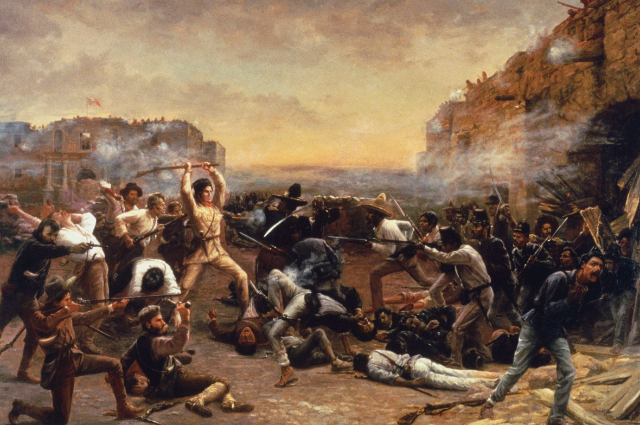
The Battle of the Alamo, fought from February 23 to March 6, 1836, stands as one of the most iconic and consequential episodes in the Texas Revolution. Situated in the mission compound of San Antonio de Béxar, the Alamo became a symbol of courage, sacrifice, and the relentless struggle for Texian independence. Over the decades, American memory has enshrined the defenders—figures such as William Barret Travis, James Bowie, and Davy Crockett—as heroic martyrs who fought to the last man against overwhelming odds. This narrative, however, has often been simplified and mythologised, emphasising bravery while glossing over the complex realities of strategy, leadership, and human cost.
Amid these romanticised accounts, the diary of Colonel José Enrique de la Peña offers a rare and critical Mexican perspective. A cavalry officer present on Santa Anna’s staff during the Texas campaign, de la Peña meticulously recorded the events of the Alamo and the broader conflict. His account, long neglected and initially dismissed as a potential hoax, resurfaced in the mid-twentieth century and has since been authenticated as a genuine eyewitness record. Unlike many Texian-centred narratives, de la Peña’s diary exposes the confusion, tactical missteps, and immense casualties faced by both sides, providing a starkly human and unvarnished view of the battle.
Central to scholarly debate are questions of authenticity, the reliability of eyewitness testimony, and the controversial details surrounding Davy Crockett’s death—claims that challenge the long-held belief that he died fighting on the walls of the Alamo. De la Peña’s narrative not only confronts entrenched heroic myths but also illuminates Mexican military perspectives, internal dissent within Santa Anna’s command, and the strategic failures that shaped the course of the Texas Revolution. By integrating this overlooked voice, historians gain a more nuanced understanding of the Alamo, bridging gaps between myth, memory, and historical reality.
The Historical Setting: Texas 1835–36
The Texas Revolution emerged from a complex web of political, cultural, and social tensions in the Mexican Republic following its independence from Spain in 1821. The newly established government struggled to assert authority over its vast northern territories, including Texas, where a growing population of Anglo-American settlers increasingly challenged Mexican laws and institutions. These settlers, attracted by land grants and economic opportunity, brought with them different legal traditions, language, and cultural practices, creating friction with Mexican authorities. Central issues included disputes over land ownership, local governance, adherence to Mexican law, and, most controversially, the settlers’ continued practice of slavery, which Mexico had outlawed.
As Anglo-American migration accelerated in the 1820s and early 1830s, tensions escalated. The Mexican government attempted to tighten control, sending officials and troops to enforce laws, but the colonists resisted, arguing for local autonomy. By 1835, these disputes had erupted into open rebellion, with Texians organising militias to defend settlements and assert political independence. Mexican authorities, perceiving this as an insurrection, responded with military expeditions to suppress the uprising.
The Alamo, originally a Spanish mission and later converted into a military garrison, occupied a central location in San Antonio de Béxar and became a focal point of both strategic and symbolic importance. For the Texians, holding the Alamo represented resistance to Mexican authority and a rallying point for broader independence. For the Mexican army under General Antonio López de Santa Anna, capturing the Alamo was essential to reassert control over rebellious Texas and demonstrate the power of the central government.
In the lead-up to the battle, Mexican forces moved strategically to isolate Texian positions. Santa Anna personally commanded a force of over 2,000 men, advancing from the south with a combination of infantry, cavalry, and artillery. Texian defenders, numbering roughly 180–260 volunteers under the leadership of William Barret Travis and James Bowie, faced not only overwhelming numbers but also shortages of food, ammunition, and reinforcements. Disorganised and spread thin across multiple defensive positions, they attempted to fortify the Alamo, but the mismatch in resources and manpower foreshadowed the dire consequences of the impending siege.
Thus, the stage was set for a confrontation that was at once strategic and symbolic: a small Texian garrison defending a key position against a powerful Mexican army determined to crush rebellion. The social, political, and military dynamics of Texas in 1835–36 created the conditions for both heroism and tragedy, a backdrop against which José Enrique de la Peña would later offer his unflinching eyewitness perspective.
The Rediscovery and Authenticity Debate
The diary of Colonel José Enrique de la Peña, a key eyewitness to the Battle of the Alamo, presents one of the most intriguing and controversial sources in Texas history. Written during the 1830s and early 1840s, the manuscript remained largely unknown for more than a century. After de la Peña died in 1840, the diary disappeared from public view, its whereabouts unknown, until it resurfaced in the mid-twentieth century. In 1955, Mexican scholar Jesús Sánchez Garza self-published the work in Spanish under the title La Rebelión de Texas, although he never disclosed how he acquired the manuscript or where it had been kept for over a century. The diary gained wider international attention when Carmen Perry translated it into English in 1975, publishing it as With Santa Anna in Texas: A Personal Narrative of the Revolution. The translation brought de la Peña’s firsthand observations to an English-speaking audience for the first time, offering a strikingly candid perspective on the battle from the Mexican side.
Upon its publication, the diary immediately became a source of controversy. Many American historians and Alamo enthusiasts expressed scepticism regarding its authenticity. Critics pointed to the lack of provenance, questioning whether the handwriting, paper, and ink could be reliably traced to the 1830s Mexican military context. Others suspected political or cultural motives, arguing that a Mexican officer’s account that contradicted the heroic Texian narrative—particularly the claim that Davy Crockett had surrendered and was executed rather than dying in combat—might have been fabricated to denigrate Texian heroism. The purported execution of Crockett was especially contentious, as it challenged the long-standing narrative of his dying heroically on the Alamo’s walls. For decades, scholars debated whether de la Peña’s diary represented a genuine historical source or a posthumous fabrication designed to rewrite Alamo history from a Mexican perspective.
The debate over authenticity shifted decisively in the early twenty-first century. In 2001, Professor David B. Gracy II and his team conducted a comprehensive forensic and scholarly investigation. The analysis included examination of ink composition and ageing patterns, which were consistent with materials used in the Mexican military during the 1830s. Paleographic comparison verified that the handwriting matched de la Peña’s other surviving writings, while archival research helped reconstruct the diary’s provenance, supporting the notion that it had indeed survived through multiple private collections before resurfacing in Mexico. This multi-faceted verification process led the scholars to conclude that the diary was authentic, though it was acknowledged that the published version had been edited for clarity and readability. Today, the consensus among historians is that de la Peña’s manuscript is a genuine eyewitness account, providing a critical primary source for understanding the Mexican perspective of the Texas Revolution.
The question of authenticity carries significant historical and cultural implications. De la Peña’s diary challenges the widely accepted Texian heroic narrative of the Alamo, introducing nuanced insights into the chaos, casualties, and command failures on the Mexican side. By presenting the battle from the perspective of a Mexican officer, the diary also underscores the human costs and ethical dilemmas faced by both sides, offering a rare counter-narrative to the American mythologization of the conflict. Furthermore, its authenticity lends credibility to controversial claims, such as the execution of Crockett, which continue to provoke scholarly debate and shape public perceptions of the battle.
In essence, verifying de la Peña’s account transforms it from a contested anecdote into a valuable historical document. It highlights the importance of integrating Mexican primary sources into the study of the Texas Revolution and demonstrates how first-hand accounts can challenge entrenched narratives. The rediscovery and authentication of the diary remind historians that history is not solely written by victors; it is also preserved in the overlooked testimonies of those whose voices have long been marginalised. De la Peña’s manuscript thus occupies a pivotal place in Alamo historiography, offering both factual insight and a corrective to the enduring myths that have shaped collective memory.
De la Peña’s Narrative: Content & Structure
Colonel José Enrique de la Peña’s diary presents a remarkable blend of memoir, military report, and personal reflection. Written in a detailed, descriptive style, the narrative oscillates between political commentary and on-the-ground battlefield reporting. Unlike many contemporary accounts that glorify their own side, de la Peña does not hesitate to criticise Mexican military leadership, particularly General Antonio López de Santa Anna. His writing conveys both a soldier’s perspective and a reflective awareness of the human costs of war. Vivid descriptions of battle, combined with insights into command decisions, provide readers with a layered understanding of the Alamo siege and its broader implications. The diary’s tone is often sombre and morally reflective; de la Peña repeatedly emphasises the futility and unnecessary bloodshed resulting from Santa Anna’s decisions.
De la Peña’s depiction of the Alamo siege and assault is both meticulous and dramatic. He provides a chronological account of the Mexican columns’ movements, the Texian defensive positions, and the tactical difficulties encountered during the pre-dawn assault of March 6, 1836. Mexican forces were divided into multiple columns commanded by officers, including Cos, Duque, and Morales, each assigned specific assault points. De la Peña details the inadequacies in siege preparations—ladders destroyed, artillery ineffective at first, and inexperienced troops pressed into close-quarter combat. He emphasises the confusion and disorder that arose as soldiers attempted to scale the walls, often clambering over wounded comrades under heavy Texian musket and cannon fire. Despite these obstacles, the Mexican forces persisted, driven by a combination of discipline, fear, and desperation, but at a staggering cost.
Among the most controversial aspects of de la Peña’s narrative are his observations regarding the fate of the defenders. Contrary to the traditional Texian myth, he claims that Davy Crockett and several others were captured alive and executed on Santa Anna’s orders rather than dying heroically in combat. De la Peña expresses moral outrage at this decision, depicting it as both cruel and unnecessary. He also describes other survivors who pleaded for mercy, only to be met with violence due to miscommunication or mistrust among Mexican soldiers. These passages challenge the familiar narrative of a gallant last stand and underscore the complexity and brutality of the engagement.
Beyond the immediate combat, de la Peña offers unique perspectives on the Mexican soldiers themselves. He records their physical suffering, noting hunger, fatigue, exposure to the elements, and inadequate preparation. He highlights internal dissent within the command, with experienced officers warning against a frontal assault, yet ignored by Santa Anna. The diary portrays a campaign plagued by mismanagement and arrogance, culminating in a victory that cost hundreds of lives but yielded little strategic advantage. By emphasising the human and logistical failures, de la Peña situates the Alamo as not merely a clash of armies but a tragic episode shaped by poor leadership and miscalculated ambition.
Moreover, de la Peña’s narrative conveys the psychological dimensions of warfare. He documents moments of fear, heroism, and desperation on both sides, illustrating the confusion and chaos that defined the assault. The soldiers’ bravery is tempered by recklessness, and the defenders’ courage is framed against their limited resources and isolation. Through these observations, de la Peña offers a rare window into the lived experience of battle—an experience often obscured in simplified heroic narratives.
In sum, de la Peña’s diary combines strategic analysis, personal reflection, and moral critique. Its detailed chronological reporting, critical perspective on Mexican leadership, and candid depiction of suffering and chaos distinguish it from other contemporary accounts. By integrating these elements, the narrative provides a rich, multifaceted view of the Alamo, revealing not only the physical realities of the siege but also the ethical and human dimensions of one of the most storied battles in North American history.
Comparing De la Peña with Other Sources
José Enrique de la Peña’s account of the Battle of the Alamo provides a unique Mexican perspective, but its historical significance becomes clearer when compared with other contemporary sources from both Mexican and Texian sides. Mexican military records, including the diaries of officers such as Vicente Guerrero, José de Urrea, and Manuel Fernández de Filisola, provide complementary insights into the campaign, highlighting troop movements, strategic objectives, and casualty reports. Santa Anna’s official orders and dispatches further contextualise the battle, revealing his strict insistence on rapid victory and the prioritisation of personal honour over prudence. These sources largely corroborate de la Peña’s descriptions of confusion during the assault, the heavy casualties among Mexican troops, and the chaotic conditions at the Alamo, underscoring the credibility of his narrative. Notably, both de la Peña and other Mexican accounts document disorganisation within the ranks, miscommunication among officers, and the brutality of the assault, supporting his claims about the unnecessary loss of life.
Texian sources, however, present a contrasting perspective, often emphasising heroism and sacrifice. Susanna Dickinson, one of the few survivors, provided eyewitness testimony describing the desperation inside the Alamo and the final moments before the fall. Joe, the enslaved man who belonged to Travis, offered accounts of Texian courage and the defenders’ efforts to repel attackers, though with limited detail on the Mexican perspective. Letters from William Barret Travis and James Bowie prior to the battle illustrate Texian concerns over insufficient supplies, manpower, and reinforcements, corroborating de la Peña’s observation that the garrison was underprepared. While these sources largely align with Mexican reports regarding the sequence of events and the extreme conditions of the siege, they differ sharply in interpretation, framing the Texians as heroic and resolute while minimising or omitting Mexican casualties and internal dissent.
Examining points of convergence and discrepancy reveals both the strengths and limitations of de la Peña’s account. Convergences include acknowledgement of high Mexican casualties, the intensity of night assaults, and the confusion inside the Alamo’s walls as defenders and attackers clashed. Discrepancies emerge in areas such as the precise number of survivors, the fate of Davy Crockett, and the timing of key events during the final assault. While de la Peña describes Crockett’s capture and execution by order of Santa Anna, Texian narratives consistently depict him as dying heroically on the walls, often portraying this act as emblematic of Texian valour.
The debate over Crockett’s fate illustrates how historical interpretation can intersect with national identity. The traditional U.S. narrative celebrates Crockett’s bravery as a cornerstone of American heroism, embodying ideals of courage, sacrifice, and resistance against tyranny. In contrast, de la Peña’s account challenges this iconic narrative, asserting that Crockett and other defenders were executed after surrendering—an assertion supported by some Mexican accounts but long ignored or dismissed in the United States. This divergence highlights the role of myth-making in shaping collective memory and raises questions about the reliability of selective narratives, particularly when national identity is intertwined with historical storytelling. The controversy persists because it forces historians and the public alike to reconcile myth with evidence, demonstrating that eyewitness accounts, when corroborated and critically analysed, can complicate deeply ingrained historical beliefs.
By juxtaposing de la Peña’s narrative with Mexican and Texian sources, it becomes evident that the Alamo was simultaneously a site of heroism, miscalculation, and human suffering. Mexican records affirm the logistical and tactical challenges described by de la Peña, while Texian sources emphasise resilience and moral fortitude. Discrepancies, especially regarding Crockett’s death, illuminate the ways in which history is selectively remembered and narrated. In this light, de la Peña’s account serves not merely as a chronicle of battle but as a corrective lens through which to reassess the Alamo’s legacy, revealing the complexities often obscured by nationalistic myth-making and underscoring the need for multi-perspective historical analysis.
Santa Anna’s Leadership Under Scrutiny
José Enrique de la Peña’s diary offers a sharp critique of General Antonio López de Santa Anna’s conduct during the Texas campaign, highlighting both tactical misjudgments and the broader consequences of autocratic decision-making. De la Peña, along with other Mexican officers, repeatedly questioned Santa Anna’s choice to launch a direct frontal assault on the Alamo rather than employing a more cautious siege strategy. According to de la Peña, experienced commanders—including José de Urrea and Martín Perfecto de Cos—recommended waiting for heavier artillery to breach the Alamo’s walls with minimal risk. Santa Anna, however, prioritised speed and personal glory over strategic prudence, ordering his troops into chaotic close-quarters combat that resulted in hundreds of avoidable casualties. De la Peña’s observations emphasise the logistical shortcomings of the Mexican army: ladders failed, ammunition was limited, and soldiers were often overloaded or poorly positioned, compounding the disorder during the assault. These critiques illustrate a broader pattern of command failure, where the judgment of seasoned officers was disregarded in favour of Santa Anna’s rigid insistence on immediate victory.
Santa Anna’s autocratic tendencies translated directly into battlefield decisions with profound consequences. His desire for a swift and dramatic triumph at the Alamo reflected both personal ambition and a belief in the psychological power of terror. By ordering the execution of surviving defenders and conducting the assault with extreme aggression, Santa Anna sought to demonstrate the Mexican government’s strength and dissuade further rebellion. While this strategy succeeded in eliminating the Alamo garrison, de la Peña notes that it did so at an enormous human cost and without yielding a decisive strategic advantage. The emphasis on personal honour and dramatic victories over calculated military planning reflects how political autocracy influenced operational choices, often to the detriment of both soldiers and the broader campaign.
The aftermath of the Alamo further exposed the limitations of Santa Anna’s leadership. Despite the apparent success of capturing the mission, morale among Mexican troops was negatively affected by the heavy casualties and chaotic nature of the engagement. De la Peña’s account portrays disillusionment among officers and soldiers, many of whom had witnessed the unnecessary bloodshed and questioned the justification for the assault. In contrast, the Texians leveraged the Alamo’s fall as a powerful rallying cry, encapsulated in the battle cry “Remember the Alamo!” This narrative galvanised Texian forces and reinforced their determination to resist Mexican control, transforming what Santa Anna intended as a demonstration of authority into a symbol of resistance.
Ultimately, the strategic miscalculations at the Alamo contributed to the Mexican army’s later defeat at the Battle of San Jacinto. By exhausting troops, squandering resources, and underestimating the resilience of the Texian forces, Santa Anna’s rigid pursuit of honour undermined the long-term objectives of the campaign. De la Peña’s account underscores that the Alamo was less a testament to Mexican military strength than an example of poor judgment amplified by political ambition. His critique situates Santa Anna’s decisions within a broader framework of leadership failure, revealing how the prioritisation of personal prestige and immediate spectacle over strategic foresight had lasting consequences for both the Mexican army and the course of the Texas Revolution.
In sum, de la Peña’s observations illuminate the interplay between political autocracy, battlefield tactics, and human cost. Santa Anna’s insistence on rapid victory, his disregard for experienced officers’ advice, and his use of terror as a tool of control resulted in a pyrrhic victory at the Alamo that strengthened, rather than subdued, Texian resolve. By critically examining these decisions, historians gain a more nuanced understanding of both the tactical and psychological dimensions of leadership in wartime, challenging simplistic interpretations of Santa Anna as either a brilliant strategist or a tyrannical despot.
Historiographical Impact & Modern Interpretations
José Enrique de la Peña’s diary has had a profound impact on the historiography of the Alamo, serving as a counter-narrative to the long-standing American heroic myths surrounding the battle. For decades, the popular memory of the Alamo emphasised the valour and martyrdom of Texian defenders, often portraying the Mexican army as an impersonal, faceless force and minimising the complexity of the conflict. De la Peña’s account challenges this simplified narrative by presenting the Alamo from the perspective of a Mexican officer who witnessed the battle firsthand. His observations humanise Mexican soldiers, reveal their suffering, and highlight the chaos and mismanagement of the assault, offering a nuanced understanding of the engagement that contrasts sharply with heroic portrayals of the Texians. By documenting both the bravery and the failures on both sides, de la Peña disrupts the monolithic heroic narrative, demonstrating that the Alamo was as much a tragedy of poor leadership and miscommunication as it was a story of Texian courage.
The diary has also contributed to significant shifts in academic understanding of the Texas Revolution and its broader historical context. The rise of borderlands studies, which emphasises the interconnected histories of the United States and Mexico, has encouraged historians to integrate Mexican primary sources into analyses of the conflict. De la Peña’s diary has become a cornerstone of this approach, offering insight into the motivations, strategies, and experiences of Mexican soldiers often neglected in Anglo-American accounts. By combining his observations with other Mexican and Texian records, scholars have been able to reconcile myth with factual evidence, creating a more balanced and nuanced historical narrative. This scholarly reassessment acknowledges the role of both sides in shaping the conflict, while critically examining the myths that emerged from selective memory and nationalistic storytelling.
Cultural implications of de la Peña’s account are equally significant. Representations of the Alamo in films, literature, and textbooks have long been shaped by the heroic Texian narrative, often glossing over Mexican perspectives and the complexities of the battle. The inclusion of de la Peña’s diary challenges these representations, inviting educators, filmmakers, and authors to portray the Alamo as a human and ethically complex event rather than a straightforward tale of heroism. Moreover, the diary has implications for the political symbolism of the Alamo in U.S.–Mexico relations. By highlighting Mexican agency, courage, and suffering, de la Peña’s account fosters a more inclusive understanding of the conflict, emphasising that history is not solely written from the perspective of the victorious or the celebrated. The recognition of Mexican experiences encourages dialogue about national memory, historical accountability, and the ways in which events like the Alamo continue to shape contemporary cultural and political identities.
Ultimately, de la Peña’s diary has reshaped both scholarly and public understandings of the Alamo. As a counter-narrative, it disrupts entrenched heroic myths, introduces overlooked Mexican perspectives, and encourages the integration of primary sources across cultural and national boundaries. Its influence extends beyond academic circles, affecting how the Alamo is taught, represented, and remembered, and highlighting the ethical and human dimensions of historical interpretation. By bridging the gap between myth and reality, de la Peña’s account not only enriches historical scholarship but also challenges society to reconsider the narratives that define national identity and collective memory.
Conclusion
José Enrique de la Peña’s diary of the Battle of the Alamo offers a rare and invaluable perspective on one of the most iconic episodes of the Texas Revolution. After decades of controversy and scepticism, scholarly investigation has largely upheld the authenticity of the manuscript, confirming it as a genuine eyewitness account. While certain editorial interventions and translation choices warrant critical contextualization, the core narrative provides historians with detailed insights into Mexican troop movements, battlefield chaos, logistical failures, and the human costs of Santa Anna’s decisions. De la Peña’s reflections, particularly on the moral and strategic errors committed by Mexican leadership, illuminate dimensions of the conflict that have often been overshadowed in Texian-centred histories.
Integrating Mexican sources such as de la Peña’s diary into the broader historiography of the Texas Revolution is essential for constructing a more balanced and nuanced understanding. His account humanises Mexican soldiers, exposes internal dissent, and challenges the conventional portrayal of the Alamo as a simple narrative of Texian heroism versus Mexican oppression. By including multiple perspectives, historians can move beyond nationalistic myths and appreciate the complexity of motivations, experiences, and consequences that shaped the conflict.
Beyond its factual contributions, de la Peña’s diary carries a broader message about history, memory, and myth-making. It challenges readers to reconsider the narratives that underpin national identity and popular memory, reminding us that historical events are multifaceted and often interpreted differently depending on perspective. In examining both the triumphs and tragedies of the Alamo through de la Peña’s eyes, we gain a deeper appreciation of the Texas Revolution as a human, political, and military struggle. Ultimately, his account enriches our understanding of the past while encouraging critical reflection on the ways collective memory is constructed and perpetuated—a lesson as relevant today as it was in 1836.
References & Sources
- De la Peña, José Enrique & Perry, Carmen (Translator). With Santa Anna in Texas: A Personal Narrative of the Revolution. Texas A&M University Press, 1975.
- Santa Anna, Antonio López. Orders, Dispatches, and Correspondence during the Texas Revolution.
(Available in archives and historical collections such as the Texas State Archives.) - Crisp, J. E. (2005). Sleuthing the Alamo: Davy Crockett’s Last Stand. Oxford University Press.
- Davis, W. C. (1999). Three Roads to the Alamo: The Lives and Fortunes of David Crockett, James Bowie, and William Barret Travis. Harper Perennial.
- Kilgore, D. E. & Crisp, J. E. (2010). How Did Davy Die? And Why Do We Care So Much? Texas A&M University Press.
- Mark, J. J. (2025, November 17). Eyewitness Account of the Battle of the Alamo. World History Encyclopedia.
- Gracy, David B. II (2001). “Verification of José Enrique de la Peña’s Diary.” University of Texas at Austin, Graduate School of Library and Information Science.
- Ohlendorf, Sheila M. “José de Urrea: A Military Leader in 19th Century Mexico.” Handbook of Texas Online, Texas State Historical Association.
- Grassmuck, Mary Elise. José Enrique de la Peña. Texas State Historical Association.
- The Alamo Official Website – Battle and Revolution History.