
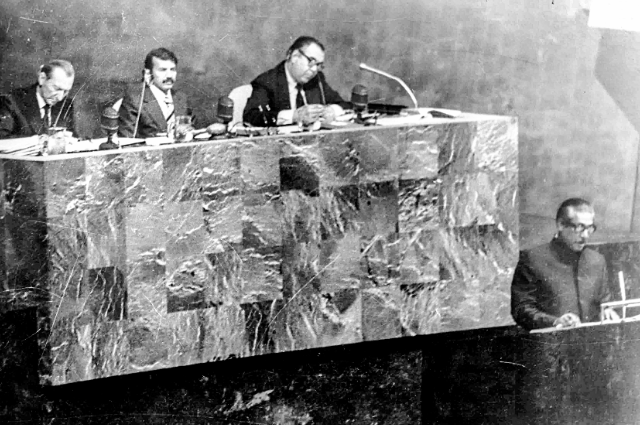
The emergence of Bangladesh as an independent nation in 1971 was rooted in deep structural inequalities within Pakistan, where the eastern wing, despite its larger population, remained politically marginalized and economically exploited by the western leadership. Disparities in resource allocation, cultural suppression, and the imposition of linguistic policies—particularly the prioritization of Urdu over Bengali—created widespread resentment in East Pakistan. Over time, these grievances evolved into a powerful movement for autonomy and eventually independence.
Within this context, the Awami League emerged as the principal political force representing the aspirations of the Bengali population. Founded in 1949, the party transformed itself from a regional opposition group into a mass-based movement capable of mobilizing millions. Under the leadership of Sheikh Mujibur Rahman, it articulated the political, economic, and cultural demands of East Pakistan with clarity and urgency, bridging the gap between elite politics and popular participation.
This article examines two central themes: the crucial role and the speciality of the Awami League. Its crucial role lies in its leadership during the struggle for independence, its foundational contribution to state-building, and its long-standing influence in governance. Equally important is its speciality—its ideological flexibility, its ability to mobilize mass support across diverse social groups, and its reliance on charismatic leadership to sustain political momentum during both crisis and consolidation.
The central argument of this study is that the Awami League was not merely a political party but the primary architect of Bangladesh’s state formation and political trajectory. Its actions, strategies, and leadership not only shaped the course of the liberation movement but also defined the institutional and ideological foundations of the modern Bangladeshi state.
Historical Background: Roots of Political Discontent
The roots of political discontent in what would become Bangladesh can be traced to the Partition of India, which led to the creation of Pakistan as a geographically divided state consisting of West Pakistan and East Pakistan. Despite East Pakistan having a larger population, political authority, military power, and economic resources were overwhelmingly concentrated in the western wing. This structural imbalance created a persistent sense of marginalization among the people of East Pakistan, who increasingly viewed the central government as indifferent to their needs and aspirations.
Economic disparities further deepened this divide. East Pakistan generated significant revenue through exports such as jute, yet much of this wealth was utilized for the development of West Pakistan. At the same time, representation in political institutions remained unequal, and key decision-making processes were dominated by elites from the western region. These inequalities laid the foundation for a growing regional consciousness and political resistance.
One of the most immediate and emotionally charged sources of conflict was linguistic. In 1948, the central government’s decision to impose Urdu as the sole national language sparked widespread protests in East Pakistan, where Bengali was spoken by the majority. This led to the Language Movement, a defining moment in the region’s history, where students, intellectuals, and political activists mobilized to defend their linguistic and cultural identity. The movement not only secured the recognition of Bengali as a state language but also marked the beginning of organized resistance against cultural domination.
Amid this rising discontent, the Awami League was founded in 1949 in Dhaka as the East Pakistan Awami Muslim League. It emerged as a platform for articulating the political demands of East Pakistan and challenging the dominance of the ruling Muslim League. Among its early leaders, Sheikh Mujibur Rahman played a crucial role in shaping the party’s direction and expanding its mass appeal. His leadership style, rooted in direct engagement with the people, helped transform the party into a powerful vehicle of popular mobilization.
Initially, the party had a religious orientation, as reflected in its original name. However, over time it evolved into a more inclusive and secular political organization. In 1955, it dropped the word “Muslim” from its name, signaling a broader ideological shift toward representing all Bengalis regardless of religion. This transformation was significant, as it aligned the party with the cultural and linguistic nationalism that was gaining strength in East Pakistan.
Thus, by the late 1950s and early 1960s, the Awami League had positioned itself at the forefront of political resistance, combining economic grievances, cultural assertion, and democratic aspirations into a unified movement that would eventually lead to the demand for independence.
Ideological Foundation and Political Speciality
The ideological foundation of the Awami League was shaped by the historical experiences of marginalization and cultural assertion in East Pakistan. At its core, the party’s ideology rested on three interrelated pillars: Bengali nationalism, secularism, and the pursuit of democracy and regional autonomy. These principles not only distinguished the Awami League from other political forces in Pakistan but also provided a coherent framework for mobilizing mass support.
Bengali nationalism emerged as the most powerful ideological force within the party. Unlike the religious nationalism that underpinned the creation of Pakistan, the Awami League emphasized linguistic, cultural, and historical identity as the basis of political unity. This shift was crucial because it allowed the party to unite diverse sections of society—Muslims, Hindus, and other communities—under a shared Bengali identity. Secularism complemented this approach by rejecting communal politics and promoting inclusivity, thereby strengthening the legitimacy of the movement in a pluralistic society. At the same time, the party consistently advocated democratic governance and greater autonomy for East Pakistan, challenging the centralized and authoritarian tendencies of the West Pakistani leadership.
A defining moment in the articulation of this ideology was the Six-Point Program announced in 1966 under the leadership of Sheikh Mujibur Rahman. This program served as a clear and practical blueprint for autonomy, demanding a federal structure, separate economic and fiscal policies, and greater control over resources by East Pakistan. It effectively translated abstract political grievances into concrete demands that resonated with the broader population. The Six-Point Program not only intensified the demand for self-governance but also laid the groundwork for the eventual call for independence.
The political specialty of the Awami League lay in its exceptional ability to transform cultural identity into organized political power. While many movements articulate grievances, the Awami League succeeded in channeling these sentiments into a disciplined and large-scale political force. It built strong grassroots networks that connected the leadership with peasants, industrial workers, students, and the urban middle class. This broad social base enabled the party to sustain long-term mobilization and respond effectively to changing political circumstances.
This approach stood in stark contrast to the elite-driven politics of West Pakistan, where decision-making was largely confined to military and bureaucratic elites with limited engagement with the masses. The Awami League, by comparison, cultivated a participatory political culture in which ordinary citizens felt directly involved in the struggle for rights and recognition. Mass rallies, public speeches, and local organizational structures played a crucial role in maintaining this connection.
Central to this process was the leadership style of Sheikh Mujibur Rahman. His charismatic and populist approach allowed him to communicate complex political ideas in a simple and emotionally compelling manner. He was widely perceived not just as a political leader but as a representative of the people’s aspirations. His speeches, particularly during periods of crisis, inspired widespread participation and reinforced collective identity. Mujib’s ability to combine emotional appeal with strategic political vision made him a pivotal figure in transforming the Awami League into a mass movement.
In essence, the ideological strength and political specialty of the Awami League lay in its capacity to integrate cultural identity, democratic aspirations, and grassroots mobilization into a unified political strategy. This combination enabled it to move beyond conventional party politics and become the driving force behind one of the most significant nationalist movements of the twentieth century.
Crucial Role in the Bangladesh Liberation Movement
The role of the Awami League in the Bangladesh liberation movement was decisive, transforming a regional autonomy struggle into a full-scale war for independence. Its leadership, organizational capacity, and political vision provided the foundation upon which the movement evolved, particularly during the crisis that followed the 1970 general elections.
In the 1970 elections, the Awami League achieved a sweeping victory, winning an absolute majority in Pakistan’s National Assembly. This electoral outcome clearly reflected the democratic will of the people of East Pakistan, who supported the party’s autonomy agenda rooted in the Six-Point Program. However, the West Pakistani leadership, including military ruler Yahya Khan and political leader Zulfikar Ali Bhutto, refused to transfer power. This refusal triggered a constitutional crisis and widespread protests across East Pakistan, as millions of people viewed the denial of power as a direct rejection of democratic principles.
The situation escalated dramatically on March 25, 1971, when the Pakistani military launched Operation Searchlight. This operation aimed to suppress the growing independence movement through force, targeting students, intellectuals, political activists, and minority communities. The scale and brutality of the crackdown led to widespread loss of life and intensified public anger, effectively eliminating any remaining possibility of political reconciliation.
In response to these developments, Sheikh Mujibur Rahman declared the independence of Bangladesh on March 26, 1971, shortly before his arrest by Pakistani authorities. This declaration was a turning point, providing a clear political objective for the resistance movement. Although Mujib was imprisoned in West Pakistan during most of the conflict, his leadership continued to inspire the struggle, and he remained the symbolic head of the emerging nation.
Following the crackdown, senior leaders of the Awami League fled to India, where they established a government-in-exile in April 1971. This provisional government played a crucial role in coordinating the liberation effort, maintaining administrative continuity, and seeking international recognition. It functioned as the legitimate representative of the Bangladeshi people, ensuring that the struggle was not merely seen as a rebellion but as a legitimate fight for national self-determination.
A key component of the resistance was the organization of the Mukti Bahini, a guerrilla force composed of civilian volunteers, defected soldiers, and trained fighters. Under the guidance of Awami League leadership, the Mukti Bahini conducted coordinated attacks against Pakistani forces, disrupting communication lines, weakening military infrastructure, and sustaining pressure throughout the conflict. This organized resistance was essential in transforming spontaneous uprisings into a structured liberation war.
Strategic coordination with India significantly strengthened the movement. India provided training, logistical support, and eventually direct military intervention. This collaboration culminated in a full-scale conflict between India and Pakistan in December 1971. The combined efforts of the Mukti Bahini and Indian armed forces led to rapid military successes, ultimately resulting in the surrender of Pakistani forces in East Pakistan on December 16, 1971. This marked the successful conclusion of the Bangladesh Liberation War and the birth of an independent Bangladesh.
The Awami League’s crucial role in this process can be understood through several key dimensions. First, it provided political legitimacy to the movement. As the democratically elected majority party, it embodied the will of the people, making the struggle for independence both morally and politically justified in the eyes of domestic and international observers. Second, the party successfully unified diverse resistance groups, including students, workers, rural populations, and military defectors, into a cohesive movement with a shared objective. Without this unifying leadership, the resistance might have remained fragmented and less effective.
Third, the Awami League acted as the international voice of Bangladesh. Through its government-in-exile, it engaged with foreign governments, international organizations, and global public opinion, highlighting the humanitarian crisis and the legitimacy of the independence movement. This diplomatic effort was critical in gaining support, particularly from India, and in shaping global perceptions of the conflict.
In essence, the Awami League transformed a regional political crisis into a successful national liberation movement by combining democratic legitimacy, strategic leadership, and effective mobilization. Its role was not only crucial but foundational, as it provided the ideological direction, organizational structure, and political authority necessary to achieve independence.
State Formation and Early Governance (1971–1975)
The transition of the Awami League from a liberation movement to the governing authority of an independent state marked a critical and complex phase in the history of Bangladesh. Following the victory in the Bangladesh Liberation War, the party was tasked not only with consolidating political power but also with constructing the institutional, economic, and social foundations of a new nation. This shift required moving from revolutionary mobilization to administrative governance under conditions of extreme fragility.
Under the leadership of Sheikh Mujibur Rahman, the Awami League assumed control of a war-torn country in 1972. One of its earliest and most significant achievements was the framing of a new constitution. Adopted in November 1972, the constitution established four fundamental principles: nationalism, secularism, democracy, and socialism. These ideals reflected the ideological foundation of the liberation movement and aimed to create an inclusive and egalitarian state. Secularism was particularly important in distinguishing Bangladesh from the religious nationalism that had characterized Pakistan, while socialism was envisioned as a means to address economic inequality and promote social justice.
However, the challenges facing the new government were immense. Economically, Bangladesh was in a state of near collapse. Infrastructure had been severely damaged during the war, industrial production had declined, and agricultural output was insufficient to meet basic needs. The country also faced the urgent task of rehabilitating millions of refugees who had fled to India during the conflict and were now returning home. In addition, there was a significant institutional vacuum, as administrative systems inherited from Pakistan were either dysfunctional or lacked legitimacy in the new political context.
The Awami League government implemented a range of policy measures to address these issues. It nationalized key industries in an attempt to stabilize the economy and ensure state control over critical sectors. Efforts were made to rebuild infrastructure, restore agricultural productivity, and reintegrate displaced populations. International aid was sought to support reconstruction, and diplomatic relations were established with various countries to secure economic assistance. Despite these initiatives, the government struggled to achieve rapid recovery. Administrative inefficiencies, lack of technical expertise, and widespread corruption limited the effectiveness of many policies.
The situation worsened with the onset of a severe famine in 1974, which exposed the vulnerabilities of the state and intensified public dissatisfaction. Food shortages, inflation, and unemployment contributed to social unrest, undermining confidence in the government’s ability to manage the crisis. In response to growing instability, Mujib adopted increasingly centralized measures to maintain control.
This shift culminated in the establishment of the Bangladesh Krishak Sramik Awami League (BAKSAL) in 1975, effectively transforming the political system into a one-party state. Opposition parties were banned, and political activity was brought under strict state control. The move was justified by the government as necessary to ensure national unity, accelerate development, and prevent further disorder during a period of crisis.
From a critical perspective, the establishment of BAKSAL reflects both the strengths and weaknesses of the Awami League’s approach to governance. On one hand, centralized control allowed for quicker decision-making and a unified direction in policy implementation, which was seen as essential in a fragile post-war environment. It also aimed to reduce political fragmentation and create stability in a context where institutional structures were still evolving.
On the other hand, the suppression of political opposition and the concentration of power in the executive undermined democratic principles. The absence of checks and balances limited accountability and contributed to the erosion of public trust. Critics argue that these measures weakened the democratic foundations that the Awami League had originally championed during the liberation movement.
In conclusion, the period from 1971 to 1975 illustrates the dual nature of the Awami League’s role in state formation. While it successfully established the foundational structures of the Bangladeshi state and articulated a progressive constitutional vision, its governance was constrained by severe challenges and marked by increasingly authoritarian tendencies. This phase remains a critical example of the difficulties faced by post-colonial states in balancing stability, development, and democratic ideals.
Crisis and Transformation After 1975
The assassination of Sheikh Mujibur Rahman on August 15, 1975, marked a निर्णायक turning point in the political history of Bangladesh and triggered a profound crisis for the Awami League. Mujib’s death, carried out during a military coup, not only ended the leadership of the country’s founding figure but also dismantled the political order that had been established after independence. The immediate aftermath saw the collapse of the one-party system under BAKSAL and the emergence of military dominance in governance.
In the years following the coup, the Awami League experienced a sharp decline in influence. The party was internally fragmented, its leadership dispersed, and its organizational structure weakened. Many of its senior figures were either removed from power, marginalized, or forced into exile. The political space that the Awami League had once dominated was quickly occupied by new and reconfigured forces, particularly those aligned with the military establishment.
The rise of military and alternative political leadership reshaped Bangladesh’s political landscape. Figures such as Ziaur Rahman emerged, founding new political platforms like the Bangladesh Nationalist Party (BNP), which promoted a different ideological orientation emphasizing Bangladeshi nationalism rather than the broader Bengali identity. This shift also saw a partial reversal of the secular principles that had defined the Awami League’s early vision, as religion began to re-enter the political sphere more prominently. Military-backed regimes consolidated authority through a combination of controlled elections and centralized governance, limiting the role of traditional political parties.
Despite these challenges, the Awami League did not disappear. Instead, it adapted to its new position as an opposition force. A key moment in this phase was the return of Sheikh Hasina, the daughter of Mujib, who assumed leadership of the party in the early 1980s. Under her guidance, the Awami League gradually reorganized its structure, rebuilt its grassroots networks, and re-established its presence in national politics. The party participated in movements against military rule, aligning itself with broader democratic struggles and regaining public support over time.
The long-term significance of this period lies in the resilience demonstrated by the Awami League. Despite facing political repression, organizational disintegration, and ideological challenges, the party managed to survive and eventually re-emerge as a major political force. This resilience was rooted in its historical legitimacy as the leader of the independence movement, as well as its enduring connection with large segments of the population.
In analytical terms, the post-1975 crisis transformed the Awami League from a dominant ruling party into a contested political actor operating within a competitive and often unstable environment. While fragmentation weakened its immediate influence, it also compelled the party to adapt, modernize, and redefine its strategies. This period of crisis and transformation ultimately contributed to the party’s ability to return to power in later decades, demonstrating that its political relevance extended far beyond its founding era.
Re-emergence and Dominance under Sheikh Hasina
The re-emergence and eventual dominance of the Awami League in the late twentieth and early twenty-first centuries is closely tied to the leadership of Sheikh Hasina. As the daughter of Sheikh Mujibur Rahman, Hasina inherited not only a political legacy but also the challenge of rebuilding a party that had been weakened by years of military rule, internal fragmentation, and political marginalization. Her leadership marked a new phase in the party’s evolution, characterized by organizational consolidation, electoral strategy, and long-term governance.
The Awami League’s return to power in 1996 represented a significant রাজনৈতিক turning point. After years of political instability and contested elections, the party capitalized on public dissatisfaction with previous regimes and positioned itself as a champion of democratic restoration. During this period, Hasina emphasized regional diplomacy, particularly improving relations with India, and initiated efforts to stabilize governance. However, the party’s tenure from 1996 to 2001 was marked by intense rivalry with opposition forces, especially the Bangladesh Nationalist Party, leading to frequent political confrontations and institutional disruptions.
A more decisive phase began with the Awami League’s return to power in 2009. From this point onward, the party established a prolonged period of dominance in Bangladeshi politics. One of the most notable features of this era was sustained economic growth. Under Hasina’s leadership, Bangladesh experienced significant improvements in key economic indicators, including GDP growth, export expansion—particularly in the garment sector—and poverty reduction. The government also prioritized large-scale infrastructure development, investing in roads, bridges, energy production, and digital connectivity. These initiatives contributed to the country’s transformation into one of the faster-growing economies in South Asia.
Another defining aspect of governance during this period was the establishment of a war crimes tribunal to address atrocities committed during the Bangladesh Liberation War. This initiative was framed as a moral and historical necessity, aiming to deliver justice for victims and reinforce the foundational values of the state. For supporters, it represented a long-overdue step toward accountability and national reconciliation. However, critics argued that the process was politically selective and used to target opposition figures, thereby raising questions about judicial independence.
The political speciality of the Awami League in this phase lay in its ability to consolidate institutions while maintaining strong central leadership. The party strengthened its control over key state structures, including administrative bodies and law enforcement agencies, which enabled it to implement policies more effectively and maintain political stability. This centralization of authority also allowed for continuity in governance, facilitating long-term planning and execution of development projects. Unlike earlier periods marked by instability, the Awami League under Hasina demonstrated a capacity for sustained rule, which contributed to both economic progress and administrative consistency.
However, this concentration of power also attracted significant criticism. Opposition parties and international observers raised concerns about the shrinking space for political dissent. Allegations of electoral manipulation, restrictions on media freedom, and the arrest of opposition leaders became recurring themes in critiques of the government. The boycott of elections by major opposition parties in several instances further weakened the competitive nature of the political system, leading some analysts to characterize Bangladesh as moving toward a dominant-party or quasi one-party system.
The weakening of opposition space had important implications for democratic governance. While the Awami League maintained that its electoral victories reflected popular support and effective governance, critics argued that the absence of robust political competition undermined accountability and institutional balance. This tension between development-oriented governance and democratic pluralism became a defining feature of Hasina’s tenure.
Analytically, this period represents a transformation of the Awami League from a liberation movement into a dominant ruling party with a strong केंद্রীভূত leadership structure. The party’s historical legitimacy, rooted in its role in independence, continued to provide a powerful source of political capital. At the same time, its ability to adapt to changing political and economic conditions enabled it to maintain relevance and authority over decades.
In conclusion, the re-emergence and dominance of the Awami League under Sheikh Hasina illustrate both continuity and change. While the party retained its foundational identity as a key architect of Bangladesh’s independence, it evolved into a modern governing force focused on economic development, institutional control, and political stability. This dual character—combining historical legitimacy with contemporary governance strategies—defines its role in shaping Bangladesh’s political landscape in the twenty-first century.
Contemporary Developments and Decline
The period from 2024 to 2025 marked a significant turning point in the trajectory of the Awami League, characterized by escalating political unrest and a dramatic shift in governance. Following the general elections of January 2024, which were widely criticized due to the absence of major opposition participation, tensions within the country intensified. Although the Awami League secured a decisive victory, questions regarding electoral legitimacy persisted, creating an atmosphere of political uncertainty.
The immediate trigger for widespread unrest came in the form of student-led protests, initially focused on civil service job quota reforms. These protests rapidly expanded into a broader anti-government movement, reflecting deeper frustrations related to unemployment, rising living costs, corruption, and perceived political repression. The scale and intensity of these demonstrations indicated a growing disconnect between the government and sections of the population, particularly the youth. As protests spread across major urban centers, clashes between demonstrators and security forces led to significant casualties, further escalating the crisis.
Amid mounting pressure, Sheikh Hasina resigned from office in August 2024 and left the country, bringing an abrupt end to her prolonged tenure. Her resignation marked not only the سقوط of a dominant political leadership but also the weakening of the Awami League’s hold on power after more than a decade of continuous governance. This development created a political vacuum, necessitating the formation of an interim administration to restore order and oversee the transition.
An interim government was subsequently established under the leadership of Muhammad Yunus. Tasked with stabilizing the political environment, the interim administration introduced measures aimed at restoring public confidence and preparing the ground for future elections. One of its most consequential decisions was the banning of the Awami League’s political activities, including its participation in electoral processes. This move reflected the severity of the crisis and the extent to which the party’s legitimacy had been called into question.
The significance of this period lies in the profound crisis of legitimacy faced by the Awami League. Once regarded as the central force behind Bangladesh’s independence and political development, the party now confronted widespread criticism regarding its governance practices and democratic credentials. The protests and subsequent political changes revealed underlying tensions that had accumulated over years, highlighting the challenges of maintaining long-term dominance in a dynamic political environment.
Furthermore, these developments signaled a broader shift in Bangladesh’s political landscape. The removal of the Awami League from active political participation disrupted the established balance of power and opened space for new actors and realignments. It also raised important questions about the future direction of governance, the restoration of democratic institutions, and the role of historical political parties in a changing socio-political context.
In analytical terms, the events of 2024–2025 represent not merely a temporary setback but a structural turning point. They underscore the limits of centralized political control and illustrate how shifts in public sentiment, particularly among younger generations, can reshape national politics. This phase thus stands as a critical moment in understanding both the decline and potential reconfiguration of the Awami League in contemporary Bangladesh.
Analytical Evaluation: Crucial Role and Speciality
The historical trajectory of the Awami League can be best understood through a balanced analytical evaluation of its crucial role and political specialty, both of which have shaped the formation and evolution of Bangladesh as a modern state.
At the most fundamental level, the Awami League functioned as the architect of independence. Its leadership transformed regional grievances into a coherent nationalist movement that ultimately led to the creation of Bangladesh in 1971. Under the guidance of Sheikh Mujibur Rahman, the party provided ideological clarity, organizational structure, and political legitimacy to the liberation struggle. Unlike fragmented resistance movements seen in some other contexts, the Awami League ensured unity of purpose, which was crucial for the success of the Bangladesh Liberation War.
Beyond independence, the party also played a central role as a builder of state institutions. In the immediate post-independence period, it laid down the constitutional and administrative foundations of the new state, embedding principles such as secularism, democracy, and social justice. Even in later decades, particularly during periods of governance under Sheikh Hasina, the Awami League contributed to institutional consolidation, economic planning, and infrastructure development. These efforts positioned Bangladesh as a relatively stable and developing state within South Asia.
However, its role as a long-term political stabilizer has been complex and, at times, contradictory. While the party has often provided continuity and strong governance—especially during periods of economic growth—it has also been criticized for contributing to political polarization and institutional imbalance. The centralization of power, particularly in later years, sometimes weakened democratic competition and fostered tensions with opposition groups. Thus, the Awami League’s stabilizing influence has coexisted with elements that have, at times, contributed to political instability.
The specialty of the Awami League lies in several distinctive features that have enabled its enduring relevance. Foremost among these is its capacity for mass mobilization. From the Language Movement to the liberation struggle and later political campaigns, the party consistently demonstrated an ability to engage diverse social groups, including peasants, workers, students, and the urban middle class. This broad-based support provided it with a durable political foundation that extended beyond elite circles.
Another defining characteristic is its tradition of charismatic leadership. The leadership styles of Sheikh Mujibur Rahman and Sheikh Hasina exemplify this pattern, where personal authority and symbolic representation play a central role in political mobilization. Mujib’s emotional appeal and direct connection with the masses were instrumental during the independence movement, while Hasina’s नेतृत्व provided continuity and strategic direction in the post-Cold War political landscape. This reliance on strong leadership has been both a strength, in terms of decisiveness and unity, and a limitation, in terms of institutional dependency.
Equally significant is the party’s adaptability across political phases. The Awami League has evolved from a regional opposition party to a liberation movement, then to a ruling party, and later to an opposition force before re-establishing dominance. This capacity to adjust its strategies, rhetoric, and organizational structures in response to changing political contexts has been key to its survival and resurgence.
From a comparative perspective, the Awami League shares similarities with other post-colonial movements that transitioned into dominant political parties, such as the Indian National Congress in India or the African National Congress in South Africa. Like these organizations, it combined nationalist legitimacy with long-term political dominance. However, a common challenge across such movements is the tension between maintaining revolutionary legitimacy and ensuring democratic pluralism in governance.
In evaluating strengths and limitations, the Awami League’s strengths include its historical legitimacy, mass appeal, organizational resilience, and developmental focus. Its limitations, however, lie in tendencies toward centralization, reduced tolerance for opposition, and over-reliance on charismatic leadership. These factors have occasionally undermined democratic institutions and contributed to political contestation.
In conclusion, the Awami League’s crucial role and speciality are deeply intertwined. Its ability to lead a successful independence movement, build a functioning state, and adapt over decades underscores its significance in Bangladesh’s history. At the same time, its limitations highlight the complexities faced by dominant political movements in balancing authority with democratic accountability.
The historical evolution of the Awami League demonstrates that it has been far more than a conventional political party; it has been a central force in shaping the very foundations and trajectory of Bangladesh. This article has argued that the Awami League’s significance lies in both its crucial role in the creation and development of the state and its speciality as a uniquely adaptive, mass-oriented political organization. From its early articulation of Bengali nationalism to its leadership during the liberation struggle and its long tenure in governance, the party has consistently influenced the direction of the nation.
As the principal leader of the independence movement, the Awami League—under Sheikh Mujibur Rahman—transformed widespread grievances into a coherent and successful struggle for sovereignty. Its role in the Bangladesh Liberation War established it as the founding political force of Bangladesh. In this capacity, it not only led the movement but also provided the ideological and institutional blueprint for the new state, embedding principles such as secularism, democracy, and social justice.
At the same time, the Awami League’s later trajectory reflects its transformation into a dominant and, at times, controversial ruling force. Under the leadership of Sheikh Hasina, the party oversaw significant economic growth, infrastructural development, and institutional consolidation. However, these achievements have been accompanied by persistent criticisms regarding political centralization, limitations on opposition activity, and challenges to democratic pluralism. This duality highlights the tension between effective governance and the preservation of democratic norms—an issue not unique to Bangladesh but common among post-liberation political movements.
The long-term legacy of the Awami League is deeply embedded in Bangladesh’s political identity. Its historical role in achieving independence continues to serve as a powerful source of legitimacy, shaping national narratives and collective memory. Even during periods of decline or crisis, this legacy has enabled the party to maintain relevance and reassert itself within the political system. At the same time, its governance record has influenced the evolution of political institutions, administrative practices, and the broader relationship between the state and society.
Ultimately, the significance of the Awami League lies in its dual nature. It is both a nation-builder that led one of the most important liberation movements of the twentieth century and a power-centric political institution that has struggled at times to balance authority with democratic accountability. This combination of foundational achievement and ongoing controversy defines its historical importance. Understanding this dual character is essential for a comprehensive assessment of Bangladesh’s past, present, and future political development.
References
- https://www.britannica.com
- https://www.britannica.com
- https://www.britannica.com
- https://www.britannica.com
- https://www.britannica.com
- https://www.bbc.com
- https://www.bbc.com
- https://www.reuters.com
- https://www.aljazeera.com
- https://www.cfr.org
- https://www.jstor.org
- https://www.tandfonline.com
- https://www.cambridge.org
- https://www.icwa.in
- https://www.hrw.org