
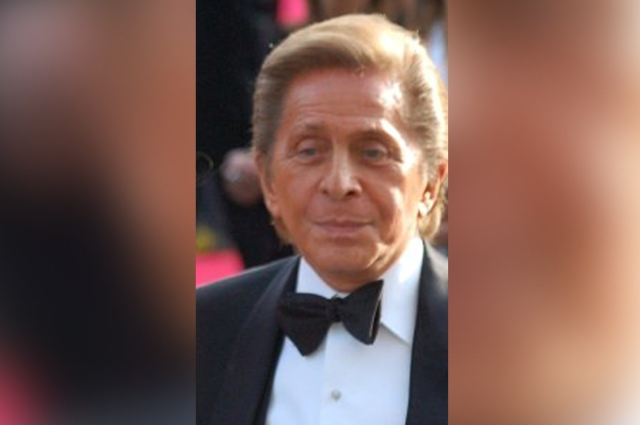
The News That Stilled the Fashion World
On January 19, 2026, the fashion world lost one of its most luminous stars. Valentino Garavani, the Italian designer whose name became synonymous with timeless glamour and red-carpet elegance, died peacefully at his home in Rome at the age of 93, surrounded by loved ones, his foundation announced. His passing marked not just the end of a remarkable life, but the close of an era in haute couture — a moment of mourning felt from Milan and Paris to New York and Hollywood.
Tributes poured in almost instantly from every corner of the fashion world. Top designers, editors and industry insiders honoured him as one of the last great couturiers, a master of beauty who helped define what luxury means in the modern age. Italian leaders called him an “undisputed master of style and elegance,” underscoring how his influence reached far beyond runway trends to become a symbol of Italian cultural pride. Icons of film and fashion took to social platforms with emotional remembrances, many echoing a common sentiment: Valentino did not just create clothes — he made women feel unforgettable.
Valentino’s name was more than a brand; it was a promise of refinement, romance and ritual — a reminder that fashion can be both an art and a language of aspiration. For decades, his signature gowns — often in the deep scarlet known simply as Valentino red — draped royalty, Hollywood royalty and global elites alike, reinforcing his reputation as the go-to designer for life’s most celebrated moments.
As the world paused to remember him, the question on every mind was not just who he was, but what it means to live and leave a legacy in beauty. To answer that, we must begin at the beginning…
From Voghera to Paris: The Making of a Couturier
Valentino Clemente Ludovico Garavani was born on May 11, 1932, in the small town of Voghera, in Italy’s Lombardy region — a place far removed from the glittering capitals of style he would one day dominate. His family was comfortably middle class, and though fashion was not part of their professional world, beauty and presentation fascinated young Valentino early on. As a child, he was drawn not to sports or machinery but to the spectacle of elegance. He later recalled being mesmerised by cinema, especially the polished glamour of Hollywood actresses whose gowns shimmered under studio lights. Those images imprinted on him a lifelong belief: clothing could transform a woman into something almost mythic.
While other boys his age were urged toward practical careers, Valentino showed an unusual clarity about his ambitions. He began studying design as a teenager in Milan, but Italy, still rebuilding after World War II, did not yet offer the kind of haute couture environment he craved. Paris — the undisputed capital of fashion — called to him. In the late 1940s, still in his teens, he made the bold decision to move there, a step that would shape every aspect of his aesthetic future.
In Paris, Valentino enrolled at the École des Beaux-Arts and later at the prestigious École de la Chambre Syndicale de la Couture Parisienne, the training ground of France’s greatest couture houses. There, he absorbed not only technical skills but also the discipline and hierarchy of haute couture — a world where precision, patience, and perfection were non-negotiable. Students were trained to think of garments not as seasonal commodities but as works of art, constructed with architectural care and finished by hand.
His formal education soon gave way to practical immersion. Valentino apprenticed with Jean Dessès, known for his ethereal, draped evening gowns worn by European aristocracy. From Dessès, he learned fluidity, proportion, and the art of dressing the female body in a way that suggested movement even at rest. He later worked with Guy Laroche, where he gained exposure to a more modern, streamlined approach to couture — an experience that subtly broadened his design vocabulary.
These Paris years were decisive. They instilled in Valentino a reverence for craftsmanship that would remain central to his identity long after fashion shifted toward speed and commercialism. He learned to value hand-finished seams, balanced silhouettes, and the emotional power of colour and fabric. Most importantly, Paris gave him confidence that elegance could be both timeless and contemporary — a philosophy that would define the House of Valentino decades later.
By the time he returned to Italy in the late 1950s, Valentino was no longer just a talented young designer. He was a couturier shaped by the highest traditions of French fashion, carrying with him the tools — and the vision — to build an empire rooted in beauty.
Rome, 1960: The Birth of the House of Valentino
When Valentino Garavani returned to Italy in the late 1950s, he carried with him the polish of Parisian couture and the ambition to build something distinctly his own. Rome — elegant, cinematic, and alive with postwar optimism — became the stage for his vision. In 1960, he opened his first atelier on Via Condotti, one of the city’s most prestigious streets, steps away from the Spanish Steps and at the heart of Italy’s emerging luxury scene. It was a bold move for a young designer with refined taste but limited financial backing.
Around this time, Valentino met Giancarlo Giammetti, a young architecture student who would become both his life partner and the business force behind the brand. Where Valentino was instinctive, aesthetic, and emotionally driven, Giammetti was pragmatic, strategic, and financially astute. Their partnership would prove to be one of the most important creative-business alliances in fashion history. Giammetti soon joined the fledgling house, helping to stabilise operations and shape a long-term vision while Valentino focused entirely on design.
The early years, however, were far from glamorous. Couture required expensive fabrics, skilled seamstresses, and time-intensive craftsmanship — costs that mounted quickly. Valentino’s refined Parisian style did not immediately translate into commercial success in Italy, where the fashion industry was still developing its global identity. At one point, the house reportedly faced serious financial strain, and closure seemed possible. It was Giammetti’s intervention — securing investors and reorganising the business — that kept the atelier alive.
The turning point came in 1962, when Valentino presented a collection in Florence, then Italy’s main fashion showcase city before Milan rose to dominance. The show was a revelation. His designs — elegant, romantic, impeccably constructed — stood apart from the more experimental or sporty looks of the time. Flowing gowns in luminous fabrics and dramatic shades of red captivated buyers and the press alike. Almost overnight, Valentino became a name to watch.
From there, his clientele expanded rapidly. Rome in the early 1960s was at the height of the La Dolce Vita era — a glamorous period fueled by cinema, aristocracy, and international jet-set culture. Hollywood productions were being filmed at Cinecittà Studios, bringing stars like Elizabeth Taylor and Audrey Hepburn to the city. European princesses, socialites, and wealthy Americans travelled to Rome seeking couture that combined Parisian refinement with Italian warmth. Valentino’s salon became a destination.
The House of Valentino was no longer just a small Roman atelier; it was becoming a symbol of a new Italian luxury — one rooted in craftsmanship, romance, and cinematic grandeur. Against the glittering backdrop of Rome’s golden age, Valentino had found not only his audience but his destiny.
The Signature Style: Romance, Red, and Timeless Glamour
Valentino Garavani did not simply design dresses — he designed an ideal. In an industry often driven by reinvention and rebellion, his work stood apart for its unwavering devotion to beauty, romance, and emotional impact. While fashion shifted through decades of minimalism, street influence, and conceptual experimentation, Valentino remained loyal to a vision rooted in classic femininity and old-world glamour. That consistency became his signature.
At the heart of that signature was a colour now inseparable from his name: Valentino Red. The shade, a vivid, warm scarlet, became his visual calling card. Valentino often traced his fascination with red back to his youth, recalling a moment at the Barcelona opera house when he saw women in striking red gowns and was overwhelmed by their presence. To him, red was not loud — it was powerful, romantic, and timeless. Over the decades, he refined the tone into a precise hue that flattered a wide range of skin tones and commanded attention without vulgarity. A woman in Valentino red did not disappear in a room; she arrived.
Beyond colour, Valentino developed a vocabulary of design codes that made his work instantly recognisable. His silhouettes flowed rather than clung, often skimming the body in long, uninterrupted lines that created elegance in motion. He favoured chiffon, silk, satin, and lace — fabrics that moved with air and light. Bows, draping, delicate ruffles, and intricate embroidery appeared frequently, not as decoration for its own sake, but as tools to enhance softness and grace. Even his most elaborate gowns maintained a sense of balance; nothing felt excessive, everything served harmony.
Central to Valentino’s approach was a simple philosophy: a woman should feel beautiful, not trendy. He resisted the idea that fashion had to shock or provoke. Instead, he believed clothing should elevate the wearer, allowing her personality and presence to shine. This belief set him apart, especially from designers who emerged later with more austere aesthetics. When Giorgio Armani introduced a new kind of power dressing built on tailoring and neutral tones, it reflected a modern, streamlined woman. Valentino, by contrast, dressed the woman who embraced romance, who wanted fluid movement, softness, and visual poetry. Both visions were influential, but Valentino’s remained rooted in couture tradition rather than modern minimalism.
His designs also possessed a rare photographic quality. Valentino understood how fabric reacted to light, how a skirt moved on a staircase, how a neckline framed the face. Long before the era of Instagram and digital amplification, his gowns were dominating magazine spreads and red carpets because they translated beautifully into images. Rich colour, dimensional texture, and elegant structure gave photographers something to capture — drama without distortion. This instinct made him a favourite for premieres, galas, and historic public moments.
Emotionally, Valentino’s clothes offered a fantasy grounded in refinement. They evoked another era — one of grand entrances, candlelit ballrooms, and cinematic love stories. Yet they never felt like a costume. His genius lay in balancing nostalgia with relevance, ensuring that a gown could feel both timeless and perfectly suited to its moment. Women who wore Valentino often spoke of feeling transformed — taller, more graceful, more assured.
As fashion industrialised and ready-to-wear accelerated production cycles, Valentino remained one of the staunch defenders of haute couture craftsmanship. He preserved the rituals of hand-finishing, custom fittings, and artisanal embroidery at a time when many houses shifted focus to mass luxury. For him, couture was not nostalgia; it was the highest form of fashion expression. Each garment carried the invisible labour of skilled hands, a quiet luxury that could not be replicated by speed.
In the end, what made Valentino unforgettable was not just a colour or a silhouette, but a worldview: that elegance is enduring, that beauty is powerful, and that fashion, at its best, should make the wearer feel like the most luminous version of herself.
Dressing the World’s Most Famous Women
Valentino Garavani’s influence on fashion cannot be measured only in ateliers or runways — it lives in some of the most photographed, remembered, and emotionally charged public appearances of the last half-century. Long before social media turned celebrity style into instant global content, Valentino understood the power of visibility. He dressed women whose lives unfolded in front of cameras, and in doing so, he helped define what modern glamour looked like.
One of his earliest bridges to Hollywood came through Elizabeth Taylor, who encountered Valentino’s designs while filming Cleopatra in Rome in the early 1960s. At a time when American actresses often relied on French couture, Taylor’s embrace of Valentino signalled the arrival of a new Italian force in high fashion. She wore his gowns both on and off the red carpet, drawn to their dramatic colour and romantic silhouettes. Her star power helped introduce Valentino to an international audience and established his reputation as a designer who understood how to dress a woman meant to be seen.
Perhaps no moment cemented his status more powerfully than Jacqueline Kennedy’s wedding to Aristotle Onassis in 1968. For the ceremony, the former First Lady chose a refined, high-necked lace gown designed by Valentino. The choice was significant: Kennedy, already one of the most influential style figures in the world, placed her trust in an Italian couturier at a deeply personal, globally scrutinised moment. Images of the wedding travelled worldwide, and Valentino’s name became permanently linked with elegance at the highest social level.
Valentino’s relationship with Princess Diana further expanded his royal association. Diana, navigating the pressures of global attention, often selected Valentino for state visits and formal engagements. His gowns offered her softness and sophistication without rigidity, aligning perfectly with her evolving public image — graceful yet approachable. The partnership reflected mutual understanding: Valentino knew how to enhance presence without overwhelming personality, and Diana’s warmth brought his designs to life.
Decades later, Valentino would again claim a place in fashion history through the red carpet. At the 2001 Academy Awards, Julia Roberts accepted her Oscar for Erin Brockovich wearing a vintage black-and-white Valentino gown from his 1992 couture collection. The dress — elegant, structured, and dramatically simple — stood out in a sea of trend-driven looks. That moment did more than revive archival fashion; it underscored Valentino’s timelessness. Nearly ten years after its creation, the gown still felt modern, proving his designs were not bound to a single season.
Beyond these headline moments, Valentino dressed queens, princesses, First Ladies, and society figures across Europe, the Middle East, and the Americas. His clientele included women who needed wardrobe diplomacy — clothing that communicated respect, authority, and refinement on the global stage. Valentino’s aesthetic, free from gimmicks, translated across cultures and political contexts. A Valentino gown could appear at a royal gala, a state dinner, or a film premiere with equal appropriateness.
In an era before digital virality, the red carpet functioned as international marketing, and Valentino mastered it instinctively. Each appearance reinforced his brand identity: romance, confidence, and enduring glamour. He understood that a dress worn at the right moment could travel further than any advertisement.
Through these women and their public lives, Valentino did more than dress celebrities — he helped shape the visual language of modern fame. He proved that fashion could frame history’s most-watched moments, turning fabric and thread into symbols of grace under the spotlight.
Building a Fashion Empire: Business Behind the Beauty
While Valentino Garavani is remembered for romance and red-carpet grandeur, the survival and growth of his brand depended just as much on sharp business evolution as on artistic vision. Behind the flowing chiffon and hand-embroidered gowns stood a company that had to adapt to changing markets, new consumers, and the realities of global luxury commerce.
In the late 1960s and 1970s, Valentino began expanding beyond the rarefied world of haute couture into ready-to-wear, recognising that the future of luxury lay in reaching a broader — though still elite — clientele. His ready-to-wear collections retained the elegance of couture but were produced in larger quantities and sold internationally. This move allowed the house to scale while preserving its image of refinement. Soon after, the brand diversified into menswear, accessories, and eventually fragrance and licensing, categories that provided more stable revenue streams than couture alone. These extensions helped transform Valentino from a salon-based couture house into a multifaceted luxury brand.
By the 1970s through the 1990s, Valentino had become a global symbol of Italian luxury. Boutiques opened in major cities across Europe, the United States, the Middle East, and Asia. The brand’s growth paralleled the rise of Italy as a fashion powerhouse, alongside houses like Armani, Versace, and Ferragamo. Valentino’s success demonstrated that Italian design could rival — and in some cases surpass — French couture in prestige. His label became one of Italy’s most recognisable fashion exports, associated with craftsmanship, sensuality, and high society glamour.
However, global expansion required capital and corporate structure beyond what a traditional couture house could easily sustain. By the late 1990s, the luxury industry was rapidly consolidating, with major groups acquiring heritage brands to compete on an international scale. In 1998, Valentino and Giancarlo Giammetti sold the company for approximately $300 million. The sale marked a turning point: Valentino remained the creative figurehead for several more years, but ownership had shifted into the realm of corporate luxury strategy.
In the decades that followed, the Valentino brand changed hands more than once, reflecting broader industry trends. Eventually, it came under the control of Mayhoola for Investments, a Qatari-backed investment group, which acquired a majority stake and focused on revitalising and modernising the house. Later, French luxury conglomerate Kering purchased a significant minority stake, linking Valentino to one of the most powerful portfolios in global fashion. These ownership changes positioned the brand within an international network of resources, retail infrastructure, and digital expansion that Valentino himself had never fully navigated during his early career.
This evolution highlighted an important distinction: Valentino the man was an artist; Valentino the corporation was a global luxury enterprise. The designer’s world revolved around fittings, fabrics, and the emotional effect of a gown. The corporation’s world involved supply chains, shareholders, brand positioning, and quarterly performance. Maintaining the founder’s aesthetic legacy while meeting modern business demands became one of the house’s central challenges.
Yet even as the company grew into a billion-euro brand with hundreds of stores worldwide, its identity remained rooted in the codes Valentino established decades earlier. The empire expanded, ownership shifted, and fashion accelerated — but the promise attached to the Valentino name endured: beauty, elegance, and the quiet authority of timeless design.
Valentino and Giancarlo: A Lifelong Creative Partnership
Behind the legend of Valentino Garavani stood a quieter, steadier force: Giancarlo Giammetti, the man who would become his lifelong partner in both love and business. The two met in 1960 in Rome, introduced through mutual friends at a time when Valentino was just beginning to establish himself. Their connection was immediate, and what began as a personal relationship soon evolved into one of the most enduring creative partnerships in fashion history.
From the start, their strengths complemented each other with remarkable balance. Valentino was the visionary — instinctive, emotional, driven by colour, fabric, and the pursuit of beauty. He lived for the atelier, for fittings, for the moment a dress came alive on a woman’s body. Giammetti, by contrast, had a strategic mind. With a background in architecture and a natural aptitude for management, he understood numbers, negotiations, and long-term planning. While Valentino dreamed in silk and chiffon, Giammetti built the financial and organisational structure that allowed those dreams to reach the world.
Their division of roles was clear and rarely blurred. Valentino remained the public face and creative heart of the house; Giammetti worked behind the scenes, securing investors, managing expansion, and guiding the brand through economic challenges. During the financially precarious early years, it was Giammetti who found the support needed to keep the atelier open. Decades later, he played a central role in negotiating the sale of the company, ensuring the brand’s survival beyond its founder’s direct control.
Together, they also crafted a life steeped in beauty. They owned homes in Rome, Paris, London, New York, and Gstaad, each reflecting their shared love of art, architecture, and refined living. Their residences housed an impressive art collection, including works by major modern artists, and were known for lavish yet deeply personal entertaining. Despite the glamour, those close to them often described their relationship as grounded in loyalty and mutual respect.
In an industry famous for creative rivalries and fractured alliances, Valentino and Giancarlo’s bond endured for more than six decades. Their partnership proved that fashion history is not shaped by designers alone, but by the unseen collaborators who help transform vision into legacy.
The Farewell: Retirement of a Fashion Era (2007–2008)
By the mid-2000s, Valentino Garavani had spent nearly half a century at the pinnacle of haute couture. When he chose to step away, the moment was marked not as a routine retirement but as the closing chapter of a historic era in fashion.
In 2007, Rome became the setting for an extraordinary celebration of his 45 years in fashion. The multi-day event brought together royalty, film stars, supermodels, and longtime friends of the house. Runway presentations, gala dinners, and exhibitions paid tribute to the designer’s career, transforming the Eternal City into a living retrospective of Valentino’s work. It was both a farewell and a coronation — an acknowledgement that his influence had transcended trends and seasons.
The emotional peak came in January 2008, when Valentino presented his final haute couture collection in Paris. The show was staged with the grandeur and romance that had defined his career: models glided down the runway in ethereal gowns, many in his signature red, before gathering together in a final tableau that felt like a curtain call at the end of a grand opera. As Valentino emerged to take his bow, the audience rose in a prolonged standing ovation. Editors, buyers, and fellow designers understood they were witnessing more than the end of a career — they were saying goodbye to one of the last couturiers who had built his name in the golden age of postwar fashion.
That transition was documented in the 2008 film Valentino: The Last Emperor, directed by Matt Tyrnauer. The documentary offered rare behind-the-scenes access to Valentino’s world, from atelier fittings to lavish celebrations, capturing both the spectacle and the vulnerability of a designer confronting the end of his professional life. The title itself reflected a widely shared belief: Valentino represented a vanishing breed of fashion creator whose authority came from artistry rather than corporate branding.
His departure symbolised a broader shift in the industry. As luxury conglomerates grew and fashion accelerated, the era of the independent, personality-driven couturier began to fade. Valentino’s retirement did not mark the end of couture, but it did signal the close of a chapter when elegance, patience, and handcraft were unquestioned sovereign values.
Life After Fashion: Patron of Art, Guardian of Legacy
Retirement from the runway did not mean retreat from cultural life. After stepping down from active design, Valentino Garavani shifted his focus from creating fashion to preserving beauty in other forms. Through the Valentino Foundation, established with Giancarlo Giammetti, he dedicated himself to supporting the arts, nurturing young talent, and safeguarding cultural heritage. The foundation became a vehicle for his long-held belief that beauty — whether in fashion, painting, architecture, or performance — is a vital part of human life.
Valentino and Giammetti funded exhibitions, restoration projects, and educational initiatives, particularly in Italy, where preserving artistic history is a national responsibility as much as a cultural one. Their patronage extended beyond fashion, embracing contemporary art, photography, and classical institutions. In doing so, Valentino positioned himself not merely as a former designer but as a custodian of aesthetic tradition.
Major museums and cultural centres continued to celebrate his work through retrospectives and exhibitions, presenting his gowns as objects of design history and craftsmanship. These showcases reinforced his place within a broader artistic lineage, connecting couture to the decorative arts and emphasising the technical mastery behind his creations. His dresses, displayed on mannequins rather than models, revealed the architectural precision and handwork often overlooked in the rush of runway seasons.
Valentino also remained a visible figure at high-profile events, from art galas to film festivals, where his presence carried the quiet authority of a living legend. Impeccably dressed, softly spoken, and unmistakably elegant, he embodied the refined image long associated with Italian style. In later years, he became less a working designer and more a symbol of Italian cultural elegance, of devotion to craftsmanship, and of a time when fashion aspired not just to novelty, but to lasting beauty.
The House of Valentino After Him
After Valentino Garavani retired in 2008, the fashion house he built did not fade — it evolved. Over the years, the creative leadership passed through several notable designers who helped the brand negotiate the delicate balance between heritage and contemporary relevance. Alessandra Facchinetti briefly succeeded Valentino before a defining partnership between Maria Grazia Chiuri and Pierpaolo Piccioli, who together led the house from 2008 and helped reshape its ready-to-wear, accessories, and couture codes for a new generation of clients. Chiuri later left for Dior, and Piccioli continued as the sole creative director until 2024, bringing a more modern sensibility while respecting Valentino’s DNA of elegance and romance. In 2024, Alessandro Michele — known for his influential tenure at Gucci — took over as creative director, ushering in a fresh chapter for the maison.
Under these successive designers, the brand’s aesthetic has evolved stylistically. While the signature elements — fluid silhouettes, refined tailoring, and the symbolic Valentino red — remain part of the house’s visual vocabulary, new creative directors have expanded its expression to engage contemporary tastes, often interpreting heritage through a modern lens. This has allowed Valentino to remain relevant across different fashion eras while preserving core elements that make it recognisable.
This evolution reflects a broader trend in luxury fashion: balancing heritage with innovation. The house continues to honour the craftsmanship and emotional appeal that defined Garavani’s work, even as it adapts to digital platforms, new markets, and changing consumer preferences. The continued presence of signature codes — from romantic eveningwear to intricate details — ensures that the founder’s aesthetic influence endures.
On the business side, Valentino remains a significant global luxury player. With hundreds of stores worldwide and annual revenues in the billion-euro range, the maison sustains a robust retail and couture presence. Its ownership structure — with Mayhoola for Investments as the majority stakeholder and Kering holding a strategic minority stake — signals continued investment in growth and global expansion, underscoring that Valentino’s legacy lives on not only in design but also in commercial stature.
Legacy: Why Valentino Still Matters
Valentino Garavani’s influence did not end with his retirement — nor with his passing. It lives on every awards season, every state banquet, every moment when a woman steps onto a global stage wearing a gown meant not just to be seen, but remembered. Modern red carpet fashion, with its emphasis on drama, elegance, and visual storytelling, owes an unmistakable debt to Valentino. He helped establish the red carpet as a place for couture-level impact, long before social media amplified those images worldwide.
At a time when much of fashion accelerated toward speed and mass production, Valentino stood as a defender of couture craftsmanship. His ateliers preserved the traditions of hand embroidery, precise draping, and meticulous fittings — techniques that connect contemporary fashion to centuries of dressmaking artistry. Today, as luxury consumers increasingly value authenticity and heritage, the standards he upheld do not feel outdated, but visionary.
Few designers have shaped the emotional language of a single colour the way Valentino did with red. Valentino red became more than a shade; it became a statement of confidence, romance, and presence. Designers still return to red as a symbol of bold femininity, but it was Valentino who refined it into a signature — a hue that could command a room without shouting.
His philosophy of “dressing for beauty” stands in quiet contrast to fashion’s often trend-driven cycles. Valentino believed clothing should elevate the wearer, not compete with her. That belief now resonates in conversations about timeless wardrobes, emotional durability, and clothing designed to be treasured rather than replaced. In this sense, his vision aligns closely with modern desires for meaning and longevity in fashion.
Perhaps most importantly, Valentino defined an aspirational fantasy that never felt unattainable in spirit. His gowns suggested candlelit palaces, grand staircases, and cinematic romance — yet the emotion they conveyed was universal: the wish to feel radiant, confident, and unforgettable.
For fashion historians, Valentino represents one of the last true couture emperors — designers who ruled not through marketing strategies but through aesthetic authority and mastery of craft. His legacy endures in every atelier that still values handwork, in every designer who chooses elegance over shock, and in every unforgettable entrance made in a sweeping gown.
And always, in the mind’s eye, there remains that image he gave the world: a woman in red, luminous and timeless, walking forward with quiet, undeniable grace.
References
News Sources
- https://www.businessinsider.com
- https://www.cbsnews.com
- https://www.theguardian.com
- https://www.lofficielusa.com
- https://www.harpersbazaar.com
- https://artdogistanbul.com
- https://www.reuters.com
- https://www.legacy.com
- https://www.globalbankingandfinance.com
- https://www.businessinsider.com
- https://timesofindia.indiatimes.com
- https://apnews.com
- https://www.harpersbazaar.com
General Background & Fashion History Sources: - https://www.britannica.com
- https://en.wikipedia.org
- https://en.wikipedia.org
- https://www.vogue.com