
“Take your brother with you.”
“Do it after you get married.”
“Be careful.”
In most parts of India, power has a gender. Strength has a gender. Stories of weapons, defence, and survival are usually passed from fathers to sons. Boys are taught how to fight the world.
Girls are taught how to survive it.
Mothers teach daughters how to endure. How to adjust. How to stay safe rather than how to stand their ground. Safety becomes a skill. Silence becomes protection. And strength is quietly redefined as patience.
But not everywhere.
In parts of Jharkhand, Odisha, and Chhattisgarh, the story takes a completely different turn.
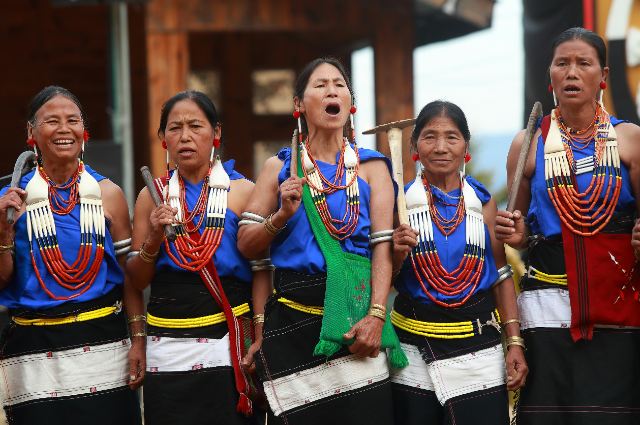
Here, tribal mothers teach their daughters how to hunt. Not as a hobby. But as a tradition that has been inherited for years.
This tradition is called Mukka Sendra, also known as Jani Shikar. And it is one of the rarest living examples of women-led martial culture in India.
Mukka Sendra is not celebrated every year. It doesn’t follow a calendar date or a harvest cycle. It happens once every twelve years.
This isn’t about entertainment or routine. It’s about reminding a generation of women why this power exists in the first place. Much like the Mahakumbh, the long wait builds meaning. When it returns, it returns heavy with history.
Celebrated primarily by the Oraon (Kurukh) tribe, Mukka Sendra is not symbolic empowerment. It is remembrance through action.
To understand why Oraon women still pick up bows, arrows, spears, and axes, you have to go back nearly five centuries.
The story begins at Rohtasgarh Fort, in present-day Bihar, around 500 years ago.
According to tribal oral history, Mughal or Turk invaders planned a calculated attack on the Oraon community. The timing was deliberate. The attack was planned for the morning after Sarhul, the spring festival.
The invaders knew what Sarhul meant. By dawn, the village would be vulnerable. The warriors would be unconscious. The fort would fall without resistance.
But the plan underestimated one thing. The women were awake.
With the men incapacitated, surrender was the expected outcome. Instead, three women stepped forward. Princess Sinagi Dai, along with Kaili Dai and Champa Dai, refused to accept defeat as fate. They gathered the women of the community and made a decision that would rewrite their history.
They dressed like men. Tied turbans and picked up whatever weapons they could find. Bows. Arrows. Spears. Axes. Then they climbed the fort walls. From a distance, the invaders saw an army.
The first attack was repelled. The second too. The women fought with such ferocity that the invaders retreated again and again, convinced that the Oraon army was fully prepared. It was only during the third assault that the truth began to surface.
A spy noticed something small but telling. The “soldiers” washed their faces in the river differently. They rubbed their foreheads in a way women did.
Some of the women were captured. To mark them as rebels, the invaders branded their foreheads with three dots in a row. What was meant to be humiliation became a legacy. The marks were never erased. Instead, they were remembered.
Generations later, those three dots still appear as tattoos on the foreheads of Oraon women. Not as scars, but as symbols. Three battles. Three reminders that survival once depended on women who refused to wait for rescue.
Mukka Sendra was born from that moment.
When the ritual returns every twelve years, it does not recreate violence for spectacle. It recreates memory. Women take over public space. They carry weapons not to threaten, but to remember what they once protected. Men stay home, and roles get reversed briefly but deliberately.
This is not a performance of equality. It is proof that equality once existed here, in practice, long before language tried to define it.
In these villages, daughters are not taught that strength belongs elsewhere. They grow up knowing that history remembers women who stood at the walls when everyone else was expected to fall asleep.
For Oraon women, the hunt is not about killing. It is about memory, mobility, and control over space. When women march from village to village in a disciplined relay, weapons in hand, they are doing something deeply political. They are occupying public roads. They are being loud. They are being seen. And they are doing it without apology.
In modern times, the ritual has adapted. To prevent harm to wildlife and avoid conflict, villages often set aside animals for symbolic hunting. The act matters more than the outcome. What must remain unchanged is the transfer of power.
Older women teach younger girls how to hold weapons, how to walk in formation, and how to move as a unit. Knowledge passes from mother to daughter, not as fear, but as confidence.
Mukka Sendra offers a radically different idea. Safety is not something you wait for. It is something you are trained for.
This tradition feels uncomfortable to many. It challenges the idea that women’s power must be soft, symbolic, or silent. It reminds us that long before laws, hashtags, and movements, women were already defending land, people, and dignity.
Mukka Sendra is not a story of the past. It serves as a reminder to every woman that real power has been in her hands for ages.
References: