
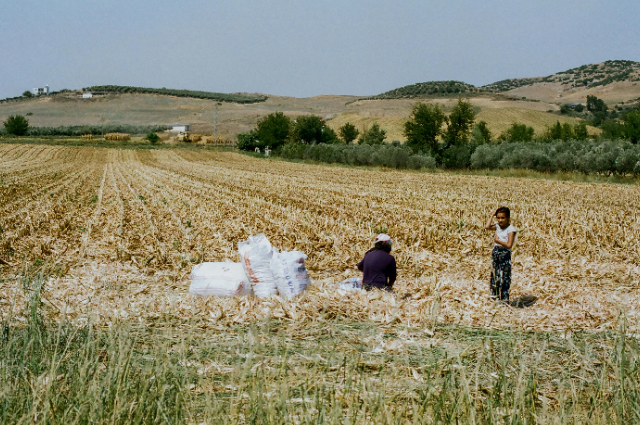
Farmer suicides in India are not just a statistic. They are a slow-burning humanitarian emergency unfolding quietly in villages, fields, and farmhouses across the country. As of January 2026, this crisis remains one of the most painful and unresolved realities of India’s agricultural landscape. Behind every number is a family destabilised, a livelihood erased, and a community pushed closer to the edge.
According to the latest National Crime Records Bureau (NCRB) data for 2023–2024, an estimated 10,000 to 11,000 individuals from the agricultural sector die by suicide every year. This includes both land-owning farmers and agricultural labourers. Put simply, that is roughly one life lost every hour. These are not isolated tragedies. They are patterns, repeating and normalised by their frequency.
What makes this crisis more disturbing is not only its scale, but its persistence. Decades of policies, schemes, relief packages, and political promises have failed to address the structural fragility of rural livelihoods. Farming in India today is not just hard work. It is economic risk management without safety nets.
The Geography of Distress:
The data reveals a clear concentration of agrarian distress in specific regions. These are not random clusters. They are long-standing crisis zones shaped by drought, fragile soil conditions, unstable markets, and weak rural infrastructure.
In 2023, the NCRB reported 10,786 suicides within the farming sector, accounting for approximately 6.3% of all suicides in India. While this percentage may appear small in national statistics, its impact on rural communities is devastating. In villages, a single suicide affects multiple families, disrupts livelihoods, and deepens collective fear and uncertainty.
Maharashtra: The Epicentre
Maharashtra consistently reports the highest number of farmer suicides, often contributing over 35% of the national total. Regions such as Vidarbha and Marathwada have become symbolic of agrarian distress. These areas face chronic drought, poor irrigation infrastructure, repeated crop failures, and heavy dependence on credit.
In many villages, debt has become intergenerational. Families inherit loans, not land security. Farming households operate in a cycle where borrowing is not a choice, but a necessity for survival.
Karnataka: Climate and Credit Pressure
Karnataka follows closely, with high suicide rates in drought-prone districts. Unpredictable rainfall patterns, groundwater depletion, and rising cultivation costs have created a fragile
agricultural environment. Farmers often invest heavily in inputs, only to lose entire seasons due to failed monsoons or extreme weather events.
Andhra Pradesh and Telangana: Market Dependency
The cotton-growing belts of Andhra Pradesh and Telangana face intense market volatility. Farmers in these regions depend on commercial crops that are deeply tied to global price fluctuations. When international prices fall, local incomes collapse. Farmers are left with loans they cannot repay and crops that cannot sustain them.
A Dangerous Shift: The Rise of Agricultural Labourer Suicides
One of the most alarming recent trends is the rise in suicides among agricultural labourers. Today, they account for over 55% of farming-sector suicides. These are people who do not own land. They survive on daily wages, seasonal work, and unstable employment.
This shift reflects a deeper structural failure. Land ownership no longer guarantees safety, and landlessness now represents extreme vulnerability. Agricultural labourers exist at the edge of survival, with no asset security, no buffers, and minimal access to government support systems.
Root Causes of the Crisis:
Experts agree that farmer suicides are not caused by a single factor. They result from a chain reaction of pressures that build over time. Each stressor compounds the next, until collapse feels unavoidable.
Indebtedness: The Core of the Crisis
Debt is the foundation of agrarian distress. Farmers often rely on informal moneylenders because institutional credit systems are inaccessible or slow. These informal loans carry high interest rates and harsh repayment conditions.
When a crop fails, farmers are unable to repay. Interest compounds. New loans are taken to repay old ones. What begins as seasonal borrowing turns into permanent indebtedness. Families remain trapped in cycles where repayment becomes mathematically impossible.
Debt is not just financial. It is psychological. It creates constant fear, social humiliation, and loss of dignity. Public shame and pressure from creditors push many farmers into isolation and despair.
Crop Failure and Climate Instability
Climate change has transformed farming into high-risk survival work. Erratic monsoons, unseasonal rains, heatwaves, droughts, and pest infestations now define the agricultural calendar.
A single extreme weather event can destroy an entire year’s income. In cotton-growing regions, pests like pink bollworm have wiped out livelihoods in days. Climate uncertainty has made farming unpredictable and uncontrollable.
Rising Input Costs
The cost of cultivation continues to rise. Seeds, fertilisers, pesticides, diesel, electricity, irrigation, and labour expenses have increased sharply. At the same time, crop prices have not risen at the same pace.
This creates shrinking profit margins. Even successful harvests may not generate enough income to cover costs, repay loans, and support families. Farming becomes a break-even struggle rather than a sustainable livelihood.
Market Volatility and Price Crashes
Farmers are increasingly exposed to global commodity markets. Price fluctuations in crops like cotton, soybean, and sugarcane directly impact village incomes.
When prices crash, farmers are left unable to recover their investments. Those who borrowed money based on expected prices face instant financial collapse. Market dependency has turned farmers into participants in an economy they do not control.
Social and Mental Health Pressures
Financial stress is amplified by social obligations. Medical emergencies, education expenses, weddings, and family responsibilities increase pressure. Failure is not just economic. It is social.
Rural mental health infrastructure is almost nonexistent. Psychological support systems are rare. Emotional distress remains stigmatised. Farmers suffer in silence, isolated within their communities.
Government and Policy Responses:
Over the years, the Indian government has introduced multiple schemes, reforms, and emergency interventions to address agrarian distress. On paper, these policies appear comprehensive. In reality, they function more as temporary stabilisers than long-term solutions. They reduce immediate pressure but fail to create lasting economic security for farming communities.
PM-KISAN: Symbolic Support, Limited Impact
The Pradhan Mantri Kisan Samman Nidhi (PM-KISAN) scheme provides ₹6,000 per year to farmer families as direct income support. While this initiative acknowledges income instability, the amount itself highlights the gap between policy intention and ground reality.
For most farmers, ₹6,000 annually does not cover even a fraction of cultivation costs. It may pay for seeds, or a portion of fertiliser, or household groceries for a few weeks. It does not address debt, crop failure, medical expenses, or market losses.
PM-KISAN functions more as psychological reassurance than financial protection. It offers presence, not protection.
PM Fasal Bima Yojana (PMFBY): Insurance Without Accessibility
The crop insurance scheme was designed to act as a financial shield against natural calamities, crop loss, and climate shocks. In theory, it should be a stabilising force in a high-risk agricultural environment.
In practice, farmers face delayed claim settlements, complex paperwork, low awareness, and limited transparency in loss assessments. Many farmers either do not receive compensation on time or receive amounts that do not reflect actual losses.
As a result, insurance fails to restore trust. Instead of being a safety net, it becomes another uncertain process in an already uncertain system.
Loan Waivers: Emergency Relief, Structural Silence
Loan waivers are frequently announced by state governments during periods of acute distress. They provide immediate relief to indebted farmers and temporarily ease financial pressure.
However, loan waivers do not change income instability, cultivation risk, or market volatility. They reset debt without fixing the conditions that create it.
This creates a dangerous cycle. Farmers return to borrowing because the system still requires credit for survival. Waivers become episodic relief, not systemic reform.
Minimum Support Price (MSP): Protection With Limited Reach
MSP increases aim to ensure farmers receive at least a 50% margin over production costs. On paper, this creates price security.
On the ground, many farmers cannot access procurement systems. Smallholders, marginal farmers, and agricultural labourers often sell through private traders and middlemen who operate outside regulated markets.
As a result, MSP becomes a policy promise rather than an economic guarantee. What’s Missing:
What rural India lacks is not schemes, but stability.
There is no integrated model that links climate resilience, market protection, mental health support, income security, and debt management into one coherent framework.
Policies respond to symptoms, but they do not redesign the system. Relief arrives after collapse, not before risk.
Until policy shifts from crisis management to livelihood design, farming will remain structurally fragile.
Reference:
- https://ncrb.gov.in
- https://timesofindia.indiatimes.com
- https://en.wikipedia.org
- https://www.nature.com