
I grew up seeing yoga as something elders did on the terrace at sunrise. Turmeric was what my mother added to milk when someone in the family caught a cold. At weddings, we wore handloom sarees without a second thought about where they came from. Bindis, kajal, juttis, copper bottles, oil hair massages, these weren’t “trends”. They were just life.
Somewhere along the way, Indian culture crossed borders without a passport. And when it returned, it came back rebranded, renamed, and repackaged. Yoga became a billion-dollar wellness industry. Turmeric turned into a “golden latte”. Ayurvedic oils became “ancient self-care rituals. Were handloom prints suddenly “boho” or “ethnic chic”?
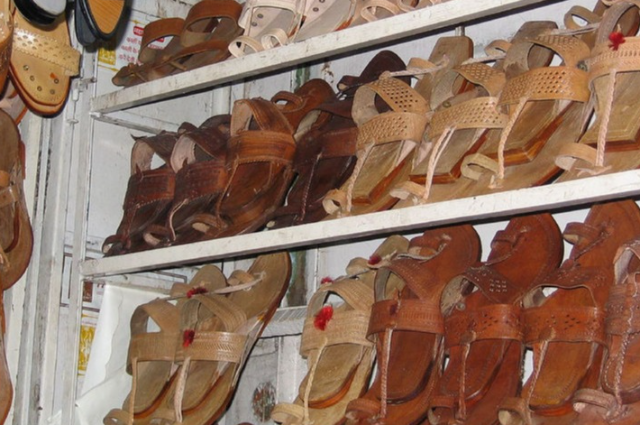
For a long time, these rebrands felt harmless. Flattering, even. A sign that the world was finally paying attention. Until the credits started blurring. And that’s where the story of the Kolhapuri chappal comes in. A simple leather sandal, shaped by generations of artisans in Maharashtra, worn by farmers, workers, and many times by Indian brides. No logos, no luxury tags, pure skill, tradition, and identity stitched into every pair. Until one day, it showed up on international runways and foreign brand catalogues.
In June 2025, during Milan Fashion Week, luxury Italian brand Prada introduced a high-end line of leather sandals. The design was unmistakably familiar. Yet they were presented as generic “leather sandals”, with no acknowledgement of their Indian roots or the communities that have made them for centuries.
And that’s when admiration quietly crossed into appropriation. The backlash was immediate. Indian artisans, designers, historians, and everyday consumers called it out for what it was: erasure.
Social media was filled with side-by-side comparisons of traditional Kolhapuri chappals and Prada’s runway version. The similarities weren’t subtle. Same flat sole. Same toe loop. Same hand-crafted leather aesthetic. The only real difference? The price tag and the absence of credit.
Indian artisans pointed out the irony. The same Kolhapuri chappals that struggle for fair pricing at home were suddenly worth thousands when validated by a European fashion house. A craft once dismissed as “local” or “unpolished” was now “global” because it walked a Milan runway.
As the controversy grew, Prada issued a statement saying it acknowledged the sandals' origins and that it was open to a "dialogue for meaningful exchange with local Indian artisans".
Prada told the BBC that it held a "successful meeting" with the Maharashtra Chamber of Commerce, Industry & Agriculture, a prominent industry trade group.
The statement also indicates that Prada may potentially collaborate in future with some manufacturers of Kolhapuri footwear.
Then, after much backlash from media interest, a Public Interest Litigation was fi led in the Bombay High Court that included a number of other laws, including the Geographical Indications of Goods (Registration and Protection) Act, 1999.
Not only Prada, just two weeks ago, Dior was also criticised after its highly-anticipated Paris collection featured a gold and ivory houndstooth coat, which many pointed out was crafted with mukaish work, a centuries-old metal embroidery technique from northern India. The collection did not mention the roots of the craft or India at all.
The stunning gold and ivory coat with a sharp houndstooth pattern caught everyone's attention. Not just the coat, the price too was jaw-dropping, $200,000 or INR₹1.67 crore INR.
The outrage wasn’t really about Prada or Dior alone. They were just the most visible names in a much older pattern.
This isn’t a cultural exchange. Cultural exchange acknowledges both sides, the origin, the people, and the context. What we’re seeing instead is extraction. And it isn’t limited to fashion.
This isn’t a cultural exchange. Cultural exchange acknowledges both sides. This extraction is not confined only to the cultural heritage of India.
My Indian heart genuinely cried when I saw a US luxury brand selling
Vimal Jola for ₹4,100. Something that we Indians see in pan shops or retail stores.
The pattern is painfully familiar. Indian knowledge becomes valuable only after it’s filtered through a Western lens. Only after it’s renamed. Only after it’s priced high enough to feel “exclusive”.
And here’s the uncomfortable part. This doesn’t happen only because Western brands take. It also happens because we let go too easily.
I’m afraid more of our age-old arts will someday be called theirs. Who knows, maybe one day a luxury brand will send its models down a runway draped in Banarasi silk, calling it “heritage-inspired fabric” or “vintage woven couture”, with no mention of Varanasi, the weavers, or the centuries of skill behind it.
Or perhaps the beautifully handwoven Paithanis of Maharashtra will be next, admired for their colours and craftsmanship, but stripped of their name, their makers, and their story.
This conversation isn’t about rejecting global appreciation. Indian culture has always travelled. It has always influenced. That isn’t the problem.
The problem begins when appreciation forgets its source. When craftsmanship is separated from its makers. When tradition is celebrated, but the people who carried it for centuries are left behind.
What needs to change isn’t the world’s curiosity. It’s our response to it. Protecting our heritage means valuing it at home, supporting the artisans behind it, demanding credit where it’s due, and refusing to let our stories be told without us.
Because culture isn’t a Pinterest mood board. It’s memory, labour, lineage. And if we don’t name it, claim it, and stand by it, someone else will.
References:
- https://www.bbc.com
- https://www.khuranaandkhurana.com
- https://timesofi ndia.indiatimes.com
- https://indianexpress.com