
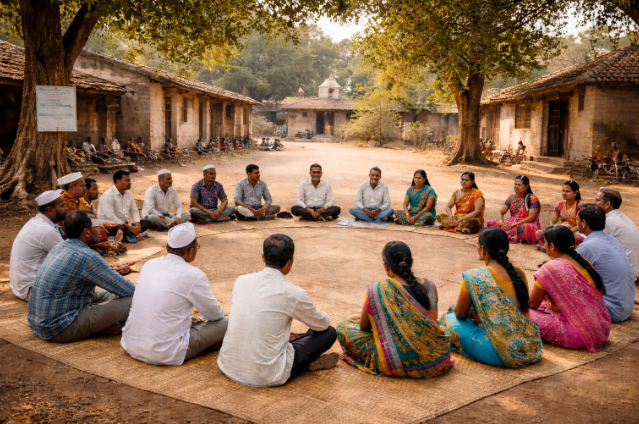
In a country where conversations around sex and sexual health still happen in whispers, one village chose to speak loudly and act decisively.
Back in 2004, Hiware Bazar, a small village in Maharashtra, introduced a rule that was radical for its time and still feels bold today: every couple must undergo HIV/AIDS testing before marriage. The rule was simple and non-negotiable. No test, no wedding.
Once an extremely backward village where alcoholism and crime were at their peak, Hiware Bazar today is a shining example of how sustainable development and change can be brought about with common sense and determination.
At a time when HIV/AIDS was wrapped in fear, misinformation, and stigma, most places preferred silence. Hiware Bazar chose clarity. The village Panchayat didn’t treat HIV as a moral issue or a subject to be tiptoed around. They treated it as what it actually is: a public health concern that needed prevention, not denial.
This wasn’t about mistrust or questioning anyone’s character. It was about protecting partners, families, and future children before a lifelong commitment began. By making testing mandatory for everyone, the village quietly dismantled the biggest barrier of all, shame. When everyone is tested, no one is singled out.
How the Decision Took Shape
The primary reason for initiating such a measure, as the village sarpanch Popatrao Pawar explained, is to save the villagers from the killer virus.
In the early 2000s, HIV/AIDS cases were rising across parts of Maharashtra, especially in rural belts where awareness was low, and testing was rare. Hiware Bazar’s leadership began noticing a worrying pattern. People were falling ill quietly. Families were affected silently. By the time symptoms showed, it was often too late to prevent further transmission within households.
Instead of reacting with fear, the village Panchayat chose to understand the problem. They consulted doctors, health workers, and government officials. What they heard was clear: early testing could save lives. Silence would not.
Mr Pawar pointed out the alarming rise of HIV cases in the state. He said many boys and girls from the village get married to people outside Hiware Bazar every year.
That understanding became the turning point. Marriage, the Panchayat decided, should begin with responsibility, honesty, and medical transparency, not silence and assumptions.
Turning an Idea Into a Rule
On 2 December 2002, the Gram Sabha passed a resolution insisting that every couple must undergo an ELISA HIV test before marriage, with the explicit goal of keeping their “model town” free of AIDS.
At the time, this went against national and state norms. The National AIDS Control Organisation (NACO), India’s main policy body on HIV, did not support mandatory testing before marriage, and even the Maharashtra government had ruled out making it compulsory statewide. But Hiware Bazar’s leaders felt the urgency was real and local, not theoretical.
The village sarpanch, Popatrao Pawar, was pivotal in steering this decision forward. He had already gained recognition for transforming Hiware Bazar—from drought and crime to prosperity—through sustainable development practices like watershed management, bans on liquor, and a broader focus on health and hygiene. Pawar explained then that their aim was straightforward: “We don’t want our children to become victims of HIV/AIDS. Prevention is always better than cure, and in the case of HIV, there isn’t any cure.”
Normalising What Was Once Taboo
By applying the rule universally, the village removed the fear of being singled out. Testing stopped being an accusation and became a routine step, just like paperwork, just like fixing a wedding date.
There were no whispered questions about why someone was being tested. No raised eyebrows. No character judgments. Everyone did it. That one decision changed the emotional weight of the process. What was once loaded with fear became administrative, and that was the point.
Families were informed early in the matchmaking process itself. The local registration office and elders made it clear: medical certificates from both the bride and groom were non-negotiable. Without them, the marriage simply would not be recognised within the village.
If a test came back positive, the response wasn’t punishment or public humiliation. Couples were guided toward medical counselling. Decisions were left to them, but they were informed decisions, not ones made in ignorance. The emphasis stayed where it belonged: health, consent, and responsibility.
The Impact on the Village
Over time, the results spoke louder than the rule itself. Hiware Bazar reported zero new HIV cases originating within the village, something almost unheard of in rural Maharashtra during that period. More importantly, awareness around sexual health improved organically. People asked questions. They stopped treating HIV as a curse and started seeing it as a medical condition.
The rule also sent a quiet but powerful message: marriage is not just a social ceremony, it’s a partnership that begins with honesty. Protecting one another isn’t optional. It’s foundational.
What makes Hiware Bazar’s approach stand out is that it didn’t wait for policy approval from above. It acted where it had control. The Panchayat didn’t challenge national guidelines out of defiance, but out of urgency. They understood their community better than any distant authority ever could.
A Big Lesson
Hiware Bazar’s story isn’t about forcing a rule onto people. It’s about removing fear through normalisation. It’s about treating health as a shared responsibility, not individual shame. And it’s about how real change often starts not in boardrooms or ministries, but in small rooms where people decide to stop looking away.
In a country where sexual health is still an uncomfortable dinner-table conversation, this village did something quietly revolutionary. It chose prevention over denial, science over superstition, and courage over comfort.
. . .
References