
What once felt like science fiction is now real. Humanoid robots are no longer experiments behind closed doors. They’re here, visible, and starting to take up real space in the world. Recently, a concert in China grabbed global attention when humanoid robots appeared as backup dancers at Chinese-American singer Wang Leehom’s concert, matching choreography, timing, and stage presence with uncanny precision. Videos flooded social media. Audiences cheered. Comment sections split between awe and unease.
China’s humanoid robots' dance performance in Chengdu awes netizens; Elon Musk calls it ‘impressive’ on X. This wasn’t a lab demonstration or a closed-door industry showcase. It was a live concert. Bright lights, loud music, human performers, and thousands of eyes watching. The robots weren’t the main act, but they weren’t hidden either. They stood beside human dancers, moving in sync, hitting beats, and doing exactly what backup dancers are meant to do: elevate the performance without stealing the spotlight.
Even Elon Musk couldn’t stop himself from tweeting “Impressive.”
Let’s understand this revolution closely.
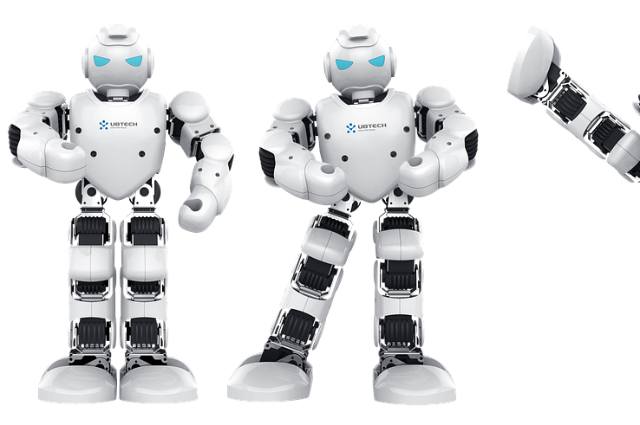
This wasn’t a gimmick or a carefully edited viral clip. According to multiple global reports, the robots that joined Wang Leehom on stage were Unitree G1 humanoid robots, a model developed by Chinese robotics firm Unitree Robotics, and they didn’t just stand there; they performed. They moved in sync with the music, matched choreography alongside human dancers, and even pulled off Webster flips in unison to the song Open Fire during the concert in Chengdu. The whole sequence was broadcast live, and within hours, clips were everywhere online.
The concert wasn’t an isolated stunt, either. Chinese robotics firms have been steadily pushing the boundaries of what humanoid robots can do in public spaces. Earlier in 2025, a dozen or more Unitree humanoid robots performed a traditional Yangge folk dance with human performers at China’s Spring Festival Gala, a show watched by hundreds of millions.
Are we even ready for this?
That question isn’t about whether the technology works. Clearly, it does. The robots didn’t glitch, freeze, or break character. They didn’t need a retake. They showed up, performed, and exited like any other professional on stage. The real question is whether we, as a society, are prepared for machines stepping into spaces we once believed were purely human. Entertainment was supposed to be safe territory.
Art is something where we feel the emotions through music, words, expressions, and handing this to a machine that is effortlessly replacing humans in that too.
It also quietly changes how we defi ne skill. Backup dancers train for years. Timing, stamina, coordination, and spatial awareness all take effort, discipline, and repetition. Watching robots execute the same routines flawlessly forces an uncomfortable comparison.
What This Means for the Future of Entertainment
We’re standing at the intersection of art and automation, and it’s messy. Human creativity is no longer insulated from technological competition.
The robot dancers have sparked fresh debate about how technology may reshape entertainment. If robots can dance on stage today, could they soon act in films, perform in theme parks, or appear regularly in live shows? Experts suggest robots could take on background roles requiring precision, repetition, and physical stamina, while humans continue to lead creative and emotional storytelling.
The implications go beyond just the stage. Think about choreography, rehearsals, and production schedules. Human dancers need rest, time off, and recovery from injuries. Robots don’t. A show that would normally require weeks of rehearsals can now be executed repeatedly with perfect timing and zero fatigue. From a production perspective, that’s revolutionary. But it also raises uncomfortable questions about labour, opportunity, and the value of human effort in creative fields.
And it’s not just about performance. Audience perception is shifting, too. We cheer for robots now, we marvel at their precision, but over time, will that fascination dilute the appreciation for human skill? When a machine can execute an intricate routine flawlessly, do we begin to undervalue the years of training and discipline human performers put in?
Will our favourite artists get replaced?
That’s the uncomfortable question everyone is asking now: are human performers at risk of being replaced? This year, we saw how AI could mimic the songs our artists sang. Some were so exact that it put us in confusion, “When did they even sing this song?”
Not only music, but AI has also created images that were never clicked. Combined with AI-generated music or digital avatars, the possibilities begin to feel a little unsettling.
Some artists are experimenting, seeing this as a chance to collaborate with robots and AI to push creative boundaries. Others are watching nervously, wondering if the “soul” of performance, the spontaneity, emotion, the little imperfections that make art human, will still matter when perfection is available at the push of a button.
We’re entering a phase where technology doesn’t just assist creativity, it competes with it. The possibilities for automation are endless. The stage that once belonged solely to humans is now shared with machines that never tire, never falter, and can replicate almost anything.
The real question isn’t whether robots can perform; it’s whether we, as a society, are ready to redefine what it means to be a human artist in a world where machines can do almost anything we can, often better, and without hesitation.
. . .
References: