
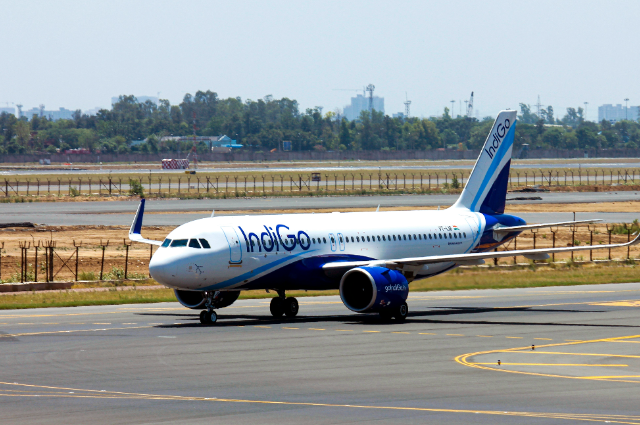
She was broke and carrying her husband’s coffin to Kolkata by air. She booked a ticket with India’s trusted airline, IndiGo. But the flight got delayed and then cancelled. And it wasn’t just her. More than 1000 flights were cancelled in a single day. This sudden collapse left thousands of passengers stranded without any answers.
IndiGo, the country’s largest airline, is now facing backlash for how carelessly the situation was handled. The mass cancellations last week have raised serious questions for the airline.
What exactly went wrong?
Let’s simplify this. Aviation runs on timing. One flight delay or cancellation hampers the progress of the others in the queue. The same thing happened with IndiGo. Fog disrupted morning departures, pilots hit mandatory duty limits, and a lack of staff worsened the delay, resulting in cancellations.
The real issue wasn’t just the weather or new rules. It was how unprepared the airline was for a crisis of this scale. Passengers weren’t told what was happening. Updates were vague, refunds were slow, alternative arrangements were unclear, and airport counters were understaffed when people needed help the most. The mismanagement hit harder than the cancellations themselves.
Why does the company fall short of staff?
Back in 2024, the government introduced the new Flight Duty Time Limitations (FDTL). Under these rules, airlines had to recruit and train enough pilots and crew to manage their schedules while ensuring mandatory rest hours.
But airlines like IndiGo, Air India, and AI Express asked for a one-year window to prepare and implement the new system by June 2025. By mid-2025, they asked for another extension, and the High Court finally pushed the deadline to November 2025.
So when November 2025 arrived, the industry had no buffer left. They had to follow the new rules, whether they were ready or not. And that’s where everything cracked. Pilots who were already stretched thin suddenly couldn’t fly because their duty hours had maxed out. IndiGo didn’t have enough trained crew to replace them, and the entire flight network collapsed like dominoes.
What were the new rules?
The FDTL norms weren’t unreasonable. They simply gave pilots more rest, something that should’ve existed long ago. The rules cut down maximum duty hours, increased mandatory rest periods, and restricted how many early-morning flights a pilot could operate back-to-back. In short, it made flying safer. But safer flying also needs more pilots. And that’s exactly what the airlines didn’t plan for.
According to aviation expert Sanjay Lazar, CEO of Avialaz Consultants, IndiGo either miscalculated or didn’t plan at all. His words were sharp: “IndiGo, despite having fewer pilots, chose to operate 900 more flights this winter, and stopped pilot recruitment six months ago.”
What is IndiGo doing to navigate the crisis?
"We do deeply apologize and understand how difficult the past few days have been for many of you. While this will not get resolved overnight, we assure you that we will do everything in our capacity to help you in the meantime and to bring our operations back to normal at the earliest," the company said in a statement.
December 5th has the highest number of cancellations. "As we are doing all that is necessary to reboot all our systems and schedules for progressive improvement starting tomorrow. Our teams are working to reinstate regular operations in alignment with the Ministry and DGCA. Short-term proactive cancellations are being made to ease operations, decongest the airports, and prepare for starting stronger tomorrow. We will ensure that all refunds for your cancellations will be processed automatically to your original mode of payment," the statement added.
But apologies alone aren’t fixing anything right now. IndiGo says it’s working with the Ministry of Civil Aviation and the DGCA to rebuild its schedule. December 5 saw the worst impact, with the highest number of cancellations.
The airline also promised automatic refunds for all cancelled flights and assured passengers that normal operations would return “as early as possible”. But the discomfort the passenger faced—sleeping on floors, missing funerals, medical appointments, and exams—can never be refunded.
Was it avoidable?
Of course it was. This wasn’t a surprise event. Airlines had a year’s notice. They asked for extensions. They got them. Yet the hiring didn’t happen, the planning didn’t happen, and the winter rush hit harder than expected.
The government set rules to make flying safer, but the responsibility to prepare for it was on the airlines. IndiGo simply didn’t do enough.
Is the damage done?
Not entirely, but the trust definitely took a hit. After Air India crashed, IndiGo was the safest and most trusted option. IndiGo will patch up its schedules, hire more crew, and eventually get operations back on track. Big airlines always recover. But passengers won’t forget how quickly everything fell apart, and how slowly the airline responded when people needed clarity the most.
This isn’t just an IndiGo story. It’s a wake-up call for the entire aviation ecosystem. Airlines have been stretching their pilots thin, adding more flights than their crew strength can support, and relying on last-minute fixes instead of long-term planning.
Are the airlines that we trust really thinking about our safety? That's the question unanswered.
. . .
References: