
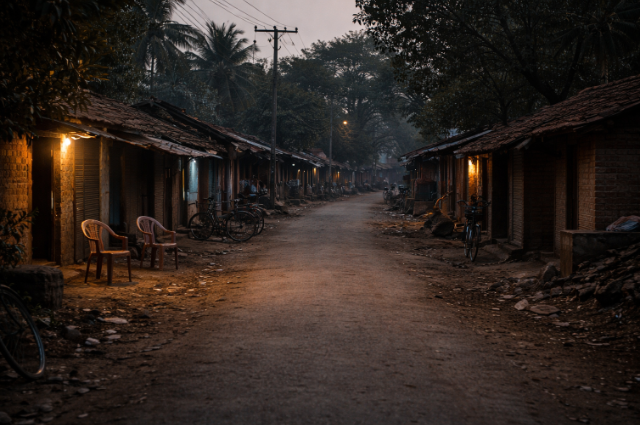
In most places, success is something people pray for. A good education, a government job, or a respected profession like a doctor or an engineer is seen as a ticket to a better life. Families feel proud, neighbors admire, and society respects you. But in some parts of western Bihar and eastern Uttar Pradesh, success can quietly become a threat. Here, being educated and financially stable does not always bring safety. Instead, it can make a man vulnerable to a frightening practice called Pakadwa Vivah, the kidnapping of grooms for forced marriage.
Pakadwa Vivah is not a rumor or an old story from the past. It is a real and painful reality that many families have lived through. In simple words, it means a man is kidnapped and forced to marry a woman against his will. This usually happens to men who are considered “valuable” in the marriage market—those with government jobs, stable incomes, or professional degrees. What should have been a reason for celebration becomes the very reason they are hunted.
The root of this problem lies in the dowry system. In these regions, dowry is not just a custom; it has turned into a heavy financial burden. The better the groom’s job, the higher the dowry demand. A man working in a government office can demand ₹20 to ₹50 lakh. Doctors and engineers are often expected to bring even more, sometimes close to ₹1 crore. For many families with daughters, these amounts are simply impossible. They do not have that kind of money, land, or savings. Marrying off a daughter can mean selling everything they own or falling into debt for life.
When families feel trapped by these demands, some take a shocking path. Instead of paying dowry, they decide to kidnap a groom. From their point of view, it feels like a cheaper option. Local gangs charge far less than the dowry amount, and the family convinces itself that this is the only way to secure their daughter’s future. Over time, this thinking has created an entire illegal system where grooms are treated like goods that can be captured and claimed.
These kidnappings are not random. The victims are chosen carefully. Information spreads quickly in villages—who got a government job, who just cleared an exam, who is still unmarried. Sometimes, even relatives or acquaintances help in identifying targets. The kidnapping often begins with trust. The groom may be invited by a friend, neighbor, or distant relative for a visit, a celebration, or a meeting. He goes without suspicion, believing he is among his own people. That is when the trap closes.
Once captured, the experience becomes terrifying. The groom is taken to an unknown place, surrounded by men carrying weapons. Many are beaten, threatened, and kept without food or rest. The goal is to break their resistance completely. Soon after, they are forced into wedding clothes. The marriage ceremony happens quickly, sometimes the very same day. On the surface, it looks like a traditional wedding with rituals, priests, and relatives. But behind that scene is pure fear.
Videos that have surfaced over the years show the true horror of Pakadwa Vivah. Grooms can be seen crying, shaking, begging to be released, while guns are pointed at them. They are forced to perform rituals, apply sindoor on the bride’s forehead, and sit through the ceremony while their freedom is taken away. What is supposed to be a sacred moment becomes one of the most traumatic days of their lives.
One might think that such marriages would end immediately once the groom gets a chance to escape. But reality is more complicated. Many of these marriages continue. This does not mean the groom accepts what happened easily. Instead, social pressure slowly traps him again, this time emotionally. In conservative societies, marriage is seen as final, especially for women. If a marriage breaks up, the woman often faces blame, shame, and rejection. Families remind the groom again and again that leaving would “destroy the girl’s life.”
The groom is made to feel responsible for a situation he never chose. He is told that society will not forgive him, that the bride will never remarry, that her future will be ruined. Over time, guilt replaces anger. Fear turns into silence. Some grooms convince themselves to adjust, to make peace with what happened. Children are born, families merge, and the forced marriage slowly becomes a “normal” family on the outside, even though it started with violence and trauma.
Psychologically, this is extremely damaging. Many victims live with deep emotional scars, anxiety, and helplessness. Some experts compare this adjustment to a survival response, where the victim accepts the situation because resisting feels impossible. The system benefits from this silence, as fewer cases come out in the open.
For many years, the law did very little to help. Police complaints were rare, and when they were filed, they were often ignored or delayed. Some officials treated these cases as family disputes rather than serious crimes. Since wedding rituals were performed, courts sometimes hesitated to interfere, even if the marriage happened under force. This legal confusion made it even harder for victims to escape.
A major change came in November 2023, when the Patna High Court gave an important judgment. The court clearly said that a marriage done under force, threat, or fear is not a valid marriage. Consent is necessary, and without it, rituals have no meaning in the eyes of the law. This decision gave kidnapped grooms a legal way out for the first time. It officially recognized Pakadwa Vivah as a violation of personal freedom, not a social adjustment.
However, while the law has changed, society has not changed overnight. Many victims still fear backlash from the community. Social pressure, family honor, and fear of violence continue to stop people from seeking justice. At the same time, it is important to remember that brides in these marriages are also victims of the same broken system. They, too, are pushed into marriages without real choice, trapped by poverty and social expectations.
Pakadwa Vivah shows how deeply the dowry system has damaged society. When marriage becomes a business deal, and success becomes a price tag, human dignity is lost. This practice is not just about crime; it is about inequality, poverty, and outdated thinking. Ending it requires more than court orders. It needs strict action against dowry, education, awareness, and the courage to question harmful traditions.
Until that happens, success will continue to carry fear for some. In parts of Bihar, being educated, employed, and stable can still be risky. Pakadwa Vivah reminds us that real progress is not just about jobs and degrees—it is about safety, choice, and respect for human freedom. Only when marriage is based on consent and equality will success stop being a danger and become what it truly should be: a blessing.
. . .
REFERENCES: