
There’s a kind of silence that feels healing, not empty.
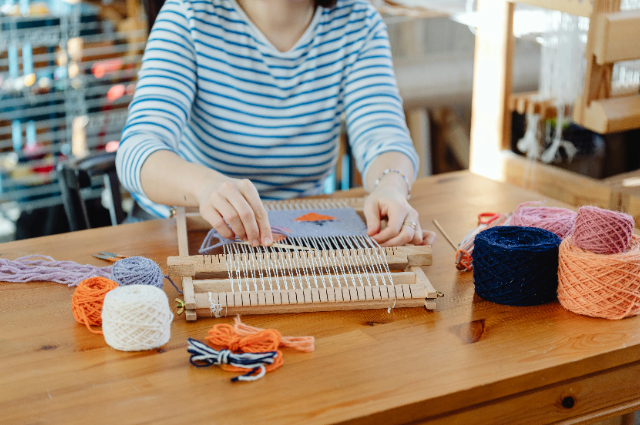
The kind that enters your room when you put your phone face down, pull out a basket of yarn, and start looping your first stitch after a day packed with pings and pressure.
For many urban women—creators, corporate workers, freelancers, students—this silence has become a new kind of survival. Our daily lives feel like a race between deadlines, algorithms, reels, and “You’re missing out” reminders. And somewhere in this noise, we forgot the simple joy of making something with our hands.
Yet slowly, quietly, a shift has begun.
Crochet hooks are trending again. Tufting workshops are booked out on weekends. The very hobbies we associated with our grandmothers are becoming the soft space modern women escape into.
It’s not nostalgia.
It’s therapy, disguised as craft.
Why We’re All Craving the Slow Life Again?
It didn’t start as a movement. It started as curiosity. But behind every soft, pastel-colored project is something harder: digital burnout.
We scroll, we compare, we rush, we refresh. Even creativity has started to feel like performance. And in the middle of this rush, slow hobbies feel like rebellion.
Crochet forces you to slow down—stitch by stitch.
Tufting demands presence—you can’t multitask with a tufting gun.
Knitting won’t let you speed through—it moves at the pace of your hands.
There’s no shortcut, no “hack,” no fast-forward button. The hobby controls the pace, not you.
And maybe that’s exactly why we need it.
The Moment It Turns Into Therapy
If you’ve ever picked up a crochet hook, you know the rhythm: loop, pull, tighten. Your hands fall into a pattern. Your breath follows.
Your mind softens.
One girl described it to me beautifully:
“Crocheting feels like someone gently ironing my thoughts.”
In a world that keeps pulling us outward, slow crafts gently pull us back inward.
Urban women—especially those in digital-heavy jobs—are using these hobbies to decompress. There’s no audience. No pressure to be perfect. No performance.
Just you, your yarn, and the small joy of creating something real.
For once, your hands are full—but your mind feels lighter.
The Rise of Tufting Studios & The Return of Girlhood Creativity
If crochet is soft and meditative, tufting is bold and playful. And yet, both do the same job: they bring you back to yourself.
Walk into a tufting studio in Mumbai, Bangalore, Singapore, or London, and you’ll find the same vibe:
Girls laughing.
Couples creating rugs together.
Content creators are recording snippets of their art.
Yarn everywhere—as a rainbow exploded.
Tufting is tactile, messy, colorful, and satisfying.
You punch yarn into a canvas with a tufting gun, watching your design bloom in real time. It’s physical enough to shake off anxiety, but creative enough to feel like childlike joy.
A studio owner I once spoke to said,
“People walk in stressed but leave with a rug…and a calmer version of themselves.”
It’s true.
A tufting session feels like three hours of meditation disguised as art therapy.
And the best part?
You walk out holding something you made with your own hands. Something that won’t disappear in 24 hours like a story.
When Celebrities Make Slow Hobbies Cool Again
Nothing becomes a mainstream trend until a celebrity embraces it—not online, not for PR, but for themselves.
And that’s why Mouni Roy’s knitting moment went viral.
One fine day, she posted a picture of herself knitting. Not as content. Not for a campaign. Just a normal, quiet moment she happened to share.
She wrote:
“Apparently, I knit now. What about you?”
Simple. Soft. Human.
That single post did something powerful: it made the rest feel cool.
It reminded women that even glamorous public figures crave slowness.
It showed that softness doesn’t make you less ambitious—it keeps you sane enough to stay ambitious.
Slow hobbies aren’t a retreat.
They’re a reset.
A Global Trend Rooted in Something Deeply Human
Whether it’s a Tokyo student crocheting frogs, a Dubai influencer tufting her first rug, the pattern is the same:
We are all reaching for something real.
Not digital real. Not aesthetically real.
Actual, physical, touchable, real.
Life is fast.
Work is intense.
The world is overstimulating.
But yarn?
Yarn moves slowly—deliberate, grounded, patient.
Post-pandemic, many of us realized we can’t live entirely online. Our hands want to build something. Our minds want stillness. Our hearts want softness.
And slow hobbies give us exactly that.
The Feminine Return to Soft Productivity
There’s something beautiful happening culturally, too.
For generations, women’s crafts were dismissed as “time pass” or “domestic work.” Today, those same crafts are being rediscovered as therapy, creativity, coping, expression, rest, and art
We are reclaiming softness without apologizing for it.
Slow hobbies aren’t unproductive.
They’re soft productivity: creating without burnout, expressing without urgency, progressing without pressure.
They remind us we are more than our output. More than our notifications. More than the algorithm.
Why Slow Hobbies Are Here to Stay
Trends rise and fade, but this one?
It’s rooted in something timeless: the need for calm.
Crochet brings routine.
Tufting brings play.
Knitting brings comfort.
And all of them give us a break from the world’s endless noise.
Young women are turning their desks into craft corners.
Mothers are crocheting again.
Couples are bonding over DIY rugs.
Creators are sharing the process, not just the polished results.
Slow hobbies aren’t old-fashioned.
Instead, they’re grounded. They’re healing.
They’re human.
A Small Reminder
If you’ve saved a tufting video, or paused at a crochet reel, or thought “maybe I should try this,” then consider this your sign.
Buy that yarn.
Learn that stitch.
Book that tufting class.
Create something small.
Take it slow.
Your mind deserves rest.
Your hands deserve purpose.
And your soul deserves softness.
In a world that keeps speeding up, choosing slow is not a weakness.
It’s a quiet, powerful rebellion.