
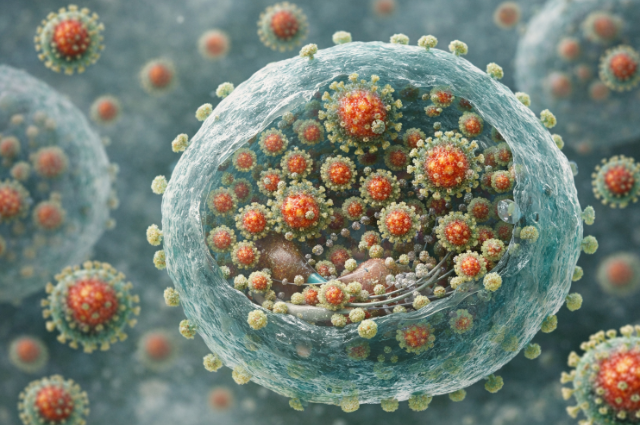
The Nipah Virus is a bad thing that can make your cells act weirdly. It basically turns your cells into factories that make more of the Nipah Virus. This is very dangerous for your body because the Nipah Virus can take over and make you very sick. The Nipah Virus is a type of virus that can affect people and animals. When it gets inside your body, it starts to make your cells do what it wants. The Nipah Virus tells your cells to make more of the Nipah Virus. This can cause a lot of problems.
The Nipah Virus is something that we should be careful about because it can spread from person to person. If someone has the Nipah virus, they can give it to people. This is why it is very important to know about the Nipah Virus and how it works. We need to be aware of the Nipah Virus and take steps to protect ourselves from it. It is a thing that can make people very sick, so we have to be careful. By knowing more about the virus, we can help keep ourselves and our loved ones safe from it.
In January 2026, people found out about the Nipah virus in South Asia. This was bad news. Two people who worked in healthcare in West Bengal, India, got very sick. The officials had to find 200 people who came into contact with them. Luckily, all of these people tested negative for the virus.
The countries near India were very worried. Singapore, Thailand and Malaysia started checking people who were travelling from that area. They did this because the Nipah virus is very bad. The Nipah virus kills a lot of people who get it. Some people say it kills 40 to 75 per cent of the people who get infected with the virus. The seasonal flu is not as bad as this; it kills a lot of people, less than 0.1 per cent. The virus is really bad because it can attack the brain and the lungs. This can cause the brain to swell, which is called encephalitis. It can also cause respiratory failure. Doctors can only help a bit by giving people oxygen, fluids and watching them really closely. They do this because we do not have a cure or a vaccine for the Nipah virus yet.
The Nipah virus turns our cells into factories that make thousands and thousands of Nipah virus particles inside us. The thing about infection is that it can really take over the body. This is how infection does it. That is why we have to take infection very seriously, even if there are only a few cases of infection.
Fruit bats, which are also known as flying foxes, are the ones that carry the Nipah virus. These fruit bats do not get sick from the virus.
They just carry it.
Humans usually get Nipah from animals that have the virus or from food that is contaminated. We do not usually get it from being around someone who has it. The Nipah virus goes from the fruit bats to people when it gets into fruit or palm sap. For example, when a fruit bat lands on a date palm tree, it can. Urinate into the sap. Then someone drinks the sap. Gets the virus.
The Nipah virus can also go to humans through animals, like livestock that have the Nipah virus. So pigs can get the Nipah virus from eating fruit that bats have bitten into. Then the virus can spread from pigs to farmers or people who're around them a lot. Sometimes, the Nipah virus can even come from horses or other animals on farms. The thing about the Nipah virus is that it can spread from person to person. Only if people are really close to each other for a long time, like when someone is taking care of a person who is sick with the Nipah virus. When people are just hanging out like normal, the chance of getting the Nipah virus is really small. It is not as easy to catch as a cold or the flu. People need to take any sickness that spreads from bats or animals seriously. This is why officials who look after public health tell farmers who grow fruit and people who collect date sap in the affected areas to cover the pots that hold the sap and wash all the fruits and vegetables. They do this to keep everyone from getting sick, from the fruit and date sap.
When the Nipah virus gets into a person through the nose, mouth or eyes it starts by attacking the Nipah virus attacks the tract. At first, the symptoms are like a bad case of the flu. You get a fever, a headache, your muscles hurt, you throw up, and your throat is sore. A lot of people feel tired, confused or dizzy when they first get the Nipah virus. Then, as the virus spreads through the body, it can make things get much worse quickly. The virus takes over our cells. Makes them produce more of the virus. This is really bad for our cells. The virus then travels through our blood to parts of our body like the brain and lungs.
Doctors see that people with cases of the Nipah virus get very sick. They get encephalitis, which means they get sleepy, confused or act strangely. The Nipah virus can cause seizures or fall into a coma fast. This is different from illnesses. With Nipah, by the time you see these bad symptoms, you do not have a lot of time left. You have to get treatment for the virus if you want it to work. Nipah is a thing, and it needs to be treated early.
Symptoms of the virus usually show up between 4 and 14 days after the person gets infected. The World Health Organisation says it can take as long as 45 days in some cases. This waiting time can make people think they are safe. When the virus first gets into the body, there is an incubation period. The virus is inside the person. It is getting stronger, but the person may feel okay. The virus is multiplying silently. Once the symptoms of the virus start to appear, the person can get very sick quickly. The virus can make the illness get faster. When doctors look at people who're sick, they see that after a few days of having a fever and feeling bad, some other things start to happen. The person has a hard time breathing, and they get confused. Their speech is not clear. They also have problems with their brain. At this point, the person needs to be in the hospital where they can get a lot of help. It is very sad. Even when people get the best help, many of them do not get better.
If we look at what happened in the past when this sickness was around, we see that a lot of people did not survive. The number of people who died was around 40%–75%. The thing about Nipah is that it is really deadly. A Reuters analysis found that out of 750 confirmed Nipah cases around the world by 2025,415 people died from Nipah. This is a high number of deaths from Nipah. The death toll from Nipah is much higher than the death toll from Ebola or bird flu. That is why Nipah is on the World Health Organisation's list of priority pathogens, which is a list of diseases that the World Health Organisation considers to be a big threat. Nipah is a concern because of the high number of deaths from it.
The thing is, since there is no cure for this disease, the treatment is basically about helping the patient feel better. Sometimes patients need a machine to help them breathe. They need fluids through a vein. Unfortunately, no medicine has been proven to work against the virus. Some medicines, like remdesivir, worked in tests with animals. Some special antibodies, like 102.4, have been used in a few cases where the patient was very sick, but none of these has been officially approved for use. Vaccine candidates are being made using things we learned from COVID-19 research. These Vaccine candidates are in the stages and are being tested. However, it will take a while before we have a Vaccine that's safe and available to everyone.
For now, doctors need to focus on finding the problem. If doctors find the problem quickly, they can give people the help they need to get better. For example, one of the doctors who got sick in January 2026 had a very bad neurological illness. This Indian doctor got better when they got the right care in the hospital.
People who survive Nipah usually have a lot of problems that do not go away. The damage to the brain from Nipah can cause issues that last forever. 20% Of people who survive Nipah have neurological problems for a long time.
Nipah survivors may have trouble remembering things, they may have trouble focusing, their mood may change, they may have personality changes, and they may have seizures all the time. They may feel weak all over. Some people who survive Nipah are paralysed. They have trouble speaking, which is similar to what happens to people who have really bad strokes.
Nipah survivors also often have health problems, like depression or anxiety, after they get over the illness. So when someone gets Nipah, they usually have to spend a lot of time getting better and taking care of themselves. That is why it is so important for people to know about Nipah and try to prevent it.
The best way to stay safe is not to get infected in the place. People who work in health say that simple things can make a difference, especially in places like South Asia, where fruit bats are found. So what can you do? Here are some important things to remember: always wash fruits well and peel them before you eat them. Do not eat fruits that look like they have been bitten or chewed by bats. Never drink raw date palm sap. Be careful with sap that might have bat droppings in it. Also, try to avoid bats or any animals that are sick, especially pigs. When there is a Nipah outbreak, the authorities tell people to stay away from farms and forests where bats are flying around. People who take care of others and healthcare workers need to wear gear like masks, gloves, and gowns when they are treating someone who might have Nipah.
Nipah is a bad virus that bats can carry. It is not common. It can make people very sick. This virus can hurt our brains and lungs. It does something bad to our cells; it makes them produce more viruses. This happens so fast that it can kill people before their bodies can fight it. Nipah is very dangerous. We do not have a cure for it. So we need to be careful and take action quickly. We have to keep ourselves clean and know about Nipah to stay safe. The Nipah virus demands that we do these things to protect ourselves. So while the chance of encountering it remains low for most people, those in affected areas must stay vigilant and follow public health guidance to keep Nipah outbreaks from growing.
REFERENCES:
- World Health Organisation (WHO): 🔗 Overview of Nipah virus infection — https://www.who.int
- (World Health Organisation)
Nipah virus fact sheet (transmission, symptoms, fatality) — https://www.who.int - Disease outbreak news on Nipah in India —https://www.who.in
(World Health Organisation)
Centres for Disease Control and Prevention - About Nipah virus (spread, symptoms, prevention) — https://www.cdc.gov
- Clinical overview and long-term effects — https://www.cdc.gov
- General Health Resources: Nipah virus causes, symptoms & prevention — https://my.clevelandclinic.org
- Doctor NDTV on Nipah symptoms and spread — https://doctor.ndtv.com
- Up-to-date news about recent outbreaks: Reuters: What to know about Nipah virus after India cases — https://www.reuters.com
- Reuters: Asia airport checks after Nipah cases — https://www.reuters.com
- reuters.com