
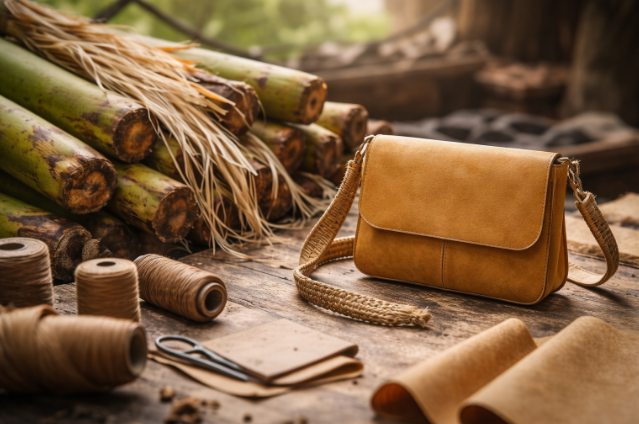
We don’t usually think twice before peeling a banana. It’s just a fruit. Cheap, easy, everywhere. Something we eat half-asleep before college or throw into smoothies when we’re trying to be “healthy.” What we don’t see is the mess that bananas leave behind. Not on our plates but on farms.
A banana plant fruits only once in its lifetime. Once the bananas are harvested, the rest of the plant, especially the thick stem, suddenly becomes useless. Farmers are left with mountains of this waste after every harvest. Most of the time, they burn it or let it rot in the fields. And this is where the problem starts.
For every 1 kg of bananas we eat, almost 10 kg of agricultural waste is left behind. When this waste rots, it releases methane, a greenhouse gas far more dangerous than carbon dioxide. So that “harmless” banana has a hidden climate cost we never talk about. Multiply that by millions of tonnes of bananas grown globally, and suddenly this small fruit looks a lot less innocent.
But what if this waste wasn’t waste at all?
That’s the exact question that led to one of the most interesting material innovations of our time: banana leather.
At first, the idea sounds fake. Leather… from bananas? It sounds like something straight out of a Pinterest eco-board that never actually works in real life. But banana leather is very real, and it’s already being turned into bags, wallets, footwear, and accessories that look just as luxurious as animal leather without the cruelty, pollution, or plastic.
The magic lies in the banana stem. Inside that thick stem are long, strong natural fibres. These fibres are flexible, durable, and surprisingly tough. For years, they were ignored because animal leather was easier and plastic was cheaper. But innovators began to see potential where others saw trash.
One of the most well-known names in this space is Jinali Mody. With a background in science and sustainability, she realised that banana stems could be transformed into a high-quality leather alternative. What she did differently was not just copying existing vegan leather methods, which usually depend on plastic. Instead, she focused on natural processes.
The process of making banana leather is simple in idea but powerful in impact. First, fibres are extracted from discarded banana stems. No new plants are grown for this. No extra land is used. It’s purely upcycling. These fibres are then cleaned and combined with natural binders like plant gums and starch, instead of toxic chemicals like chromium and lead that are commonly used in animal leather tanning. Finally, the material is pressed into sheets and finished with natural colours.
The result is a material that looks, feels, and even smells like leather. But it didn’t come from an animal. And it didn’t poison a river either.
This matters because the leather industry is one of the most polluting industries in the world. Traditional animal leather uses more than 10,000 litres of water to make a single bag. The tanning process releases toxic wastewater that often flows untreated into nearby water bodies, especially in developing countries. Entire communities live near tanneries with polluted groundwater, skin diseases, and respiratory problems. Leather may look luxurious in showrooms, but its production is anything but clean.
Banana leather changes that story.
It uses up to 95% less water, produces zero toxic waste, and is biodegradable. But the benefits don’t stop with the environment.
For farmers, banana leather creates a completely new income stream. What was once burned or dumped can now be sold. Studies and field data show that farmers can increase their income by around 30% just by selling banana stems. In rural economies where margins are tight and farming incomes are unstable, this “bonus” income can make a real difference.
And then there’s fashion. Most people don’t realise that a lot of so-called “vegan leather” isn’t eco-friendly at all. It’s usually made from PU or PVC, basically plastic. Sure, no animals are harmed, but plastic doesn’t disappear. It breaks down into microplastics that enter our food, water, and bodies. So the ethical win is incomplete.
Banana leather sits in a rare sweet spot. It’s cruelty-free and plastic-free. It proves that sustainability doesn’t have to be ugly, boring, or compromise on aesthetics. A banana leather bag doesn’t scream “eco.” It just looks like a good bag.
This is why companies like Banofi Leather are gaining global attention. They aren’t just selling products; they’re selling a different way of thinking about materials, waste, and value.
In 2025, this work received global recognition when Jinali Mody was named a UNEP Young Champion of the Earth. This award is given to young innovators creating real solutions to environmental problems — not ideas on paper, but systems that actually work.
She stands alongside other young changemakers tackling waste from completely different angles. Joseph Nguthiru turns invasive water hyacinth into biodegradable packaging. Noemi Florea created a system that converts household greywater into clean drinking water. Different problems, same mindset: waste is not the enemy, ignorance is.
What makes banana leather especially powerful is how quietly revolutionary it is. It doesn’t demand lifestyle overhauls or guilt-based consumption. It doesn’t lecture you. It just replaces something harmful with something better.
A bag is still a bag. But now it carries a story of circular economy, farmer empowerment, and environmental repair.
In a world obsessed with fast fashion, trends, and cheap convenience, banana leather forces us to slow down and ask better questions. Why do we accept pollution as the price of beauty? Why do farmers get paid the least in a system built on their labour? Why do we call something “waste” just because we don’t know what to do with it?
The future of sustainability won’t come only from big factories or billion-dollar tech. Sometimes, it comes from farms. From leftovers. From people who choose to look twice at what everyone else throws away.
And sometimes, the future of fashion really does grow on trees.
Reference: