
In December 2025, a name that most of India had never heard before suddenly refused to stay quiet. It appeared on phone screens, protest posters, Instagram stories, candle marches, and angry threads typed late at night. Anjel Chakma was only 24 years old. He was an MBA student, a son, an elder brother, and someone who simply stepped out to shop one evening and never came back the same.
What happened to Anjel was brutal, but what followed was something rare. His death did not remain a statistic. It became a moment of collective awakening, especially across Northeast India. For once, grief did not stay private. It turned into digital solidarity, public outrage, and a united voice that crossed tribal identities, state borders, and long-standing silences.
On December 9, 2025, Anjel and his younger brother Michael were shopping in the Selaqui area of Dehradun. What should have been a normal, forgettable evening turned violent when a group of men allegedly began hurling racial slurs at them. This part of the story is painfully familiar to many people from the Northeast living outside their home states. The insults usually start casually, masked as “jokes,” until they suddenly are not jokes anymore.
When Anjel protested reportedly saying, “I am not Chinese, I am an Indian” the situation escalated. He was attacked with rods and a knife. The assault was so severe that he suffered critical head and spinal injuries. For seventeen days, Anjel lay fighting for his life. On December 26, 2025, he died.
Seventeen days is a long time. Long enough for hope to rise and fall repeatedly. Long enough for a family to pray, bargain, and prepare for the worst. Long enough for the rest of the country to almost forget. But when the news of his death broke, forgetting was no longer possible.
What made Anjel’s case strike such a deep nerve was not just the violence, but the reason behind it. He was not attacked for something he did, but for how he looked. For a face that did not fit someone else’s idea of who looks “Indian.” That truth made many uncomfortable, because it forced a question India often avoids: how deeply racism exists within us.
The legal response came quickly, at least on paper. The Uttarakhand Police arrested five people, including two minors. The main accused, Yagya Awasthi, reportedly fled toward Nepal, after which a reward of ₹1 lakh was announced for information leading to his arrest. A Special Investigation Team was formed. The National Human Rights Commission (NHRC) issued notices to the Uttarakhand government, asking for reports on the safety of students from the Northeast.
A Public Interest Litigation (PIL) was filed in the Supreme Court of India, demanding clearer guidelines and legal recognition of racial slurs as hate crimes. The petition referenced earlier tragedies like the killing of Nido Tania, a reminder that Anjel’s death was not an isolated incident, but part of a painful pattern. And yet, alongside these developments, there was a familiar frustration. Arrests happen. Committees are formed. Notices are issued. But justice, especially for people from the margins, moves slowly and unevenly. This is where something different began to happen.
The hashtag #JusticeForAnjel started spreading online. At first, it was students from Tripura and nearby states posting about the case. Then voices from Assam, Manipur, Nagaland, Mizoram, Meghalaya, Arunachal Pradesh, and Sikkim joined in. Soon, the hashtag was no longer just about Anjel. It became a space where people shared their own stories being called “Chinese,” being denied rental rooms, being mocked for accents, being stared at, followed, or dismissed.
Social media, often criticised for being shallow or performative, turned into something heavier. Instagram posts felt like confessions. Twitter threads read like long-held anger finally finding words. People who had never met each other realised they were carrying the same experiences, the same quiet humiliation, the same fear of speaking up.
What made this moment powerful was unity. The Northeast is often spoken about as one block, even though it contains immense diversity of different tribes, languages, histories, and conflicts. But Anjel’s death cut across those divisions. For once, the message was clear and shared: this keeps happening, and it cannot continue.
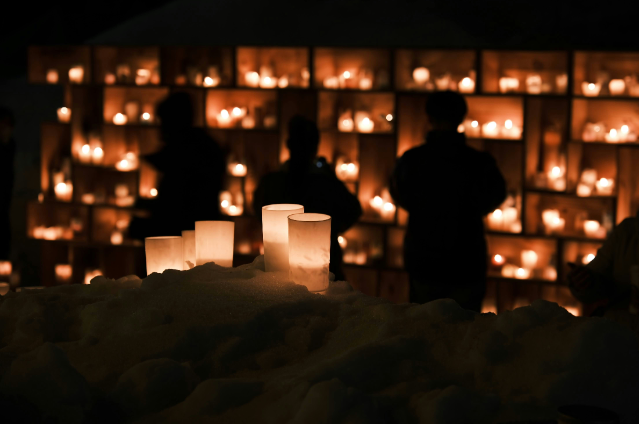
Digital solidarity soon spilled into real life. Protests erupted in Tripura and Assam. Candle marches were held. Students gathered with placards demanding accountability and safety. Organisations like the North East Students' Organisation (NESO) called for a dedicated anti-racism law in India.
These protests were not loud in the way television debates are loud. They were heavy. Many protestors spoke not just about Anjel, but about years of swallowing insults to survive. About parents warning their children to “ignore it” because complaining never helps. About the exhaustion of having to constantly prove one’s nationality.
India often likes to believe that racism is a foreign problem. We speak confidently about colonialism, apartheid, and Western discrimination. But within our own borders, racial prejudice is normalised so deeply that it rarely shocks. Slurs are excused as ignorance. Violence is dismissed as an “argument gone wrong.” Victims are asked what they did to provoke it.
Anjel’s death made that denial harder to maintain. It showed that casual racism does not stay casual forever. It grows teeth. It grows hands. And sometimes, it kills.
What happens next will decide whether this moment becomes another forgotten outrage or a turning point. Laws alone will not solve the problem, but naming racism legally matters. Sensitisation programs in universities, workplaces, and hostels matter. Fast and transparent justice matters. But beyond policy, something more uncomfortable requires self-reflection.
It requires asking why someone’s face can still trigger suspicion. Why “Indian” is imagined in such a narrow way. Why are people from the Northeast constantly asked to explain where they are “really from.”
Anjel Chakma should not have become a symbol. He should have been allowed an ordinary life. But his name now carries a weight that refuses to disappear. #JusticeForAnjel is not just about punishing the guilty. It is about forcing a country to look at itself, honestly and without excuses.
Because if India cannot protect all its citizens equally, then the idea of unity remains incomplete. And if Anjel’s story fades without change, it will not be the last name we are forced to remember.
Reference: