
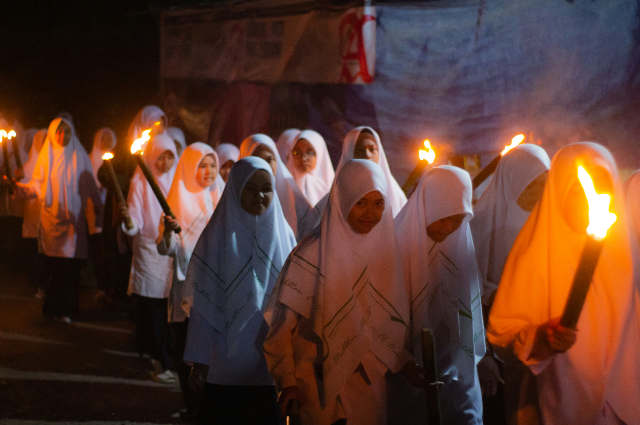
Women burning their hijabs in Iran is not a sudden act of rage or a trend born on social media. It is the visible surface of a pressure that has been building for decades. To someone watching from the outside, the image can look shocking or confusing. A piece of cloth on fire. But inside Iran, that burning fabric carries years of fear, humiliation, violence, and silence. It is not about rejecting faith. It is about rejecting control.
For many Muslim women around the world, the hijab is a personal and spiritual choice. In Iran, it stopped being a choice in 1979. After the Islamic Revolution, the state turned a religious symbol into a legal weapon. The hijab became compulsory, not just socially expected but enforced by law, by patrol vans, by arrests, by beatings, by fines, and by constant surveillance. A woman’s body became a public site that the state felt entitled to police. Hair showing was no longer just hair. It was treated as a rebellion.
For years, Iranian women resisted quietly. They pushed the scarves back slightly. They wore brighter clothes. They walked faster when they saw the morality police. Resistance existed, but it was cautious, private, and lonely. Fear worked. Until it didn’t.
Everything changed in September 2022 with the death of Mahsa Amini, also known by her Kurdish name Jina. She was 22 years old. She was arrested by Iran’s so-called “Guidance Patrol” for wearing her hijab “improperly.” Witnesses reported she was beaten in custody. Hours later, she was in a coma. Three days later, she was dead. The state denied responsibility, but the public had seen this pattern too many times before. Her death was not seen as an accident. It was seen as a message: this is what happens when you disobey.
Mahsa’s death shattered the fragile illusion that compliance could guarantee safety. Women understood something very clearly in that moment: if even quiet obedience could end in death, then fear had lost its power. Protests erupted across Iran. Women walked into the streets, removed their hijabs, and burned them in public. Some cut their hair. These were not symbolic gestures made for cameras. These were acts that carried real consequences: arrest, prison, torture, even death.
Burning the hijab became a sentence without words. It said, “My body does not belong to the state.” It said, “You will not rule me through fear anymore.” For many women, it was the first time they had publicly disobeyed a law that had controlled them since childhood. The act was terrifying and liberating at the same time.
The slogan that rose from these protests was simple and powerful: Woman, Life, Freedom — “Zan, Zendegi, Azadi.” These three words captured something the Iranian state could never offer.
Women, because women were at the center of the struggle.
Life, because survival itself had become resistance.
Freedom, because without it, everything else was meaningless.
This chant echoed from Tehran to small towns, from universities to bazaars, from rooftops at night.
The movement did not end with the headlines fading. It changed shape. Many women in cities like Tehran simply stopped wearing the hijab in daily life. No slogans. No marches. Just refusal. This quiet, daily disobedience terrified the authorities more than protests ever could. You can arrest a crowd. You cannot arrest half the population every morning.
The state responded the only way it knew how: with harsher control. Around 2024 and 2025, new “Hijab and Chastity” laws were introduced. Fines became heavier. Surveillance expanded. Women could lose access to their bank accounts. Cars could be remotely impounded. Businesses that served unveiled women were sealed shut. The punishment moved from public violence to administrative suffocation. The goal was the same: break women without drawing blood on camera.
But repression kept producing resistance.
In October 2023, the country was shaken again by the death of Armita Geravand, a 17-year-old girl. She entered the Tehran Metro without a hijab. CCTV footage, later released with suspicious gaps, showed her being carried out unconscious. Witnesses said she was pushed by a hijab enforcer and hit her head. She fell into a coma and died weeks later. To many Iranians, she became “the second Mahsa.” Proof that nothing had changed. Proof that the system was still willing to kill girls to protect a law.
Another horrifying aspect of the crackdown received far less international attention: systematic blinding. Security forces fired birdshot pellets directly at protesters’ faces. Hundreds lost one or both eyes. Young women. Teenagers. Students. The intention was clear: to permanently mark them, to turn their bodies into warnings. Instead, these survivors became symbols. Many shared photos online with captions saying, “I lost my eye, but I found my vision.” A sentence so powerful that it revealed the moral bankruptcy of the violence used against them.
By late 2024 and into 2025, the state shifted again, moving into what many activists call “smart repression.” AI-powered cameras began identifying unveiled women in cars. Text messages replaced batons. Fines replaced public arrests. Bank accounts were frozen quietly. Cars disappeared into impound lots without explanation. Cafés were shut down overnight. The violence became invisible but no less real. Control was automated.
As Iran entered 2026, something new began to happen. The movement merged with economic desperation. Inflation soared. The rial collapsed. Ordinary life became unaffordable. The bazaar merchants, known as the Bazaaris, historically a backbone of regime support, began striking. When women’s rights slogans mixed with chants against corruption and poverty, it marked a dangerous moment for the government. Iranian history shows that when merchants and the streets unite, power trembles.
Through all of this, one name continued to echo beyond prison walls: Narges Mohammadi. A human rights defender and Nobel Peace Prize laureate, she remains imprisoned in Evin Prison. Even behind bars, she organizes sit-ins, writes letters, and documents abuse. Her existence alone is a refusal. The state can cage a body, but it cannot erase a voice that has already escaped.
So when women burn their hijabs in Iran, it is not an attack on religion. It is an attack on ownership. It is the rejection of a system that treats women as walking violations. It is grief turned into courage. It is fear turned into fire.
The hijab burns because silence no longer works. And once silence is gone, there is no easy way to bring it back.
. . .
References: