
Loneliness doesn’t always look like sitting alone in a dark room. Most of the time, it looks much quieter and far more normal. It looks like sitting in a crowded metro, scrolling endlessly on your phone, surrounded by people but not really with anyone. It’s replying to Instagram stories instead of having conversations. It’s knowing everyone’s life updates but having no one you can actually call when your day falls apart. This is what people are now calling the loneliness pandemic, and it’s spreading slowly, silently, and almost invisibly.
Loneliness is basically the painful gap between the relationships we have and the relationships we want. You can have hundreds of contacts on WhatsApp, thousands of followers online, and still feel deeply unseen. Technology has made connection easier, faster, and more constant, but belonging has somehow become harder. We are always “reachable,” yet rarely reached. We talk more, but we share less. We react, but we don’t respond. Somewhere along the way, human connection became efficient, and that efficiency stripped it of warmth.
What’s surprising is who loneliness hits the hardest. In 2025, research shows that young people between 15 and 24 years and the elderly are the loneliest groups. Young people are constantly online, constantly consuming other people’s lives, yet real-life friendships have become fragile, competitive, and sometimes transactional. Conversations feel performative. Friendships feel conditional. Everyone is busy building a version of themselves that looks successful, interesting, and unbothered. Admitting loneliness feels like admitting failure.
Older people, on the other hand, experience a different kind of quiet loss. Social circles shrink as children move away, partners pass on, or health limits movement. In countries like India, this problem becomes sharper when families scatter across cities and countries. And for young adults, moving to big cities for education or work often means cutting off from families, neighbours, childhood friends, and familiar routines. You leave behind people who knew you without filters, and suddenly your life becomes office, room, repeat. Days pass where the only voices you hear belong to colleagues, delivery apps, or customer care numbers.
On a global scale, this isn’t a small or personal issue anymore. About 1 in 6 people worldwide are dealing with chronic loneliness right now. That’s not just an emotional problem. That’s a public health crisis.
And no, loneliness is not “just in your head.” Science has been very clear about this. Long-term loneliness physically changes how your body functions. It keeps your nervous system in a constant state of stress, like it’s always bracing for something to go wrong. Your body reacts as if it’s under threat even when nothing is happening.
For your heart, loneliness is brutal. Researchers have found that chronic loneliness can be as harmful as smoking around 15 cigarettes a day. It raises blood pressure, increases inflammation, and significantly increases the risk of heart disease and stroke. That comparison isn’t poetic exaggeration. It’s biology.
Your immune system also suffers. When you feel lonely for long periods, your body stays stuck in “fight or flight” mode. Over time, this weakens your ability to fight common infections. You fall sick more often, take longer to recover, and feel tired even when you haven’t done much.
Your brain takes a hit too. Loneliness has been linked to faster cognitive decline and a higher risk of dementia as we age. The brain is social by design. It evolved through interaction, storytelling, shared experiences, and conversation. When it doesn’t receive regular, meaningful social stimulation, it slowly starts shutting down the very parts that rely on connection.
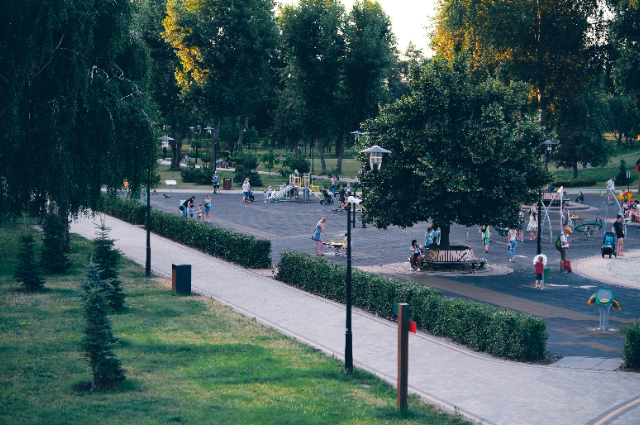
So where did we go wrong? One big reason is how our cities are designed now. Everything is built for speed, productivity, and privacy. We have gyms where everyone wears headphones and avoids eye contact. Cafes filled with people sitting alone with laptops. Offices designed for efficiency, not interaction. Even park places that should invite pause have turned into transit spaces. People walk fast, jog with earphones, glance at their watches, and leave. There are very few spaces left where talking to a stranger feels normal instead of awkward or suspicious.
This is why we desperately need parks where people actually talk. Not parks that exist only for jogging, selfies, or aesthetic reels. But parks are designed for sitting. For lingering. For unplanned conversations. Parks with circular benches instead of straight ones, where people naturally face each other. Parks with chess boards, carrom tables, open libraries, group yoga spaces, storytelling corners, and community notice boards. Parks where it feels normal to ask, “Can I sit here?” without feeling like you’re intruding on someone’s carefully guarded bubble.
In India, especially, parks used to serve this purpose without trying. Evening walks weren’t workouts; they were social rituals. Kids played together until their mothers called them home. Uncles debated politics loudly. Aunties exchanged recipes, complaints, and laughter. Strangers slowly became familiar faces. Somewhere along the way, we replaced all of that with screens, schedules, and silence.
Talking doesn’t have to mean deep, emotional, therapy-level conversations. Even small talk matters more than we think. Saying hello. Commenting on the weather. Asking someone’s name. Complaining about mosquitoes. Laughing about something ordinary. These tiny interactions send a powerful signal to your nervous system: you are safe, you are seen, and you are part of something larger than yourself.
Loneliness thrives in isolation. It weakens when the community becomes routine. We keep trying to solve loneliness individually through self-care routines, productivity hacks, mindfulness apps, and motivational quotes, but loneliness isn’t a personal failure. It’s a collective problem. And collective problems need collective spaces. They need environments that encourage human presence, not just human movement.
Maybe the solution isn’t another mental health app or another online community that disappears when the screen locks. Maybe the solution is simpler and older. Maybe it’s a bench. A tree. A park where people don’t just pass through but stay, talk, and slowly remember how to belong.
Reference: