
There was a time when cybercrime felt distant. It lived inside laptops, emails, and badly written scam messages that we laughed at and deleted. It was something that happened to “other people.” Today, cybercrime has quietly crossed a line. It no longer stays on screens. It sits on your wrist, listens to your heartbeat, watches where you go, studies how you think, and sometimes even pretends to be the people you trust the most. The danger now isn’t loud or dramatic. It’s intimate.
This is not theoretical. In 2018, the fitness tracking app Strava accidentally revealed sensitive military locations across the world, and when its global heatmap showed jogging routes of soldiers. Secret bases in Afghanistan, Syria, and Africa suddenly became visible to anyone with internet access. Soldiers weren’t hacked directly; their wearable data betrayed them. It was a powerful reminder that even innocent technology can become a surveillance tool when aggregated at scale.
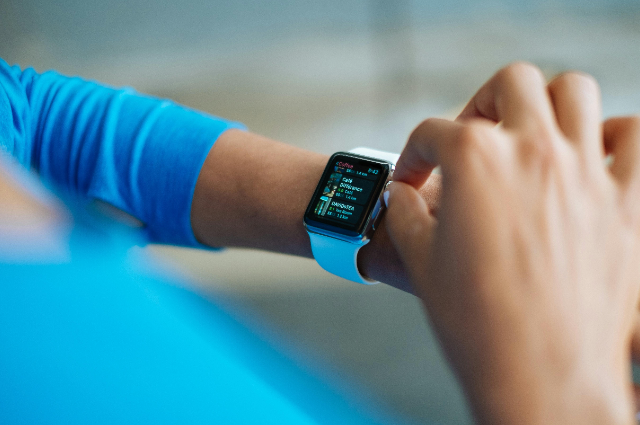
Take the smartwatch on your wrist or the fitness ring you wear while sleeping. It feels harmless, almost comforting. It counts steps, tracks sleep, reminds you to move, and makes you feel productive even on lazy days. But beneath that polished interface is a constant stream of data flowing somewhere you cannot see. Your heart rate patterns reveal stress, fear, attraction, and anxiety. Your location data quietly maps your routines when you leave home, when you return, which roads you prefer, and which places feel safe enough to visit repeatedly. If this data is stolen, it is no longer just information. It becomes a blueprint of your life. A hacker doesn’t need to guess where you are or when you are vulnerable. Your own body has already told them.
What makes this era frightening is not just what is being stolen, but who is doing the stealing. Cybercrime is no longer entirely human-driven. We have entered a phase where machines attack on behalf of humans, sometimes without direct supervision. Autonomous hacking systems, often called shadow agents, roam the internet constantly. They don’t get tired, they don’t take breaks, and they don’t wait for instructions. They scan websites, servers, cloud systems, and apps, looking for tiny weaknesses the way a burglar checks every window on a street. While a human sleeps, the machine keeps breaking in. Crime has learned how to work night shifts without people.
Then there is the quieter sabotage that happens inside artificial intelligence itself. AI systems are trained on data, and that dependence makes them vulnerable in a very human way. If you poison what an AI learns, you poison what it becomes. Hackers exploit this by feeding manipulated or false data into systems used by companies, hospitals, and governments. The AI doesn’t realise it is being lied to. It learns confidently, repeats the mistake flawlessly, and spreads that error at scale. The danger here is subtle. When a human makes a mistake, we question it. When an AI makes a mistake, we often assume it knows better than us. Trust becomes the weapon.
Sometimes, hackers don’t even need to attack systems directly. They attack conversations. Prompt hijacking works by confusing AI tools through cleverly crafted language. It’s manipulation, not force. The AI is tricked into ignoring its own safety rules and revealing information it was designed to protect. No alarms go off. No systems crash. It looks like a normal interaction. That’s what makes it so dangerous. In the digital world, politeness and clever wording can be as powerful as malware.
As terrifying as AI-based attacks are, the most disturbing frontier of cybercrime lies in body-hacking. Health technology has advanced rapidly, and for good reason. Smart medical devices save lives every day. But when healthcare becomes digital, it also becomes hackable. Devices that monitor heart rhythms, insulin levels, or movement patterns generate data that is deeply personal. This information is priceless on black markets because it exposes vulnerabilities that people cannot change. You can cancel a credit card, but you cannot cancel a chronic illness.
Body-snatching takes this one step further. Hackers don’t just steal health data; they weaponise it. Knowing someone’s medical condition can be used for blackmail, harassment, or targeted psychological pressure. Even more horrifying is the rise of bio-ransom scenarios. Imagine a hacker locking a smart medical device and demanding payment to restore access. It sounds unreal, but it has already been discussed seriously in cybersecurity circles. When devices that sustain life are connected to the internet, crime gains a terrifying leverage. Survival itself becomes negotiable.
Yet, perhaps the most dangerous attacks don’t touch your body or your devices at all. They target your mind. In a world flooded with images, videos, and constant updates, seeing used to mean believing. That rule no longer applies. Live deepfakes have shattered it completely. Today, you can receive a video call from someone who looks exactly like your boss, your parents, or your friend. Their faces move naturally. Their voices sound familiar. They react in real time. And they ask for something urgent: money, passwords, access. The human brain is wired to trust faces. Hackers know this. They exploit emotion, urgency, and familiarity because fear and love make us careless.
On a larger scale, mind-hacking takes the form of mood manipulation. Thousands of fake social media accounts can be activated simultaneously to spread fear, anger, or panic. False news is posted, shared, and amplified until it feels unavoidable. People react emotionally before facts can catch up. Markets fluctuate. Communities polarise. Elections tilt. No system is hacked in the traditional sense, yet entire populations are influenced. This is not hacking machines; it is hacking human behaviour.
What connects all these forms of cybercrime is a simple truth: modern attacks are not about technology alone. They are about people. About trust, routine, emotion, and dependence. Technology has woven itself so deeply into our lives that attacking it means attacking us directly. Cybercrime today feels less like theft and more like intrusion. It watches, waits, learns, and blends into daily life until it becomes invisible.
The scariest part is how normal all of this feels. We wear devices that listen to our bodies without questioning where that data goes. We talk to AI systems as if they understand us, forgetting they can also be manipulated. We trust images and videos because our brains have not evolved fast enough to doubt them.
Cybercrime thrives in this gap between technological progress and human awareness. In this world, cybersecurity is no longer just the responsibility of IT professionals or law enforcement. It has become a personal skill, almost like literacy. Knowing when not to trust, when to pause, when to question urgency, and when to protect your data is as important as locking your front door. Because the front door is no longer just physical. It is digital, biological, and psychological.
We are entering an era where crime does not knock. It blends in, wears familiar faces, and speaks politely. And the real challenge is not stopping technology from advancing, but learning how to live with it without losing control over our bodies, our minds, and our trust.
. . .
Reference links: