
The first thing people imagine when they hear the phrase “death hotel” is something dark, cold, almost cruel. A place where life is counted down in days, where people arrive knowing they will not leave alive. But in Varanasi, death does not wear the same face it does elsewhere. Here, death is not a failure, not an accident, not something whispered about behind closed doors. It is expected. It is prepared for. And in places like Kashi Labh Mukti Bhawan, it is even welcomed.
The manager of one such guesthouse has seen more than 12,000 deaths. That number sounds unreal, almost cinematic, but for him, it is just a part of the job. Day after day, families arrive carrying small suitcases, folded clothes, prayer beads, medicines, and a quiet hope that this will be the end of a very long journey. They come from different states, different castes, different economic backgrounds, but they all come for the same reason: to die in Kashi.
In Hindu belief, dying in Varanasi is not just death. It is liberation. Moksha. The end of the cycle of birth, death, and rebirth. A final exit from suffering. For centuries, people have believed that if their last breath is taken on this sacred land, their soul is freed forever. This belief is so strong that entire institutions have been built around it. Guesthouses where you are not allowed to check in unless you are already dying.
Kashi Labh Mukti Bhawan is one of the most well-known among them. The rules are simple but heavy. Only the elderly or terminally ill are allowed. Each person is usually given around two weeks. Fourteen days to wait for death. If death comes within that time, the family considers it a blessing. If it doesn’t, they are politely asked to leave. Not because anyone is heartless, but because others are waiting. Others also want salvation. Space, here, is limited even for death.
What happens inside these walls is very different from how we imagine dying. There is no panic, no desperate rushing to hospitals, no beeping machines. The rooms are small, clean, and quiet. People spend their days praying, chanting God’s name, listening to bhajans, staring out of windows, or simply lying still. Families sit beside them, sometimes talking, sometimes silent. There is grief, yes, but there is also acceptance. A strange calm that comes when everyone already knows the ending.
The manager has seen people arrive terrified and leave peaceful. He has seen people who cried all night on the first day, only to start smiling after a few days. He has seen old men who stopped eating because they believed the body must be emptied before death. He has seen women who asked to be dressed in fresh sarees every morning, just in case today was the day. After witnessing thousands of deaths, death itself stops being shocking. What stays with him are the small human moments, the last conversation, the last prayer, the way a family suddenly falls silent when breathing stops.
What makes these places unsettling to outsiders is the rule that if someone does not die within the given time, they must leave. To many, it sounds cruel. How do you tell a dying person, “You haven’t died yet, please go”? But inside this system, it is understood. These guesthouses are not hospitals. They are not meant to prolong life or fight death. They exist only for those who are already on the edge. When someone survives longer than expected, it is taken as a sign that their time has not yet come. Their journey is not over. And so they return home, sometimes disappointed, sometimes relieved, sometimes confused.
There is something deeply philosophical about this. In most of the world, death is something we constantly try to postpone. We chase longer lives, better treatments, and miracle cures. Here, people come willingly to let go. It forces us to ask uncomfortable questions. Is a longer life always better, or is a meaningful end more important? Is death something to defeat, or something to understand?
For the families, bringing their loved ones here is not abandonment. It is an act of faith. Many have saved money for years just for this journey. Some have promised their parents they would do this. Some come because the dying person asked for it themselves. Sitting in these rooms, families often talk about old memories, unresolved regrets, and past mistakes. There is crying, but there is also laughter. Death, when expected, opens space for honesty.
The manager says the hardest deaths are not the painful ones, but the lonely ones. People whose families could not come. People who arrived alone with faith as their only companion. In such cases, the staff becomes family. They sit with them, chant with them, make sure they are not alone when the final moment arrives. After 12,000 deaths, you would expect someone to become numb. Instead, he says he has become more sensitive. He notices life more. He values small things more. Watching people die every day teaches you how precious ordinary living actually is.
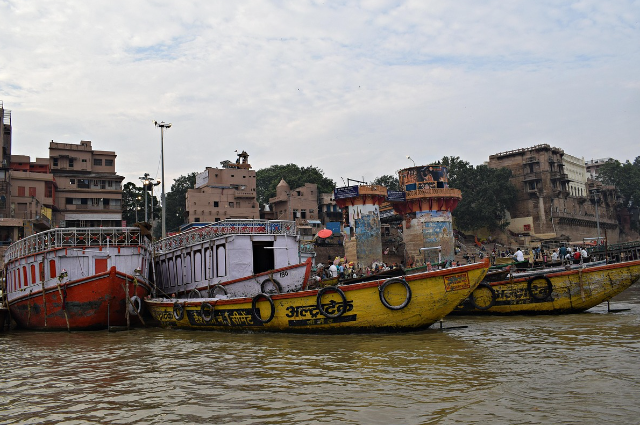
Varanasi itself mirrors this strange relationship with death. Funeral pyres burn constantly by the Ganges, right next to temples, shops, and tea stalls. Life and death exist side by side without apology. Children play while bodies are cremated a few steps away. For the city, this is not morbid. It is normal. Death is not hidden. It is visible, audible, and accepted.
The idea of celebrating death might sound disturbing, but here, celebration does not mean happiness. It means fulfillment. It means the belief that the soul has finally reached its destination. When someone dies in these guesthouses, there is grief, but there is also relief. The suffering is over. The waiting is over. The cycle is believed to be broken.
In a world where we are taught to fear death, places like Kashi Labh Mukti Bhawan challenge everything we think we know. They force us to confront mortality without distractions. No hospital curtains. No medical jargon. Just the body, the breath, and the belief.
The manager who has seen 12,000 deaths does not think of himself as surrounded by death. He thinks of himself as surrounded by endings. And endings, he says, are not always tragic. Sometimes, they are exactly what someone has been waiting for their entire life.
Maybe that is why these places exist. Not to glorify death, but to remove its terror. To remind us that death, like life, can be gentle. That letting go can be as sacred as holding on. And that sometimes, the most peaceful check-out is the one where the soul finally goes home.
. . .
References: