
The rise of friend-shoring and digital manufacturing cannot be overemphasized. In a world where de-globalization is now the order of the day, the geopolitical shift of the supply chain has drastically diminished the value of offshoring and cost-efficiency. But what is de-globalization all about?
The era of de-globalization is that in which economic agents are severing their international economic links and are relocating economic activity toward their domestic economies (Antràs, 2020), has been gaining momentum. Macro-level data show that foreign direct investment (FDI) has fallen by 48 % in 2020 from its peak in 2007 in parallel with the stagnation in international trade (UNCTAD, 2024). In fact, a recent analysis of 23 value chains across 43 countries, which account for 96 % of global trade, indicates that trade intensity, the share of output that is traded across the globe, has declined from 28.1 % to 22.5 % of gross output from 2007 to 2017 in goods-producing value chains (McKinsey Global Institute, 2019).
Another often-cited measure of globalization, the ratio of world trade to world GDP, shows that, while the period between 1986 and 2008 indicates an era of hyperglobalization (Krugman, 2020), the rate of growth during the following decade has been much more restrained (and comparable to that over 1970–1985). The share of global value chains (GVC) in global trade, which identifies the share of a country’s exports that flow through at least two borders, shows that this indicator has recently stagnated following significant growth during the period of hyperglobalization.
While globalization has made the world a smaller place, where countries, businesses, and people are more connected, manufacturers have reshaped the global commerce with what is called friend-shoring.
Friendshoring, sometimes called ally-shoring, is the practice of shifting supply chains to countries that share a company’s political values, trade agreements, and regulatory standards. The rise of this movement portrays a situation where countries and companies prefer to do business with political or economic allies, those considered trustworthy. It is about minimizing the risks of failure by strengthening supply chains due to shared values and mutual interests. For instance, instead of sourcing natural resources from a country with unstable relations, the U.K. might turn to Nigeria or a trusted ally. This geopolitical shift doesn't mean the end of globalization; it is more like a rediscovery. The goal is no longer just about low cost as labor, but important factors such as trust, relationship, and flexibility are also to be considered.
There are so many current trends shaping friend-shoring, such as geopolitical realignment. Global trade flows are shifting. The U.S. is reducing reliance on China, deepening ties with Mexico, India, and Eastern Europe. The EU is pursuing strategic autonomy in the digital and energy sectors. Friendshoring often overlaps with nearshoring. For example, U.S. firms shifting production to Mexico enjoy both political and logistical advantages. Governments are also using tariffs, subsidies, and tax incentives to reward friendshoring. The U.S. imposed 125% tariffs on Chinese EVs and offered a 15% tax break for domestic production.
Globalization made the world connect. It is why you can use a phone made in China, drive cars designed in Nigeria, and see a movie produced in Japan, all from your home in India. This is what offshoring tends to achieve. A company moved part of its production to another country to cut costs and lower skilled labor. But with that connection came a challenge. A restricted port or strained diplomatic tie could affect entire industries.
Additionally, disruptions like the COVID-19 pandemic, the Russia-Ukraine war, trade tensions, and increasing cyber threats have exposed the cracks in global supply chains. Companies found themselves stuck—unable to access raw materials, fulfill orders, or even communicate across borders. So rather than maintaining countries that offer low-cost, they seek trusted partners, and that is where we get to notice the benefits of friend-shoring. It reduces exposure to political volatility and supply chain chokepoints, easier compliance with shared ESG, labor, and trade standards, lower tariff risks, and fewer sudden policy shifts, secures access to critical goods (e.g., chips, pharma, energy), and appeals to consumers and investors favoring ethical sourcing.
But while this strategy is promising, friend-shoring is not without hurdles. This concept follows a higher cost, where wages in friendly countries may be significantly higher than in low-cost manufacturing zones. For example:
- U.S.: $28.34/hour
- Canada: $21.09/hour
- China: $6.80/hour
Friend-shoring brings about political volatility in allies, whereby today’s ally could be tomorrow’s adversary. WTO warns that friendshoring may lead to unstable trade blocs and long-term fragmentation. Friend-shoring also causes infrastructure and talent gaps because emerging hubs like Vietnam or Brazil may lack the logistics or workforce scale needed for rapid absorption of new industries. A popular case study is the Apple Company, which is now diversifying beyond China. Their goal is to reduce reliance on China as they relocate 25% of iPhone production to India by 2025.
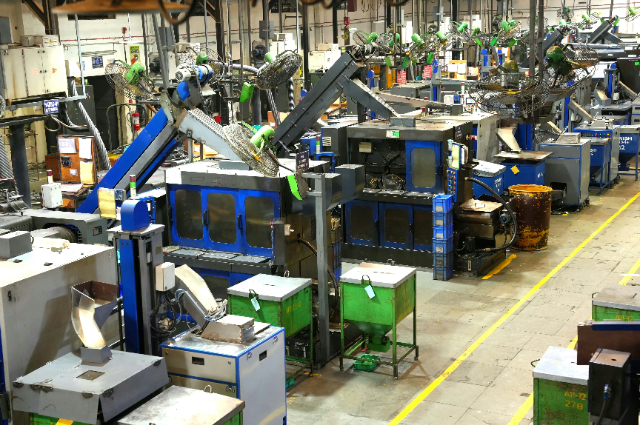
Industries also tend to switch to digital manufacturing. With the advent of AI, automation has become the order of the day. Digital manufacturing now makes use of digital technologies to improve the production process. These tools can be 3D printing, additive manufacturing, AI and machine learning, digital twins, and smart factories, which are connected by IoT (Internet of Things). Digital manufacturing allows producers to prototype, test, and discover parts faster, with less waste and more customization. Combining friend-shoring with digital manufacturing, the advantages are enormous. Companies are therefore applying these new systems to facilitate production, supply chain, and globalization.
Using the aerospace industry as a real-life case study, we can highlight how complex, high-precision parts like engine blades, aircraft interiors, or structural components are now digitalized. Traditionally, producing these required massive factories, long supply chains, and expensive tooling. But with digital tools like 3D printing, companies like GE Aviation, Airbus, and Boeing can now print metal parts on demand, customize each part for each aircraft, cut weight, reduce lead times from weeks to days, and avoid shipping delays. These highlight the impact of the digital era that has simplified manufacturing and production.
In a nutshell, the rise of friend-shoring and digital manufacturing is opening new opportunities. Countries that invest in skilled talent, digital infrastructure, and stable governance can become new hubs for strategic manufacturing. Digital production is also helping companies localize production, reduce risks, and innovate more easily. This geopolitical shift is building secure and smart supply chains in a post-pandemic, politically uncertain world.
References
- Antràs, P. (2020). _De-Globalization?_
- UNCTAD. (2024). _Global Investment Trends Monitor_.
- McKinsey Global Institute. (2019). _Globalization in transition: The future of trade and value chains_.
- Krugman, P. (2020). _The Return of Depression Economics and the Crisis of 2008_.
- WTO. (2023). _World Trade Report 2023_.
- Apple Inc. (2023). _Supplier Responsibility Progress Report_.
- GE Aviation. (2023). _Additive Manufacturing_.
- Airbus. (2023). _Digital Transformation_.
- Boeing. (2023). _Digital Innovation_.