
The policy brief discusses the inability to end the practice of child labour in the world supply chains, paying particular attention to the fact that the daily consumer-product coffee, textiles, and electronics, can be indirectly associated with the practice of child labour. Whereas multinational companies make that pledge on the front stage, on the back stage, child labour is getting deeper into a low-production, less noticeable stage. This brief offers an overview of why the traditional compliance tools are ineffective and outlines why new regulatory tools, including the European Union’s Corporate Sustainability Due Diligence Directive, are transforming corporate responsibility through an examination of the tiered supply chain, audit failures and informal labour fueled by poverty (node. 1).
The Hidden Nature of Modern Child Labour
Child labour nowadays hardly looks like the giant factory platforms of industrial exploitation. Instead, it has been shifted in informal, discontinuous, and mostly invisible forms. Workplace operations of corporations far away in illegal mines have children working on their family farms, in their home-based workshops or in illegal mining activities. As the International Labour Organisation notes, there were more than 138 million child labourers in the world in 2018, most of whom have to work in agriculture and the extraction industry (ILO, 2024).
Understanding the Tiered Supply Chain System
The world production is being conducted via complicated tiered supply chains. The Tier 1 suppliers are generally large companies with large factories, which are visible, registered and audited by multinational corporations. Such factories, in their turn, send parts to Tier 2 workshops, which tend to also source raw materials at, say, Tier 3, e.g. small farms or artisanal mines. The lowest level is where child labour is most rife, where there is little regulation and no one to check. Companies respond that they do not have any direct contractual ties with these suppliers.
The Shadow Workforce: Where Children Disappear from View
In Tier 2 and 3, it is common to move the production to homes, informal workshops, or unregulated places of extraction. Children can select coffee beans, collect cotton, sew buttons, or mine cobalt that is contained in smartphone batteries. These are activities that are outside the scope of inspections. Due to the decentralised and non- permanent nature of work, child labour is both statistically underreported and operationally invisible to the corporate audits (UNICEF, 2023).
The Poverty Trap and Price Pressure
The gist of invisible child labour is economic pressure. Multinational purchasers are price-insensitive, high-speed customers who transfer the pressure of prices down the line. Small suppliers working on low margins tend not to have the financial resources to employ adult labour to work at wages that are within the law. In those circumstances, the families are depending on child labour to achieve the targets of production. Child labour thereby becomes a mode of survival as opposed to taking advantage of morals (ILO, 2024).
Why Traditional Audits Fail
Corporate social responsibility audits have not been effective in ensuring they deal with child labour. Audits are usually publicised beforehand, and suppliers have to take their kids temporarily off workplaces. Moreover, Tier 1 suppliers are virtually the only ones that are audited, and the other tiers are not audited. Records are often counterfeited, and local markets often blend documents on child labour and those without child labour, making it almost impossible to trace them (OECD, 2022).
Case Study: Coffee and Agricultural Supply Chains
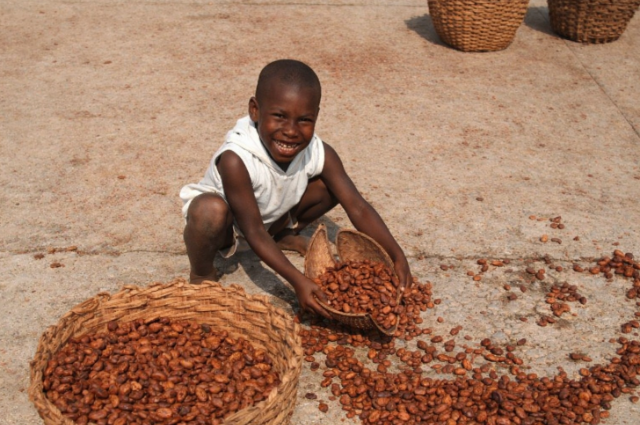
The coffee industry in the world explains the issue of unseen child labour. Although the large coffee companies are known to certify their direct supplier, the coffee beans usually go through various intermediaries prior to being exported. Child labour harvested beans could be blended with other legitimate harvest and traceability would be lost. Although certification schemes exist, child labour in coffee-producing areas exists because of poverty, poor enforcement and price fluctuations (Fairtrade International, 2023).
Missed Global Targets and the Scale of the Crisis
The international community was not achieving the target of 2025 to end child labour. Families have become vulnerable due to economic shocks, conflict, and change of climatic conditions. The existence of child labour not only indicates a policy failure but also structural inefficiencies of the global trade designs that promote low consumer prices at the expense of human development (UNICEF, 2023).
What Is Changing: Legal Accountability for MNCs
The last regulatory changes represent a radical change. The Corporate Sustainability Due Diligence Directive, which is implemented by the European Union, stipulates that companies must recognise, avoid, and correct human rights abuses within their whole chain of supply. MNCs are legally and financially liable now to avoid abuses outside the Tier 1 suppliers. This is the shift towards the voluntary ethics to mandatory responsibility (European Commission, 2025).
Policy Implications and Recommendations
This will be achieved by new regulations, transparency in supply chains, and price reform to completely eradicate child labour. The policymakers will have to enforce full-chain due diligence, income preservation of the small producers, and investing in education and social security. Compliance mechanisms will not be adequate without solving the problem of poverty at the root.
Technology Without Governance: The Limits of Digital Solutions in Ending Child Labour
In addition to regulation, technology is also taking a central role as a means of exposing invisible child labour, but its benefits are still uneven. The digital traceability systems, satellite monitoring, and blockchain sourcing platforms are piloted to trace the origin of commodities like coffee, cocoa, and minerals. Nevertheless, technology-based solutions cannot be used to replace governance in an informal setting. In other areas where households, informal farms, or artisan mines are doing the production activities, there are still gaps in data, and the technological regulation has the danger of isolating the poorest of producers instead of safeguarding children. In the absence of equivalent investments in the enforcement regime in a country, income stabilisation of producers, and access to education, transparency tools are potentially just worrying about the shift of risk but not the abolition of exploitation (OECD, 2022; ILO, 2024).
Beyond Compliance: Addressing the Structural Drivers of Child Labour
In the long run, child labour is perpetuated due to a greater inappropriate adjustment of the global economic system as the demand for goods of low cost is out of balance with their conditions of production in the social sphere. Child labour as long as MNC buyers encumber the poorest levels of their supply chains with risk and volatility, child labour will stay a rational coping strategy for vulnerable households. To abolish child labour, however, takes more than simply compliance; it takes a reevaluation of the pricing model, an allocation of value more fairly along the supply chain, and an investment into education as an economic priority, as opposed to a social afterthought. Accountability frameworks are expected to be a positive move, but their effectiveness will be anchored on whether similar initiatives are accompanied by development-oriented interventions that will help to deal with poverty at its source (UNICEF, 2023; European Commission, 2025).
The practice of child labour has ceased to appear on the factory floors, but it exists deep within the world's supply chains. Since cheap products are being consumed by people, the real price can be paid by children who lack the opportunity to receive education and be safe. New laws give hope; however, the only way to change is to restructure the economic profits that perpetuate exploitation. Corporate accountability should be enforced as well as ethical consumption.
References
- European Commission (2025) Corporate Sustainability Due Diligence Directive.
- Fairtrade International (2023) Child Labour in Coffee Supply Chains.
- International Labour Organisation (2024). Global Estimates of Child Labour.
- OECD (2022). Due Diligence in Agricultural Supply Chains.
- UNICEF (2023) Child Labour and Supply Chain Risk.