
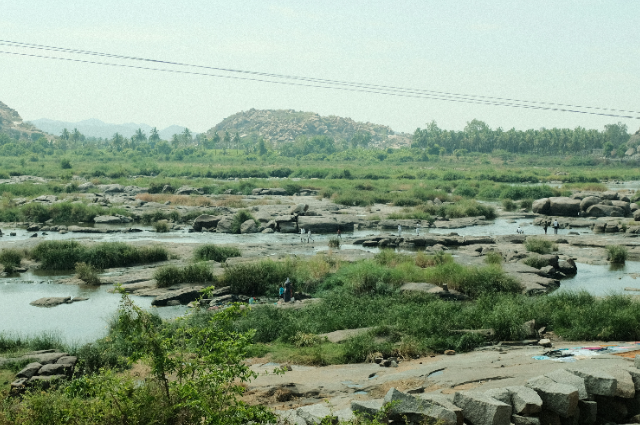
This policy brief examines reverse migration in Hiware Bazar, Maharashtra, where over 60 families returned from Mumbai after the restoration of groundwater and agricultural productivity. The case challenges assumptions that urban migration is irreversible and highlights how sustainable rural development can outperform urban informal employment (World Bank, 2018).
Executive Summary
The phenomenon analyzed in this policy brief is reversal migration in Hiware Bazar, Maharashtra, where over 60 family names voluntarily retired from Mumbai to engage in agriculture-based livelihoods. Once expelled to the outskirts by drought and agricultural failure, these people were lured back into the area by the restoration of groundwater and the farming of high-value crops and efficient local administration. The case questions mainstream expectations that rural-urban migration is unavoidable and irreversible and proves that sustainable rural development can be superior to urban informal jobs in cases when environmental resources and organizations are managed efficiently (World Bank, 2018).
Background: Drought, Distress, and Forced Migration
The village of Hiware Bazar has, over the decades, been plagued with a recurring drought, loss of groundwater, and a reduced agricultural harvest. The villagers were not able to support themselves and went to Mumbai with the hope of getting employment. The majority of the migrants settled in overcrowded chawls and became drivers, security guards, or daily wage laborers who got low salaries with minimal occupational security. Necessity and not aspiration influenced migration, which mirrors the organizational failure of rural resource management (Government of Maharashtra, 2017). For decades, drought forced residents of Hiware Bazar to migrate to Mumbai, where most lived in cramped chawls and worked as drivers or daily laborers. Migration was driven by necessity rather than opportunity (Government of Maharashtra, 2017).
Urban Informality Versus Rural Opportunity
Municipal exodus can be viewed as a channel to social elevation, although the economic pressure and social exclusion faced by the inhabitants of drought-related areas are a common reality. Informal jobs are characterized by reduced income rates and health and housing risks among households. On the contrary, regenerated rural economies are able to guarantee consistent incomes, social appreciation, and better living standards. One possible drawback of environmental constraints, as it is seen in Hiware Bazar, is that it causes rural potential to go unutilized (Planning Commission of India, 2002).
Groundwater Restoration and Institutional Reform
Scientific watershed development and water governance through discipline was the turning point of the state of Hiware Bazar. Groundwater tables were replenished by the use of check dams, contour trenches, and rainwater harvesting structures. At the same time, crop planning and the ban on irrational farming methods consuming water were simultaneously enforced. Such principles recovered the utility of the agricultural practices and ensured the background of the economic turnaround (Government of Maharashtra, 2017). Scientific watershed development restored groundwater levels and enabled high-value cash crop cultivation. Onions, flowers, and vegetables began generating annual incomes of ₹10–12 lakh per household.
The Reverse Exodus of 60 Families
The increased productivity in agriculture saw ex-migrants re-evaluating the economy of urban living. Cash crops included onions, flowers and vegetables, and started yielding 10-12 lakh incomes per household annually. It was an award-winning move of 60 families when the farmers realized that farming was more profitable, prestigious, and secure than Mumbai. This is a rare instance of voluntary migration of people to rural areas encouraged by opportunity, as opposed to necessity. Recognizing improved economic prospects, more than 60 families voluntarily returned from Mumbai to resume farming in Hiware Bazar. This rare reverse migration demonstrates the power of environmental restoration and institutional governance.
Economic Outcomes and Social Transformation
The resettlement of the migrant families enhanced the economy of the village and the village's social fabric. A greater supply of labour favoured intensive agriculture as well as more income, which facilitated investments in education, housing, and farm goods. The previous workers in urban areas were socially accepted as becoming good farmers, and this concept was contrary to the previous stratifications that favoured urban jobs over farming (Banerjee and Duflo, 2011).
Policy Implications and Transferability
The experience of the Hiware Bazar can be valuable to policymakers. In the first case, distress migration is reversible in situations where resource scarcity is solved. Second, agrarian resilience revolves around the aspect of water security. Third, village-level governance is as important as the investment in infrastructure. All the contextual factors differ, but the fundamental concepts of environmental restoration, incentive alignment, and community involvement are widely applicable (World Bank, 2018). The Hiware Bazar case underscores the importance of water security, local governance, and rural investment in addressing migration pressures.
The impending rural decline and overcrowding in cities are questioned in the reverse exodus to Hiware Bazar. Facilitating high-value agriculture and restoring the groundwater, the village converted changes to migration as a survival strategy into a decision. The case shows that when the environment is managed, there is economic planning and responsible governance, then rural life can compete and even outshine the informal urban economies. Reverse migration from Hiware Bazar proves that rural livelihoods can compete with urban economies when natural resources and institutions are effectively managed.
References
- Banerjee, A. and Duflo, E. (2011) Poor Economics. New York: PublicAffairs.
- Government of Maharashtra (2017) Hiware Bazar Model Village Development Report.
- Planning Commission of India (2002) Watershed Development and Rural Livelihoods.
- World Bank (2018) Social Norms and Community-Driven Development.