
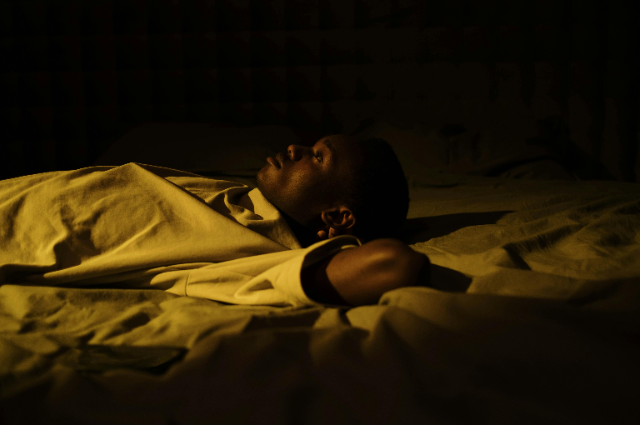
Loneliness has become a quantifiable health risk that is now a public health hazard with direct effects for sleep, mental stability and long-term health results. Research suggests that socially isolated people have fragmented and shallow sleep because of increased physiological vigilance. This has been a brief that evaluates the biological and psychological mechanisms between loneliness and insomnia and proposes policy responses at different levels - community, workplace and Government (Hawkley and Cacioppo, 2010; WHO, 2023).
Loneliness is increasingly being recognised as a structural social determinant of health, and less as an emotional state. Urbanisation and a decline in the bond of the community have led to an increased rate of isolation, and the disruption of sleep may often be the first symptom (WHO, 2023).
Economic Productivity and Workplace Implications
Loneliness is not something that ever stays within private life; it has a direct impact on economic systems. Employees who suffer from chronic social isolation are said to be less concentrated, have a slower rate of cognitive work, and experience increased emotional fatigue. When the quality of sleep reduces, these effects are compounded. Research has repeatedly found that sleep deprivation decreases memory consolidation, the accuracy of decision making and reaction time. In high-skill and/or safety-critical industries such as healthcare, transportation and the finance sector, these deficits result in measurable operational risks. From a policy perspective, loneliness-induced insomnia therefore has macroeconomic consequences, such as absenteeism, presenteeism, and additional healthcare spending. Dealing with loneliness is not a welfare measure but a workforce productivity measure.
Youth and Digital Substitution Effects
Among adolescents and young adults, loneliness has changed as technology has changed. While social media makes us appear to be connected, it commonly replaces merry-go-round interaction for meaningful relationships. Passive scrolling and late-night screen work to delay melatonin release and disrupt circadian rhythms, which also leads to poor sleep. Studies show that the heavy nighttime use of certain devices is related to both perceived loneliness and delayed sleep onset. In this way, digital habits result in exaggerating the isolation's biological effects. Young people can be perpetually connected, but emotionally unsupported. Policy responses must therefore take account of digital literacy, education on screen hygiene, and school-based peer networks to recreate real and world social ties that provide protection against sleep ill health.
Urban Design and Social Infrastructure
Physical environments determine social behaviour rather than just individual motivation. High-density housing, no shared spaces, long commutes and car-dependent neighbourhoods reduce the amount of spontaneous social contact. On the contrary, parks, libraries, community centres and walkable streets result in more incidental interaction and a sense of belonging. Public health scholars, therefore, increasingly refer to these amenities as "social infrastructure," which is necessary for psychological resilience. Cities that invest in accessible public spaces to gather the community tend to have stronger community ties and lower loneliness metrics. Sleep outcomes are often improved by the indirect effects of reduced stress and greater emotional security of residents. Urban planning, therefore, is as much a public health intervention as it is an act of design.
Healthcare System Integration
Healthcare systems often address insomnia and anxiety as two specific clinical problems, without taking into consideration loneliness as a causative factor. This leads to the overreliance on short-term pharmacological solutions such as sedatives or sleep aids, which are indicative of addressing symptoms and not of drivers. Integration of loneliness screening into primary care could help with interventions that are not medical in nature and that can be started earlier. Social prescribing models, in which doctors, nurses and other healthcare professionals make referrals to community groups, volunteering or peer support activities, have yielded promising results in both improving mental well-being and sleep patterns. Such approaches cut healthcare costs, enhance community participation and provide a preventive alternative to medication-dependent healthcare.
Risk Populations and Equity Considerations
Loneliness does not make all people equal. Elderly people who live on their own, migrants who have been disconnected from family networks, people with disabilities, and poor people living in cities are at higher risk of being isolated. Often, these groups do not have access to safe (social) communal space or flexible work arrangements that encourage social connection. Consequently, sleep issues become an ample burden for those already susceptible, leaving more inequalities in the health sector. Policymakers, therefore, have to create interventions using an equity lens. Targeted outreach, transportation for the poor, and local social programs can help make sure that the specifics of solutions are used by those who are most at risk and not just people with pre-existing means.
Long-Term Societal Outlook
If recent trends hold, loneliness can become one of the public health characteristics of the coming decades. The combination of ageing populations, remote lifestyles and weakened family structures could increase rates of isolation even more. Without proactive actions, both mental and sleep disorders will probably increase hand in hand. The cost of inaction will be cumulative: a less efficient education system as a result, a less efficient workforce and increased stress on healthcare systems. By treating loneliness as a systemic risk, instead of an individual failing, governments will have the opportunity to act early through preventive social investment, instead of trying to address these issues later through medical spending.
Measurement and Data Gaps
Despite a new understanding of the importance of loneliness as a public health issue, assessments of loneliness remain highly inconsistent across health systems. Most national surveys monitor depression, anxiety or sleep disorders, but few regularly measure social isolation according to standardised indicators. This lack of data serves to conceal the true extent of this problem and restricts the use of evidence-based policy. Without a way to be properly measured, loneliness goes underdiagnosed and underfunded compared to other risks for our health. Incorporating measures of loneliness and sleep quality into national health surveillance systems would enable governments to identify at-risk populations, assess the effects of interventions, and better target them with resources. The key to converting awareness into a policy that tackles the issue of social connection is to make social connection a measurable variable instead of an abstract concept.
Preventive Strategy: Building Connection Before Crisis
At the end of the day, the best remedy against loneliness-related insomnia is preventing it rather than curing it. Waiting for individuals to develop chronic sleep disorders or mental health complications adds to both the cost for everyone, both in sheer suffering and increased public costs. Proactive approaches, such as embedding strong school communities, incentives for neighbourhood networks, and a flexible but socially engaged workplace, create protective buffers well before the clinical symptoms start. When people feel "in" stable social systems, stress levels decrease, and sleep improves naturally. In this regard, social connection is preventive medicine. Investing early in community cohesion may have returns of the same magnitude as traditional medical interventions in terms of health benefits that reinforce the underlying value that well-being is as much influenced by our relationships as our healthcare.
Biological Mechanisms
Isolation activates stress pathways that prevent deep sleep and increase nighttime awakenings. Even adequate sleep time may not translate to restorative rest (Hawkley and Cacioppo, 2010).
Case Studies
Community programs for isolated elderly populations and structured social engagement for remote workers have both shown improvements in sleep outcomes, demonstrating the direct health impact of social connection (OECD, 2022).
Addressing loneliness is therefore a preventive health strategy. Strengthening community bonds may be as important as medical interventions for improving sleep.
References:
- Hawkley, L. and Cacioppo, J. (2010) Loneliness matters.
- OECD (2022) Remote work and wellbeing report.
- World Health O (2023). Social isolation and health risks.