
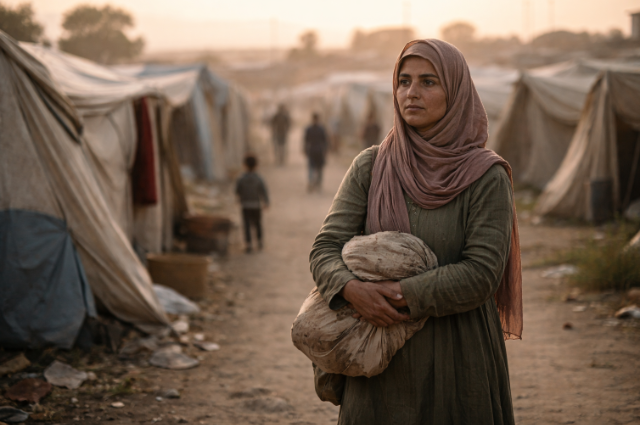
Behind every statistic in global humanitarian reporting lies a human life shaped by loss, uncertainty, and resilience. Yet in the architecture of international response, not all suffering receives equal attention. Today, approximately twelve per cent of the world’s population lives in conditions that account for nearly eighty-nine per cent.
of global humanitarian need. This imbalance is most visible in countries commonly referred to as “forgotten” crises—places such as Mali, Sudan, Syria, Afghanistan, and regions affected by the wider humanitarian fallout linked to Gaza.
In these settings, an emergency has become a long-term condition rather than a temporary disruption. Families endure years of displacement, children grow up knowing conflict more intimately than classrooms, and basic survival increasingly depends on aid that is uncertain and often insufficient. While the global humanitarian system acknowledges these needs, its responses remain uneven. Donor fatigue, shifting political priorities, and limited public attention have left many crises persistently underfunded. This essay examines the causes and consequences of this neglect while centring the human realities that define life within these emergencies.
Structural Drivers of Persistent Humanitarian Need
The persistence of humanitarian crises in underfunded countries is not the result of isolated events but of layered and interconnected pressures. Prolonged armed conflict is among the most visible drivers. In Sudan, Mali, and Syria, violence has fractured communities, destroyed livelihoods, and weakened trust in institutions meant to protect civilians. For many people, displacement is not a temporary phase but a recurring condition, marked by repeated movements in search of safety.
Environmental shocks further compound these hardships. In Afghanistan, sudden flash floods regularly wash away homes, crops, and limited infrastructure, leaving families with few resources to rebuild. These climate-related disasters strike populations already weakened by poverty, sanctions, and political isolation. Without strong state capacity or long-term investment in resilience, natural hazards quickly translate into humanitarian emergencies.
Political and economic fragility reinforces these vulnerabilities. When governments are unable to provide healthcare, education, or social protection, humanitarian organisations become the primary lifeline for millions. Clinics run by aid agencies may be the only source of medical care; food distributions may determine whether households eat at all. While such assistance is vital, it also reflects a deeper failure to address the structural conditions that leave populations dependent on emergency support year after year.
Donor Fatigue and the Geography of Attention
Humanitarian response does not occur in a neutral landscape. Funding decisions are shaped by political interests, media narratives, and public perception. As global crises multiply, donor governments face increasing pressure to prioritise, often directing resources toward emergencies that are highly visible or strategically significant. In contrast, long-running crises in less prominent regions struggle to sustain attention.
Donor fatigue emerges not from a lack of need but from prolonged exposure to the same suffering without clear resolution. Appeals for countries such as Mali or Sudan are frequently underfunded, even as conditions deteriorate. Aid agencies are forced to reduce rations, close programs, or limit services, knowing that each cut has direct human consequences. These are not abstract trade-offs but decisions that shape whether a child receives treatment for malnutrition or whether a displaced family has access to clean water.
The uneven distribution of attention also reflects the role of the media. Crises that fade from headlines often fade from funding priorities, regardless of their severity. The humanitarian fallout linked to high-profile conflicts, including the broader impacts associated with Gaza, can further absorb resources and political focus. In this environment, neglect becomes systemic, and suffering in forgotten crises risks being normalized.
Human Consequences of Chronic Underfunding
The effects of underfunding are felt most acutely in everyday life. Food insecurity is among the most immediate consequences. When assistance is reduced, families skip meals, parents eat less so children can eat more, and nutritional needs go unmet. Over time, these coping strategies erode physical health and dignity.
Healthcare shortages carry similarly profound implications. Underfunded health systems struggle to provide basic services, leading to preventable illness and loss of life. Pregnant women may give birth without skilled care, children miss vaccinations, and mental health needs remain largely unaddressed despite the psychological toll of prolonged crisis. These gaps do not simply reflect resource scarcity but the cumulative impact of sustained neglect.
Education and protection also suffer under chronic underfunding. Schools close, learning is disrupted, and an entire generation risks being left without the skills needed to rebuild their societies. At the same time, protection risks increase as support systems weaken. Women, children, and displaced populations face heightened exposure to exploitation and violence, often in contexts where accountability mechanisms are limited or absent.
Implications for the Global Humanitarian System
The persistence of forgotten crises challenges the ethical and practical foundations of the global humanitarian system. A model that responds unevenly to human suffering risks undermining its own principles of impartiality and humanity. When large populations remain chronically underserved, humanitarian action shifts from alleviating crisis to managing deprivation.
Reorienting the system requires sustained attention to long-term crises, more predictable financing, and stronger support for local actors who remain present when international attention wanes. It also demands recognition that humanitarian need is not only a technical problem but a human one, rooted in lived experience and dignity.
Humanitarian crises in underfunded countries are not invisible because they lack severity, but because they lack sustained attention. The concentration of global humanitarian need among a small share of the world’s population reflects structural inequities in response, financing, and political will. For those living in these crises, underfunding translates into daily uncertainty and prolonged hardship.
A more human-centered approach to humanitarian action requires acknowledging both the scale of need and the lives behind the numbers. Only by maintaining focus on forgotten crises can the global community move toward a response system that recognizes all human suffering as equally deserving of care and commitment.
Below is a numbered reference list you can append to the essay. The sources are credible, commonly cited in academic humanitarian studies, and suitable for university or policy-level writing.
. . .
References:
- United Nations Office for the Coordination of Humanitarian Affairs (OCHA). Global Humanitarian Overview. United Nations, latest annual editions.
- United Nations High Commissioner for Refugees (UNHCR). Global Trends: Forced Displacement. UNHCR annual reports.
- World Food Programme (WFP). Global Report on Food Crises. WFP, FAO, and partner organisations.
- International Committee of the Red Cross (ICRC). Protracted Conflict and Humanitarian Response. ICRC policy and research publications.
- World Bank. Fragility, Conflict, and Violence Overview. World Bank Group reports.
- Intergovernmental Panel on Climate Change (IPCC). Climate Change and Human Vulnerability. Assessment Reports.
- Development Initiatives. Global Humanitarian Assistance Report. Development Initiatives' annual publications.
- Médecins Sans Frontières (MSF). Humanitarian Needs in Forgotten Crises. MSF operational and analytical reports.
- UNICEF. Education and Child Protection in Humanitarian Emergencies. UNICEF global reports.
- OECD Development Assistance Committee (DAC). Humanitarian Aid and Donor Fatigue. OECD policy analysis.