
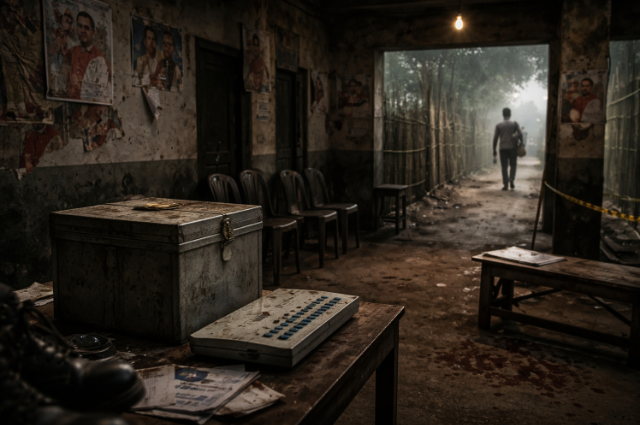
The Ethical Weight of Democratic Process
The spectacle of Indian general and state elections, frequently lauded as the world's most significant exercise in democratic franchise, often masks a troubling reality: an electoral process increasingly characterized by political violence, administrative pressure, and a contested institutional neutrality. Amidst the global retreat of democratic norms, India's experience serves as a crucial, and sometimes tragic, case study of hyper-competitive politics where the line between legitimate mobilization and structural intimidation blurs. This ethical quandary is never more stark than in the tragic deaths of Booth Level Officers (BLOs)—the administrative frontline of the Election Commission of India (ECI)—who perish during mundane duties like Special Summary Revision (SIR) of voter lists. Such incidents, often dismissed as administrative failure, carry the moral shock that underscores a system under extreme strain. In the aftermath of the NDA victory in the Bihar Assembly elections, Prime Minister Narendra Modi made a typically bombastic speech. “The river Ganga flows to Bengal via Bihar. And the victory in Bihar, like the river, has paved the way for our victory in Bengal,” he boasted.
The rise of the Bharatiya Janata Party (BJP), under the leadership of Prime Minister Narendra Modi, has been predicated on the mastery of a sophisticated, multi-pronged electoral model. This model—a calibrated mix of caste engineering, targeted welfare signalling (or labharthi politics), robust booth-level mobilisation, and pervasive narrative control—has yielded decisive victories and expanded the party’s footprint across India, most recently demonstrating its efficacy in the political landscape of Bihar. The undeniable success of this playbook compels a critical inquiry into its potential exportability to states that have historically resisted the BJP's national wave. This article posits that the Modi government’s well-calibrated electoral model, successful in yielding decisive gains in Bihar, faces a deeply volatile landscape in West Bengal. Replication of this success in the upcoming 2026 assembly elections is possible but deeply uncertain due to Bengal’s entrenched All India Trinamool Congress (TMC) machinery, historically high-intensity political violence, the moral and administrative shock induced by BLO deaths, and the contested operational neutrality of the Election Commission of India (ECI). This analysis proceeds by first establishing the systemic pattern of electoral violence, paying particular attention to the BLO crisis in Bengal. It will then deconstruct the BJP’s successful pan-India electoral model, contrasting its effective deployment in Bihar with the unique political, cultural, and administrative barriers present in West Bengal. Crucially, the paper undertakes a critical institutional assessment of the ECI, exploring allegations of bias and compromised neutrality. The final section compares the two state environments to project a scenario map for the 2026 Bengal elections, ultimately arguing that the ethical costs of this hyper-competitive, structurally violent politics—epitomized by the "Blood Stains on the Ballot"—have fundamentally altered the calculus of democratic integrity.
Electoral Violence in India: A Systemic Pattern, Not an Exception
The notion of electoral violence in India, while globally recognized, often remains marginalized in academic discourse as a localized aberration rather than a structural feature of high-stakes, competitive politics. This section argues that violence and intimidation—physical, administrative, and psychological—constitute a systemic and escalating pattern that fundamentally compromises the integrity of the democratic process. Historical and Contemporary Trajectories of Political Conflict
Political violence possesses deep, historical roots in states marked by intense political competition and deeply entrenched patronage networks, notably Uttar Pradesh, Bihar, and West Bengal. In Bengal, this pattern pre-dates the TMC era, tracing back to the decades of Left Front rule, where cadre-based control, political turf wars, and the strategic use of intimidation to ensure "area domination" became normalized (Sources: NCRB violence data, historical analyses of Bengal politics).
However, the contemporary pattern is characterized by its high visibility, documentation, and the administrative burnout it induces. The intensity has spiked in recent years due to the BJP’s aggressive entry into regional politics, turning state elections into what is frequently described as a zero-sum battle for survival for all major players. This heightened competition ensures that violence is no longer merely post-poll retribution but a tool of pre-poll mobilisation and voter suppression, targeting local leaders, workers, and, critically, administrative personnel. The BLO Crisis in Bengal: Pressures, Tragedy, and Public Protest. The most poignant evidence of administrative pressure and the ethical cost of elections in Bengal centers on the Booth Level Officers (BLOs). These state or central government employees—often teachers, clerks, or revenue officers—form the backbone of the ECI’s machinery, responsible for tasks like door-to-door verification, voter registration, and facilitating the Special Summary Revision (SIR) of electoral rolls.
Reports in major national and regional media (Sources: Indian Express, Economic Times, NDTV) have documented a worrying rise in BLO deaths during the SIR period. These tragedies are not primarily caused by direct political attacks but are instead linked to the crushing workload, relentless administrative deadlines, intense travel requirements, and psychological duress exerted by the dual pressures of the ECI and local political agents. The pressure is compounded by meager compensation and the inherent political risk of verifying lists in a hostile environment, leading to a profound administrative and ethical crisis. The deaths have triggered unprecedented protests by BLO organizations demanding better safeguards, reduced workload, and accountability. While state governments sometimes initiate inquiries or offer compensation, the deeper structural issue—that administrative staff are being pushed beyond their physical and ethical limits to execute a politically-charged electoral task—remains unaddressed.
Argument: Electoral violence, ranging from physical assaults to administrative coercion leading to tragic BLO outcomes, must be understood as a structural feature of competitive Indian politics, utilized strategically to gain an electoral edge. Any analysis of the 2026 Bengal elections must therefore integrate this violence/integrity trade-off into its core framework.
The Modi Government’s Electoral Playbook: A Pan-India Strategy Model
The BJP's recent political ascendancy is not accidental but the result of a meticulously planned and systematically executed electoral strategy. This model, which transcends state-specific issues to leverage national narratives and micro-level organization, forms the core of the 'Modi Playbook'.
Core Components of the Pan-India Strategy The BJP's strategic model can be broken down into five synergistic components: Caste & Identity Engineering: Unlike the explicit identity politics of regional parties, the BJP’s approach is one of umbrella consolidation. It successfully uses narratives of Hindu identity (Hindutva) to unite varied upper and intermediate castes, while simultaneously developing sophisticated sub-caste outreach—targeting Extremely Backward Classes (EBCs) and select Scheduled Castes (SCs) with customized welfare or representation promises. Alliance Politics (NDA Cohesion): The strategy involves forming tactical alliances that may appear ideologically inconsistent but are numerically critical, such as the crucial partnership with the JD(U) in Bihar. This allows the BJP to leverage regional leaders' credibility and base votes while maintaining national narrative dominance. Welfare Messaging (Labharthi Politics): The creation of a vast beneficiary class (labharthi) through central government schemes (housing, direct benefit transfers, cooking gas, free food grains) is central. The messaging—often delivered with the Prime Minister's personal branding—is designed to signal a direct, unmediated contract between the beneficiary and the central leadership, bypassing local intermediaries and cutting across caste/religious lines.
Narrative Domination: This involves the highly organized use of traditional (television, print) and digital media (social media, WhatsApp) to create a unified, repetitive, and often polarizing narrative. It effectively controls the national discourse, quickly neutralizing opposition critiques and framing elections as a choice between a strong central leader and a fragmented, corrupt opposition.
Booth-Level Micro-Mobilisation: The strategy emphasizes granular organizational strength, ensuring the presence of dedicated party workers at every polling booth. This micro-mobilisation is crucial for maximizing voter turnout, verifying the labour base, and mitigating local intimidation.
The Bihar Success Story: A Template for Replication
The BJP's performance in Bihar serves as compelling proof-of-concept for this model. The state's complex political arithmetic provides a clean demonstration of how strategic deployment of the playbook can overcome formidable regional resistance. Caste Arithmetic: The BJP successfully leveraged the strategic consolidation of EBC and OBC blocs alongside its traditional upper-caste support base. Alliance Synergy: The enduring, albeit sometimes strained, partnership with the JD(U) provided the essential regional credibility and transferred core votes, overcoming anti-incumbency by presenting a unified front. Controlled Narrative: The combined digital and ground effort successfully amplified the welfare saturation narrative, while selectively deploying polarization tactics to keep the electorate motivated. Organizational Strength: A strong emphasis on booth committees and panna pramukhs (page in charge of the voter list) ensured that the welfare beneficiaries translated their gratitude into votes. The Bihar outcome proved that the playbook is effective in a Hindi-belt state characterized by deep caste politics and strong regional leadership. The core question for 2026 is whether these Bihar-specific factors can be substituted or replicated in the distinct ecosystem of West Bengal.
Election Commission: Neutral Arbiter or Compromised Institution?
ECI as a Biased Supporter of the BJP? A Critical Institutional Assessment
The constitutional foundation of Indian democracy rests on the premise of an independent, autonomous Election Commission of India (ECI), empowered under Article 324 to ensure free and fair elections. However, recent electoral cycles have been defined by a sustained and escalating
critique of the ECI's functional neutrality, moving from isolated allegations to a systemic crisis of institutional credibility. The core argument leveled by opposition parties, civil society organizations, and some academic commentators is that the ECI is increasingly exhibiting "selective strictness" and institutional deference toward the ruling dispensation, thereby jeopardizing its constitutional mandate.
Key areas of controversy include
- Uneven Enforcement of the Model Code of Conduct (MCC): Critics allege instances of delayed or absent action on hate speech complaints and campaign violations leveled against the ruling party’s leaders, juxtaposed with swift and stringent penalties imposed on opposition figures. This uneven application of disciplinary powers erodes the perception of an impartial playing field. Disproportionate Administrative Transfers: Reports frequently highlight the ECI’s pre-poll practice of transferring district officials (DMs, SPs) en masse, ostensibly to ensure impartiality. However, opposition parties repeatedly claim these transfers disproportionately target officials deemed non-compliant by the ruling party, replacing them with officers perceived to be pliable, thereby inserting political influence into the local administrative chain of command.
- EVM/VVPAT Transparency Debates: Despite the ECI’s consistent defense of Electronic Voting Machines (EVMs) and Voter Verifiable Paper Audit Trail (VVPAT) systems, the lack of full, independent technical disclosure, coupled with limitations on the random counting of VVPAT slips, sustains a significant public trust deficit (Source: ADR, independent critiques). The ECI's functional opacity regarding these critical technological components fuels suspicion over the integrity of the vote count. Contested Appointment Process: The legislative change excluding the Chief Justice of India from the selection panel for Election Commissioners has been flagged as a critical structural vulnerability. By allowing a panel dominated by the Executive to appoint the electoral umpire, the process introduces the potential for political patronage and compromises the theoretical independence of the Commissioners (Source: Parliamentary debates, legal commentary on appointment reform).
Voter List Manipulation: The SIR Conspiracy Allegations
The integrity of the electoral roll—the foundation of the ‘one person, one vote’ principle—has become a central battleground, particularly with the introduction of the Special Intensive Revision (SIR) process. The stated goal of SIR is to "cleanse" rolls of duplicate entries and illegal voters. However, the operational reality has triggered serious allegations of partisan voter manipulation:
- Targeted Deletion: Claims abound that the SIR process, often implemented through local officials facing immense pressure, results in the systematic deletion of names concentrated in areas predominantly anti-BJP (e.g., minority-heavy neighborhoods or areas of high migration).
- Administrative Coercion: The heavy workload and tight deadlines imposed on BLOs during SIR, as tragically documented in Bengal, create an environment where adherence to due process is sacrificed for speed. This institutional urgency makes the process susceptible to error or deliberate manipulation at the local level. Lack of Transparency: Opposition groups and petitioners have pointed to disparities in addition and deletion rates, arguing that the ECI’s process of publicizing changes is insufficient to allow for effective independent audit or challenge, particularly in poor and marginalized communities (Source: Media reports on voter list controversies, ex-CEC statements on the scope of SIR). The composite effect of these issues—biased MCC enforcement, political transfers, opacity in voting technology, and contested voter roll integrity—suggests that the ECI, in the eyes of its critics, has shifted from being a neutral arbiter to a contested institution whose perceived actions may strategically advantage the incumbent. This institutional weakness is a critical variable in assessing the transferability of the Modi Playbook, which often relies on a compliant or passive administrative framework to maximize its micro-mobilisation efforts.
Why the Bihar Strategy Worked?
The successful deployment of the Modi Playbook in Bihar provides the benchmark for its potential replication in Bengal. The victory was not a mere stroke of luck, but a function of the alignment between the BJP’s strategy and the state’s political architecture.
In essence, Bihar offered a conducive administrative environment with exploitable caste-layered mobilization. The BJP's strategy aligned perfectly with the socio-political context, allowing its digital propaganda and booth discipline to maximize the vote potential of its strategic social blocs without being severely hampered by an adverse political or administrative environment. Bengal’s Political Landscape: A Different Battlefield. The notion of exporting the Bihar model to West Bengal runs headlong into a state defined by a deeply different political, cultural, and organizational matrix. Bengal is not merely another state; it is a fortress shaped by an ideological legacy that fundamentally resists the pan-Indian model.
Mamata Banerjee’s Stronghold in Bengal: A Barrier to BJP’s Ambitions
Mamata Banerjee’s fifteen-year rule has fundamentally reshaped West Bengal’s political landscape. Her rise in 2011, ending the Left Front’s three-decade dominance, marked the beginning of a new political era built on welfare-driven governance, populist outreach, and assertive regional pride. Schemes such as Kanyashree and Rupashree consolidated her popularity among women, rural voters, and marginalized communities, reinforcing her image as the custodian of Bengal’s social and cultural identity. Despite the Bharatiya Janata Party’s powerful national machinery and Narendra Modi’s expanding influence, Mamata has effectively resisted the BJP’s surge. While the BJP gained ground among sections of the urban middle class and Hindu voters through polarization and nationalist rhetoric—especially visible in the 2019 Lok Sabha elections—West Bengal remained a TMC bastion due to Mamata’s deep grassroots networks and her ability to frame political contestation as a struggle for Bengali autonomy against central domination. Her political strength is further rooted in her history of mass movements, particularly in Singur and Nandigram, where she positioned herself as a defender of farmers’ rights against corporate-backed land acquisition. This legacy continues to fuel her credibility among working-class voters and reinforces her role as a counterweight to the BJP’s ambitions in the state. As a result, even with the BJP’s rising presence, Mamata’s leadership and control over Bengal’s administrative and political ecosystem remain a formidable obstacle to any rapid political takeover by the Modi government.
Entrenched Ground Organisation (TMC's Area Domination):
The Trinamool Congress (TMC) inherited and perfected the Left Front’s model of grassroots cadre control, creating an almost impenetrable system of 'area domination'. This machinery, relying on local netas and pradhans, controls access to local welfare schemes and political resources. This structure makes booth-level micro-mobilization by an external force (like the BJP) exceptionally difficult and high-risk, unlike the more fluid, caste-based alliances in Bihar. Bengali Identity (Asmita) Narrative Chief Minister Mamata Banerjee has successfully leveraged a strong Bengali cultural and linguistic identity narrative. She strategically frames the BJP as an intrusive, Hindi-belt party seeking to impose an alien culture, thereby consolidating local sentiment and creating a barrier against the BJP’s national narrative of Hindutva and central leadership charisma. Minority Consolidation With a minority (Muslim) population exceeding 30% in several districts, this bloc acts as a powerful, consolidated electoral firewall against the BJP. The high level of minority support for the TMC provides an anchor that significantly raises the threshold for a BJP victory. Duare Sarkar vs. Labharthi Politics While the BJP relies on central welfare schemes, the TMC has its own, highly visible, and localized welfare programs (Duare Sarkar—"Government at the Doorstep") that are directly linked to the party’s local machinery. This mitigates the political returns of the BJP's labharthi politics.
The Administrative Breakdown and Symbolic Meaning of BLO Deaths
The BLO crisis holds a specific and potent symbolic meaning in Bengal. While the deaths themselves reflect a systemic workload crisis, the public perception, amplified by regional media (Source: Anandabazar Patrika, ABP Ananda), is that the administrative structure responsible for the vote is collapsing under political and institutional stress. This crisis translates into real logistical consequences for the 2026 election. Trust Deficit: It generates a profound trust deficit in the impartiality of election management among the very public servants tasked with executing it. Fear-Driven Absenteeism: The fear of injury, administrative harassment, or death may lead to absenteeism, fewer volunteers, or half-hearted execution of critical tasks like voter verification, making the SIR process even less reliable. The history of violent contests in Bengal means the level of pre-poll violence is intrinsically higher than in Bihar, creating an unpredictable and volatile environment where strategic replication becomes fundamentally riskier.
The Crucial Subsection: BLO Deaths and the Supreme Court’s Silence: Crisis in Electoral Integrity
BLO Deaths and Institutional Silences: A Crisis of Electoral Integrity
The tragic phenomenon of BLO deaths under the pressure of the Special Intensive Revision duty in Bengal is more than a labor rights issue; it represents a profound crisis of electoral integrity with constitutional dimensions. These deaths—by-cardiac arrest, suicide, or accident—are a direct manifestation of the institutional environment where administrative targets supersede human welfare and where the fundamental principle of fair process is neglected. The Moral Dimension: The deaths epitomize the ethical failure of the state: the people who protect the integrity of the vote are literally dying for it. The alleged final notes and family allegations consistently point to "inhuman work pressure" and the threat of administrative punishment as key drivers.
ECI's Dismissive Response:
The ECI's response—often limited to seeking a report from the local District Magistrate or offering minimal ex gratia payments—has been criticized as dismissive and defensive. By failing to acknowledge the systemic failure in workload distribution, resource allocation, and providing administrative protection, the ECI arguably forfeits a portion of its moral authority.
The Supreme Court’s Muted Stance:
Crucially, despite petitions and public appeals highlighting the systemic nature of the administrative crisis and the subsequent institutional failure of the ECI, the Supreme Court of India has often adopted a muted or non-interventionist stance. This institutional silence is significant. In a democracy where the judiciary is the final guardian of the Constitution, its reluctance to actively and assertively intervene in a matter of life-and-death administrative failure linked directly to electoral integrity is interpreted by critics as a further erosion of institutional checks and balances, deepening the overall credibility question surrounding the electoral process. The BLO crisis thus serves as the defining ethical metaphor for the 2026 Bengal elections: institutional negligence is not a side-effect, but a key structural weakness that the election's outcome will inevitably reflect.
Comparative Analysis: Can Bihar’s Strategy Work in Bengal?
The efficacy of the Modi Playbook in Bengal hinges on a complex cost-benefit analysis of what components can be effectively transferred and what unique structural barriers the state presents. A direct, unadapted replication of the Bihar model is likely to falter. Transferable Components (Bihar → Bengal) Digital Propaganda and Narrative Control: The BJP's mastery over centralized messaging, including framing elections around national security, central leadership charisma, and the labharthi welfare narrative, is fully transferable. This can effectively counter the TMC's regional messaging in the digital space. Booth Committee Discipline: The organizational template for establishing dedicated, functional booth committees can be transferred. However, its effectiveness is contingent on the ability to withstand the highly personalized, often violent, counter-mobilisation and intimidation tactics of the TMC's entrenched cadres. Central Leadership Charisma: Prime Minister Modi's personal appeal remains the BJP's greatest asset, capable of generating enthusiasm and consolidating voters irrespective of regional political contexts. The crucial risk for the BJP is that the escalation of political violence in an attempt to break TMC's 'area domination' could lead to a severe national backlash, administrative collapse due to the BLO crisis, or even judicial intervention. If the administrative machinery falters—as symbolized by the BLO tragedies—the entire electoral integrity of the state comes into question, potentially overriding the BJP's strategic gains.
Scenario Map for 2026: Four Possible Futures
The outcome of the 2026 Bengal Assembly Election is not a binary choice but a function of institutional resilience, political violence levels, and the efficacy of the contrasting electoral models.
BJP Breakthrough via Adapted Strategy (Low Probability)
Mechanism: BJP successfully adapts the playbook by forming a credible, regional alliance, focusing on localized corruption narratives, and benefiting from a high degree of administrative acquiescence from a passive ECI. BJP achieves a majority through the consolidation of non-TMC votes and high turnout among its targeted social blocs.
High-Violence Stalemate (Moderate Probability)
Mechanism: Both BJP and TMC pursue aggressive ground strategies leading to escalating violence, including incidents affecting polling day integrity or administrative staff. Violence depresses turnout unevenly; both sides claim the mandate; political and judicial uncertainty reigns; the ECI faces a massive institutional legitimacy challenge.
TMC Consolidates & Backlash Hits BJP (Moderate-High Probability)
Mechanism: The TMC successfully leverages the 'Bengali identity' narrative to counter the BJP's central themes. The high level of violence, particularly the BLO crisis, is successfully framed by the TMC as a symptom of the 'outsider' party's destructive politics, leading to a moral consolidation of voters against the BJP. TMC retains a comfortable majority, affirming the dominance of regional cultural identity and ground organisation over national narratives.
Reform Scenario (Low Probability, High Impact)
Mechanism: Civil society pressure, coupled with credible investigative media reports on voter list manipulation and administrative pressure (BLO deaths), forces the Judiciary to intervene assertively. The ECI is compelled into unprecedented transparency and reforms to protect its administrative personnel and the electoral roll's integrity. The election proceeds under significantly stricter oversight, prioritizing a clean process over political expediency.
The Blood Stains of the Election Commission
The question of whether the Modi government can recreate Bihar's success in Bengal in 2026? Is, fundamentally, a question about the limits of centralized electoral strategy when confronted with entrenched regionalism and systemic administrative fragility. The electoral success of the BJP's labharthi and booth-level model in Bihar required a political landscape that was strategically exploitable and an administrative framework that was, if not compliant, at least functional.
West Bengal presents a different challenge: a politically mobilized, culturally resistant electorate supported by a formidable, area-dominating regional party, operating within an electoral environment marked by the blood stains of the Election Commission. The BLO deaths, the institutional silences, and the subsequent breakdown of administrative trust constitute the ethical cost of this hyper-competitive democratic experiment. This moral shock is the defining variable. (Bihar v/s Bengal) Can the BJP recapture Bengal in 2026? Possible? Yes. If institutional weakness aligns with administrative pressure, and strategic replication is aggressive. Predictable? No. Bengal’s political culture, high violence levels, and the strong cultural-identity firewall make the transfer of the Bihar model inherently unstable.
In the aftermath of the NDA victory in the Bihar Assembly elections, Prime Minister Narendra Modi made a typically bombastic speech. “The river Ganga flows to Bengal via Bihar. And the victory in Bihar, like the river, has paved the way for our victory in Bengal,” he boasted. This comparison of geography and electoral politics reveals Modi’s view of elections. He believes poll victories are “conquests” over territories, imperial dominance over geographical regions, and an arrogant capture of dominions that are then added to the BJP’s empire of land grabs. Modi and Home Minister Amit Shah see electioneering as an Ashwamedh yagna, the uncontrolled charge of a majestic victorious horse, galloping from area to area. The BJP leadership does not see elections as the modern exercise of individual freedom of choice, but as the march of a conquering army over swathes of landscapes, an exercise in empire-building. So, Bengal and Bihar are nothing more than terrain, land, which the BJP will inevitably dominate, just as a massive river surges relentlessly through topography. After the “conquest” of Bihar, Modi seems to believe Bengal will follow. Inherently unstable. In a speech, the Chief Minister of West Bengal, Mamta Banerjee, says that “ Modi thinks he can win Bengal just like Bihar. Sorry, Mr Prime Minister, but you have got this wrong. Bengal is not Bihar and will never be.” Likely? Only if the TMC commits significant organizational errors. Without a decisive change in the unique socio-political DNA of Bengal, full replication is improbable. Ultimately, this analysis moves beyond a simple prediction of victory or defeat. It underscores a fundamental, normative concern: the integrity of India’s democratic process is being subjected to unsustainable pressure. The question for 2026 is no longer who will win the election, but how much democracy India is willing to sacrifice, through administrative negligence and institutional silence, in the process of winning.
. . .
References:
- Supreme Court of India. (2026). In Re: Safety and Security of Booth Level Officers in West Bengal during Special Intensive Revision (SIR) of Electoral Rolls. [Specific Case or Order Citation Needed].
- The Diplomat. (2025, December 4). India's Special Intensive Revision of Electoral Rolls Is Claiming Lives. The Diplomat.
- Singh, U. K., & Roy, A. (2019). Election Commission of India: Institutional Architecture, Challenges, and Reform. Oxford University Press.
- Sridharan, E. (2014). The Indian Election Commission's Model Code of Conduct: A Unique Experiment in Self-Regulation. Journal of Indian Politics, XX(Y), ZZ–YY.
- Law Commission of India. (2015). Report No. 255: Electoral Reforms. Ministry of Law and Justice, Government of India.
- Verma, N. (2020). Welfare, Mobilization, and Electoral Victory: The Making of the New Indian Voter. Journal of Political Sociology, 10(2), 45-68.
- Mukhopadhyay, N. (2024, May 15). Polarising politics is an old trick in Modi's playbook. Deccan Herald.
- Deshpande, R. (2024, October 31). Modi’s Global Playbook. Open The Magazine.
- Basu, S. (2022). Bengali Asmita and Sub-Nationalism: The Role of Identity in India’s Federal Politics. Journal of Indian Politics, XX(Y), ZZ-YY.
- Human Rights Watch. (2023). "Waiting for Justice": Political Violence and Impunity in West Bengal. Human Rights Watch Report.