
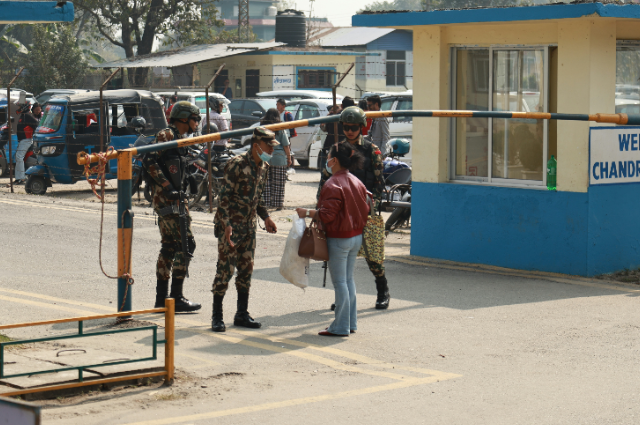
The twenty-first century has witnessed unprecedented levels of forced displacement, making global refugee movements one of the most significant political phenomena shaping international relations. According to the United Nations High Commissioner for Refugees (UNHCR), the number of forcibly displaced people worldwide surpassed 110 million in 2023, driven by protracted conflicts, political repression, environmental degradation, and economic collapse. Contemporary crises in Ukraine, Syria, Afghanistan, Sudan, Myanmar, and parts of Central America have reconfigured not only humanitarian responses but also geopolitical alignments, domestic political discourses, and international legal frameworks. Refugee flows are no longer peripheral humanitarian concerns; they are central to global governance, state sovereignty debates, regional security calculations, and the evolution of international norms.
This essay critically examines the multifaceted impact of global refugee movements on world politics, analyzing their influence on state sovereignty, regional stability, populist politics, international law, security paradigms, and global governance institutions.
Refugee Movements and the Transformation of Sovereignty
The modern international system, rooted in Westphalian sovereignty, presumes territorial control and border integrity as fundamental attributes of statehood. However, large-scale refugee movements challenge this model by testing states’ capacity and willingness to regulate borders while adhering to humanitarian norms.
The cornerstone of refugee protection, the United Nations 1951 Refugee Convention, institutionalised the principle of non-refoulement, prohibiting states from returning refugees to territories where they face persecution. While this framework established legal obligations, contemporary politics has exposed tensions between humanitarian commitments and domestic political pressures. States increasingly employ securitisation narratives to justify restrictive asylum policies, externalisation agreements, and offshore processing mechanisms.
The European Union’s response to Mediterranean migration flows, including agreements with transit countries, illustrates how refugee governance has become intertwined with diplomatic bargaining and border externalisation. Thus, refugee movements compel states to renegotiate the balance between sovereignty and international legal obligations.
Geopolitical Realignments and Strategic Instrumentalisation
Refugee populations have increasingly become instruments of geopolitical strategy. Host states may leverage refugee presence for financial assistance, diplomatic concessions, or strategic leverage. For example, Turkey’s hosting of millions of Syrian refugees has positioned it as a critical actor in European migration diplomacy. Similarly, frontline states neighbouring conflict zones often demand greater burden-sharing mechanisms from wealthier states.
Moreover, refugee flows can alter regional alliances. The displacement caused by the Russia-Ukraine war reshaped European unity, reinforced NATO cohesion, and prompted expanded humanitarian coordination. In this context, refugee protection became both a moral imperative and a political signal of solidarity.
In some cases, forced displacement has been weaponised. The deliberate facilitation of migrant flows across borders to pressure neighbouring states demonstrates how human mobility can be manipulated within hybrid warfare strategies. Consequently, refugee movements are no longer solely humanitarian crises but also components of strategic statecraft.
Domestic Politics and the Rise of Populism
Perhaps the most visible political impact of refugee movements has been within domestic electoral politics. Large-scale migration has fueled nationalist, right-wing populist movements across Europe and North America. Political parties have framed refugee arrivals as threats to cultural identity, economic stability, and national security.
The migration crisis of 2015 significantly influenced political developments in Germany, Italy, Hungary, and the United Kingdom. Debates surrounding migration and border control played a substantial role in the Brexit referendum. In the United States, immigration became a defining electoral issue, shaping presidential campaigns and policy orientations.
This politicisation of refugee issues has led to policy polarisation, stricter asylum regimes, and expanded border enforcement mechanisms. At the same time, countervailing political forces advocating humanitarianism and multiculturalism have mobilised in response, illustrating how refugee movements intensify ideological contestation within democratic societies.
Security Paradigms and the Securitisation of Migration
The securitisation theory, advanced by scholars of the Copenhagen School, helps explain how refugee flows are framed as existential threats requiring extraordinary measures. Although empirical evidence linking refugees to terrorism remains limited, political discourse often conflates forced migration with security risks.
Post-9/11 security architectures reinforced border surveillance technologies, biometric registration systems, and intelligence-sharing networks. Contemporary refugee governance increasingly intersects with counterterrorism strategies, transforming humanitarian protection into a domain of national security.
This securitised framing has normative consequences. It risks undermining refugee rights, stigmatizing displaced populations, and legitimising exceptional measures that restrict civil liberties. Simultaneously, it reshapes global security agendas by integrating migration management into defence and intelligence policies.
Economic and Developmental Implications
Refugee movements also influence the global political economy. While host states often perceive refugees as fiscal burdens, empirical research demonstrates mixed outcomes. In many contexts, refugees contribute to labour markets, entrepreneurship, and demographic renewal, particularly in ageing societies.
International financial institutions, including the World Bank, have reframed refugee assistance as a development challenge rather than solely a humanitarian emergency. Concessional financing mechanisms now support infrastructure, education, and employment programs in host countries.
However, disparities in burden-sharing remain stark. Low- and middle-income countries host the majority of the world’s refugees, while wealthier states accept comparatively fewer asylum seekers. This imbalance generates political tensions and demands for more equitable responsibility-sharing mechanisms under frameworks such as the Global Compact on Refugees (2018).
Climate Change and Future Political Instability
Emerging patterns of displacement linked to environmental degradation introduce new complexities. Although international law does not formally recognise “climate refugees,” rising sea levels, desertification, and extreme weather events are increasingly displacing populations.
Climate-induced displacement blurs the line between voluntary migration and forced flight, challenging existing legal categories. As environmental crises intensify, refugee governance will likely become central to climate diplomacy, adaptation financing, and conflict prevention strategies.
Regions vulnerable to both political instability and environmental stress—such as the Sahel—illustrate how climate and conflict interact to generate cyclical displacement. Future refugee movements may therefore become even more deeply embedded in global security calculations.
Normative Shifts in Global Governance
The scale and persistence of displacement have prompted normative innovation in global governance. The 2018 Global Compact on Refugees represents an attempt to strengthen international cooperation without imposing binding quotas. While criticised for lacking enforcement mechanisms, it reflects a shift toward multilateral responsibility-sharing.
Simultaneously, civil society networks, municipal governments, and regional organisations have assumed more active roles in refugee integration. Cities have emerged as key actors in implementing inclusive policies, sometimes diverging from national political rhetoric.
This multi-level governance approach suggests that refugee movements are reshaping not only interstate politics but also the architecture of global governance itself.
Global refugee movements are no longer episodic humanitarian crises but structural features of contemporary international politics. They challenge traditional conceptions of sovereignty, influence geopolitical bargaining, reshape domestic political landscapes, and transform security paradigms. While they can exacerbate political polarisation and regional tensions, they also stimulate normative innovation and institutional reform.
As conflict, authoritarianism, and climate change persist, forced displacement will remain a defining issue of world politics. The central question for the international community is not whether refugee movements will continue, but how global governance systems will adapt to manage them in ways that uphold human dignity while maintaining political stability. The answer will significantly shape the trajectory of international relations in the twenty-first century.
. . .
References:
- Betts, A., & Collier, P. (2017). Refuge: Transforming a Broken Refugee System. Allen Lane.
- Buzan, B., Wæver, O., & de Wilde, J. (1998). Security: A New Framework for Analysis. Lynne Rienner.
- Hollifield, J. F. (2004). The Emerging Migration State. International Migration Review, 38(3), 885–912.
- United Nations High Commissioner for Refugees (UNHCR). (2023). Global Trends: Forced Displacement in 2023. Geneva: UNHCR.
- United Nations. (1951). Convention Relating to the Status of Refugees.
- World Bank. (2023). Refugee Policy Review Framework and Development Approaches.