
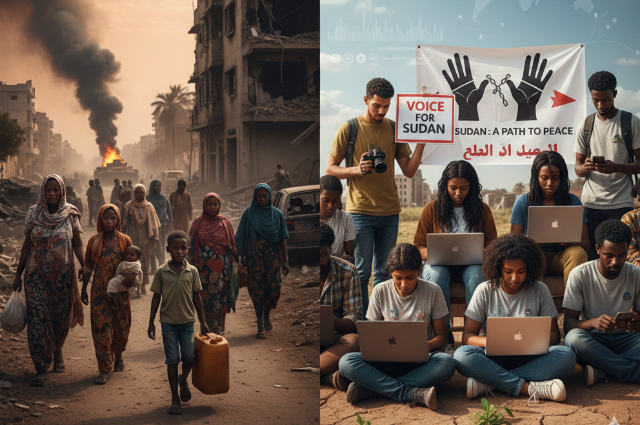
In recent years, Sudan has experienced a dramatic and devastating period of conflict that has affected not only its citizens but also the broader region. The war in Sudan has escalated into one of the most pressing humanitarian crises of the 21st century. What started as political unrest has now evolved into widespread violence, displacing millions of people, causing severe economic instability, and creating an atmosphere of fear and uncertainty for its citizens. In this article, we will explore the origins, progression, and impact of the Sudanese conflict.
Origins of the Conflict
The roots of Sudan's conflict lie in its complex political, ethnic, and social landscape. The country's history is marked by a series of power struggles, regional tensions, and foreign interventions, all contributing to its volatile situation. The division of Sudan into two countries in 2011 — Sudan and South Sudan — was initially seen as a path to peace, but it did not bring an end to the country's internal conflicts.
The conflict's most recent phase began in 2019, with the overthrow of long-time dictator Omar al-Bashir. Al-Bashir had ruled Sudan for nearly 30 years, during which time he implemented a strict Islamic regime, which led to widespread human rights abuses, including the Darfur genocide in the early 2000s. In 2019, mass protests erupted in response to skyrocketing inflation, food shortages, and political repression. These protests led to al-Bashir’s removal from power, and a transitional government was established. However, the transition to democracy was fraught with difficulties, with military factions and civilian groups struggling to share power.
Escalation into Civil War
The situation took a dangerous turn in 2021 when a military coup, led by General Abdel Fattah al-Burhan, toppled the civilian-led government. This action reignited tensions between the military and civilian factions, leading to violent clashes across Sudan. The coup left Sudan in a state of political limbo, with no clear path forward.
The military's increasing control over key institutions, including the economy and security forces, has further fueled the conflict. Competing factions, including various paramilitary groups, have further escalated violence. Ethnic tensions, particularly in the western and southern regions, have also contributed to the instability.
Humanitarian Impact
The humanitarian crisis caused by the Sudan conflict is dire. Millions of people have been forced to flee their homes due to violence, leaving them in refugee camps or trapped in conflict zones with limited access to food, water, healthcare, and education. According to the United Nations, more than 2.5 million people have been displaced since the latest phase of the conflict began.
The Sudanese economy has also suffered greatly. Inflation has soared, making basic goods unaffordable for most families. The agricultural sector, a key part of Sudan's economy, has been decimated by the fighting. In addition, the country’s infrastructure has been severely damaged, with roads, schools, and hospitals destroyed.
The war has disproportionately affected Sudan's youth, with many young people being recruited into armed groups. The lack of access to education and employment opportunities has made the youth more vulnerable to manipulation and violence. Women and children have been particularly vulnerable, facing sexual violence, forced recruitment, and other human rights abuses.
International Response
The international community has struggled to address the Sudan crisis. Several countries, including the United States, the United Kingdom, and members of the European Union, have imposed sanctions on Sudan’s military leaders in an attempt to pressure them to return to a civilian-led government. Despite these efforts, the military continues to consolidate power, and the conflict has only intensified.
The African Union and other regional organizations have called for peace talks, but there has been little progress toward a resolution. Humanitarian aid has been slow to arrive due to the security situation, and some aid workers have been targeted in the violence.
China and Russia, which have significant economic interests in Sudan, have largely stayed out of the political conflict, although they have continued to provide economic support to the Sudanese government. The involvement of foreign powers in the conflict has complicated efforts to broker peace, with various factions aligning with different international actors.
The Role of Social Media
In recent years, social media has played a crucial role in shaping the narrative of the Sudan conflict. Activists and ordinary citizens have used platforms like Twitter, Facebook, and Instagram to document the violence, share information, and call for international attention. This has helped raise awareness of the crisis globally, leading to protests and campaigns to demand action from governments and international organizations.
However, social media has also been used to spread misinformation, incite violence, and mobilize extremist groups. This has made the conflict even more difficult to resolve, as it has fueled distrust among various factions and made it harder to separate truth from propaganda.
The Path Forward
The future of Sudan remains uncertain. The path to peace is blocked by deep political divides, ethnic tensions, and an entrenched military presence. While there are no easy solutions, several key steps could help move Sudan toward stability:
Inclusive Peace Talks: The international community, including the African Union and the United Nations, must support genuine peace negotiations that include all factions — military and civilian — as well as marginalized ethnic groups. Only an inclusive dialogue can address the underlying causes of the conflict.
Humanitarian Assistance: Immediate humanitarian aid must be provided to the millions of displaced people and those trapped in conflict zones. This includes access to food, healthcare, and education, as well as support for rebuilding the country’s infrastructure.
Transitional Justice: Addressing the legacy of violence and human rights abuses under Omar al-Bashir’s regime is essential. Sudan needs to establish mechanisms for transitional justice that hold perpetrators accountable and promote healing and reconciliation.
International Support: The international community must continue to pressure Sudan’s military leaders to relinquish power to a civilian government. At the same time, support for economic development and rebuilding the country’s institutions will be crucial for long-term peace and stability.
The war in Sudan is a tragic reminder of the consequences of political instability, corruption, and the breakdown of democratic institutions. It is a conflict that has cost countless lives, displaced millions, and plunged the country into one of the worst humanitarian crises in recent memory. However, with concerted efforts from the Sudanese people, the international community, and regional organizations, there is hope that Sudan can eventually find a path to peace and rebuild its shattered society.
The Sudanese people deserve a future free from violence and instability, and the world must stand with them as they seek justice, peace, and reconciliation.