
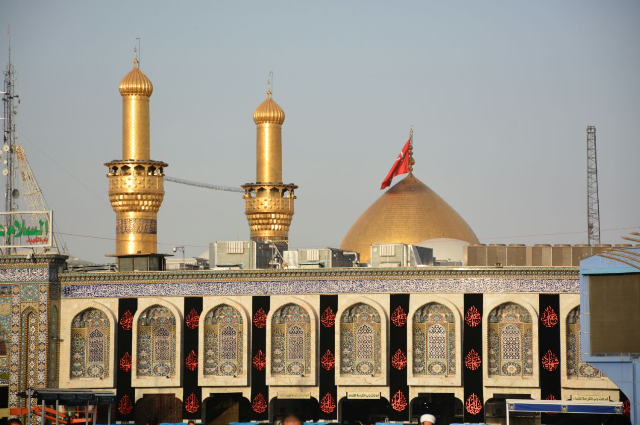
Throughout human history, certain events transcend the boundaries of time and place, becoming enduring symbols of courage, sacrifice, and moral conviction. The tragedy of Karbala is one such event. More than thirteen centuries have passed since the Battle of Karbala took place on the plains of present-day Iraq in 680 CE, yet its message continues to resonate across cultures, religions, and generations. Karbala is not merely a historical incident; it is a timeless lesson about standing firm for truth, defending human dignity, and refusing to submit to tyranny.
The story of Karbala centres on Imam Husayn ibn Ali, the grandson of the Prophet Muhammad (peace be upon him), whose unwavering commitment to justice transformed a seemingly hopeless struggle into one of the most influential moral victories in history. His sacrifice remains a source of inspiration for those who seek truth and resist oppression.
Historical Background: The Road to Karbala
To understand the significance of Karbala, it is essential to examine the historical circumstances that led to this event. Following the death of the Prophet Muhammad in 632 CE, the Muslim community faced the challenge of political leadership. Over time, political tensions, tribal rivalries, and differing views regarding governance emerged within the rapidly expanding Islamic state.
The situation became increasingly complex during the rule of the Umayyad dynasty. After the death of Muawiyah ibn Abi Sufyan in 680 CE, his son Yazid assumed power. According to many early Muslim historians, including al-Tabari in Tarikh al-Rusul wa al-Muluk (History of Prophets and Kings), Yazid's succession marked a significant departure from earlier methods of leadership selection and was viewed by many as the beginning of hereditary monarchy within the Muslim world.
Several prominent figures expressed reservations about Yazid's leadership. Among them was Imam Husayn ibn Ali. For Husayn, the issue was not merely political but deeply moral and religious. He believed that remaining silent in the face of injustice would compromise the ethical teachings of Islam.
Imam Husayn: A Symbol of Moral Leadership
Imam Husayn was born in 626 CE into one of the most respected families in Islamic history. As the grandson of the Prophet Muhammad and the son of Ali ibn Abi Talib and Fatimah al-Zahra, he was widely known for his integrity, generosity, wisdom, and devotion.
Historical sources indicate that Husayn's refusal to pledge allegiance to Yazid was based on principle rather than political ambition. In a well-known statement recorded by several historians, Husayn declared that he sought reform within the Muslim community and wished to promote good and prevent wrongdoing.
According to al-Tabari and Ibn Kathir, Husayn emphasised that his objective was not personal gain but the preservation of justice and moral values. His stand reflected the belief that leadership must be accountable to ethical principles.
The Journey Toward Karbala
The people of Kufa, a city in present-day Iraq, sent numerous letters to Imam Husayn, inviting him to lead them and promising support against the Umayyad administration. Historical records mention that hundreds of letters were delivered to Husayn, urging him to come to Kufa.
Responding to these appeals, Husayn departed from Mecca with members of his family and a small group of companions. Before his arrival, however, the political situation in Kufa changed dramatically. The Umayyad governor, Ubayd Allah ibn Ziyad, suppressed opposition and intimidated many of Husayn's supporters.
As Husayn approached Iraq, he learned that support in Kufa had largely collapsed. Nevertheless, he continued his journey and was eventually intercepted by Umayyad forces and compelled to stop at Karbala.
The Tragedy of Karbala
On the 10th of Muharram, 61 AH (10 October 680 CE), known as Ashura, the confrontation reached its tragic climax.
Historical accounts agree that Imam Husayn's group was vastly outnumbered by the Umayyad army. Reports indicate that access to water from the Euphrates River was restricted for Husayn's camp in the days leading up to the battle.
One by one, Husayn's companions and family members were killed. Among those who lost their lives were his sons, nephews, brothers, and loyal followers. Despite overwhelming odds, Husayn refused to surrender his principles or legitimise what he regarded as unjust rule.
The martyrdom of Imam Husayn marked a turning point in Islamic history. Although he suffered a military defeat, many historians argue that his sacrifice exposed political injustice and inspired future movements seeking reform and accountability.
Justice: The Heart of Karbala
At its core, Karbala is a story about justice.
Imam Husayn believed that justice was a fundamental principle of Islam. His refusal to submit to what he considered illegitimate authority reflected his conviction that moral values must take precedence over political expediency.
The Qur'an repeatedly emphasises justice as a divine command:
"Indeed, Allah commands justice, excellence, and giving to relatives and forbids immorality, bad conduct, and oppression." (Qur'an 16:90)
Husayn's stand demonstrates that justice often requires sacrifice and courage. His example continues to inspire individuals and communities striving to confront corruption and abuse of power.
Truth and Human Dignity
One of the most enduring lessons of Karbala is the importance of truth. Imam Husayn refused to endorse what he believed was wrong, even when doing so would have ensured his personal safety.
The Qur'an instructs believers:
"O you who believe! Stand firmly for justice as witnesses for Allah, even if it be against yourselves." (Qur'an 4:135)
Closely connected to truth is the concept of human dignity. Islam teaches that every human being possesses inherent worth:
"And We have certainly honoured the children of Adam." (Qur'an 17:70)
Through his actions, Husayn demonstrated that preserving dignity and moral integrity can be more important than preserving worldly status or even life itself.
Courage and Sacrifice
The courage displayed at Karbala was not the courage of conquest but the courage of conviction.
Despite facing overwhelming military odds, Husayn and his companions remained faithful to their principles. Their sacrifice was motivated by commitment to justice, faith, and moral responsibility rather than personal gain.
Historian Edward Gibbon observed that the tragedy of Husayn's death has inspired sympathy and admiration across different cultures and eras.
The story of Karbala demonstrates that true courage lies in remaining steadfast when confronted by fear, pressure, and adversity.
Faith, Patience, and Spiritual Strength
Another powerful dimension of Karbala is its emphasis on faith and patience.
Throughout the ordeal, Imam Husayn displayed remarkable trust in God. Historical narratives describe him praying and encouraging his companions to remain steadfast despite the certainty of hardship.
The Qur'an teaches:
"Indeed, Allah is with the patient." (Qur'an 2:153)
Patience in Karbala did not mean passive acceptance of injustice. Rather, it meant enduring suffering while remaining committed to truth and righteousness.
The examples set by Husayn and his family continue to inspire believers facing personal and social challenges.
Resistance Against Oppression
Perhaps the most universal lesson of Karbala is resistance against oppression.
The struggle between justice and tyranny is not limited to a particular era or region. Throughout history, people have faced various forms of political, social, and economic injustice.
Imam Husayn's stand reflects the Islamic principle of opposing wrongdoing. A famous hadith of the Prophet Muhammad states:
"The best jihad is a word of truth spoken before a tyrannical ruler."(Sunan al-Nasa'i, Hadith 4209)
Karbala teaches that silence in the face of oppression can strengthen injustice, while principled resistance can awaken conscience and inspire reform.
The Enduring Legacy of Karbala
The significance of Karbala extends far beyond the Muslim world. Its message speaks to universal values that transcend religious and cultural boundaries.
Every year, millions of people commemorate Ashura and reflect upon the lessons of Karbala. Scholars such as Wilferd Madelung and Heinz Halm have noted that Husayn's martyrdom became a defining symbol of resistance against injustice and moral corruption.
Mahatma Gandhi is often quoted as saying that he learned from Imam Husayn how to achieve victory through sacrifice. While historians debate the exact wording of the quotation, Gandhi openly expressed admiration for the spirit of sacrifice associated with Karbala.
The legacy of Imam Husayn continues to challenge humanity with a profound question: What are we willing to sacrifice for justice and truth?
The story of Karbala is far more than a chapter in Islamic history. It is a timeless testament to the power of conscience, the necessity of justice, and the enduring strength of moral conviction. Imam Husayn's stand against oppression transformed a tragic event into a universal symbol of resistance and hope.
Supported by historical sources such as al-Tabari, Ibn Kathir, and modern scholars including Wilferd Madelung and Heinz Halm, the events of Karbala demonstrate how moral courage can outlast political power. Husayn's message continues to echo across centuries: truth must be defended, dignity must be preserved, and injustice must never be accepted.
As long as humanity continues to seek justice and resist oppression, the message of Karbala will remain relevant—guiding hearts, inspiring courage, and illuminating the path toward a more just and humane world.
References
- Al-Tabari, The History of al-Tabari, Vol. 19, translated by I.K.A. Howard, SUNY Press, 1990.
- Ibn Kathir, Al-Bidayah wa al-Nihayah (The Beginning and the End), Vol. 8.
- Wilferd Madelung, The Succession to Muhammad, Cambridge University Press, 1997.
- Heinz Halm, Shi'ism, Edinburgh University Press, 2004.
- Edward Gibbon, The History of the Decline and Fall of the Roman Empire, Vol. 5.
- The Holy Qur'an (16:90, 4:135, 17:70, 2:153).
- Sunan al-Nasa'i, Hadith 4209.