
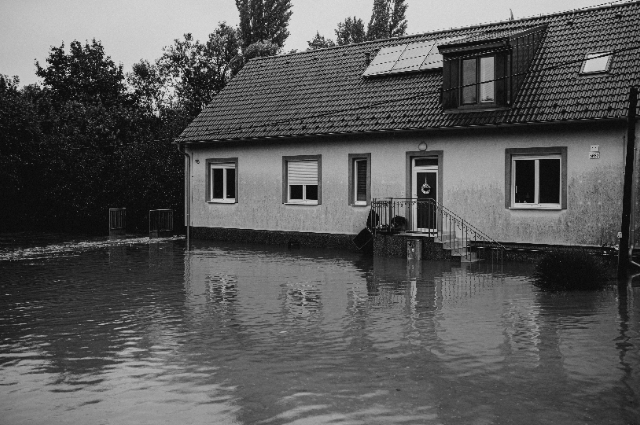
In the dusty villages of Seemanchal — where broken roads disappear into flooded fields, and children walk barefoot to school carrying torn bags filled with fading dreams — education was supposed to become the bridge between poverty and dignity. For millions of poor families in districts like Purnea, Araria, Kishanganj, and Katihar, government schools were not merely buildings; they were promises made by the Constitution itself.
But today, in many corners of Seemanchal, those promises lie abandoned like cracked blackboards under leaking roofs.
The tragedy of Bihar’s education system is not just about poor marks or weak schools. It is about an entire generation slowly losing faith in the future. It is about children sitting silently in classrooms where no real teaching happens. It is about parents who cannot read or write themselves, yet still send their children to school, hoping they might escape the darkness of poverty, only to discover that the system meant to uplift them has itself collapsed from within.
A School Without Learning
Across rural Bihar, especially in Seemanchal, government schools often function as empty rituals rather than centres of learning. In many villages, teachers arrive late, leave early, or remain absent entirely. Attendance registers may be filled, but classrooms remain lifeless.
The Annual Status of Education Report (ASER) repeatedly highlights Bihar’s weak learning outcomes. According to recent ASER findings, learning levels in Bihar remain below the national average despite some improvement after the pandemic. A large number of Class 5 students in government schools still struggle to read Class 2-level textbooks properly — a deeply troubling reality for children already halfway through primary education.
The crisis becomes even more painful in Seemanchal, one of the most educationally backward regions of the state. Here, many children in Class 8 struggle to read basic Hindi or solve simple division problems. In some schools, students spend entire days without meaningful instruction because teachers are either disengaged or overwhelmed by administrative pressure and political interference.
Education has become mechanical. Attendance matters more than understanding. Mid-day meal distribution often receives more attention than classroom teaching itself.
Teachers Who Stopped Teaching
It would be unfair to blame every teacher. Many sincere teachers continue working honestly under difficult conditions. But the harsh truth is that a significant section of the system has become deeply negligent.
In countless villages, government teaching jobs are seen less as a social responsibility and more as a secure monthly income. Residents often complain that some teachers focus more on salary, transfers, political connections, or private coaching than on classroom education.
Several educational surveys over the years have shown that teacher attendance in Bihar schools remains below the national average. Student attendance is often even lower. Many children simply stop attending regularly because they no longer believe school can change their future.
But statistics alone cannot capture the human pain behind these numbers.
A child who sits in school for five years without learning to read does not merely fail an exam — society fails that child.
In many rural schools of Seemanchal, students quietly admit that they depend almost entirely on private tuition to learn basic subjects. Poor parents who can barely afford food are forced to pay tutors because government schools no longer inspire confidence. Those who cannot afford tuition simply fall behind, slowly disappearing from the educational system altogether.
Thus, poverty reproduces itself generation after generation.
The Corruption Beyond the Classroom
The decay of education in Bihar is not limited to absent teachers. It is rooted in a much larger system of corruption and administrative failure.
There are repeated allegations regarding fake attendance records, irregular mid-day meal management, misuse of school funds, and politically protected negligence. In some schools, infrastructure exists only on paper. Toilets remain unusable, libraries are locked, science labs are empty, and classrooms resemble abandoned warehouses.
Children sit on broken floors during scorching summers and freezing winters. During monsoon seasons, many schools become nearly inaccessible due to floods and damaged roads — a common reality across Seemanchal.
The tragedy is not merely a lack of money. Bihar spends heavily on education schemes. The real issue is accountability. Funds disappear into layers of bureaucracy, corruption, and political management before meaningful change reaches classrooms.
Political Negligence and Educational Backwardness
The failure of Bihar’s education system cannot be separated from politics.
For decades, education has rarely been treated as a serious political priority. Elections are fought on caste equations, religious polarisation, welfare promises, and power struggles — while classrooms continue collapsing silently.
Society itself often criticises political leaders, ministers, MLAs, and MPs for lacking a strong educational vision or intellectual seriousness regarding quality education reform. Bihar’s politics has long produced debates around power, identity, and survival, but rarely around learning outcomes, teacher accountability, or academic excellence.
This neglect has damaged entire regions like Seemanchal, where literacy rates remain lower than in many parts of India, and opportunities are painfully limited.
The result is visible everywhere: unemployed youth, migration, child labour, early marriages, and hopelessness.
When education collapses, democracy weakens too.
An uneducated society becomes easier to manipulate — emotionally, politically, and economically.
Children Paying the Price
The deepest victims of this broken system are not politicians or officials. They are poor children.
The boy was studying under a lantern in a flood-prone village of Araria.
The girl in Kishanganj who walks kilometres to school but returns home without understanding what was taught.
The child in Katihar whose parents sold goats to pay for private tuition because the government classroom taught nothing.
These children are intelligent. They are curious. They dream of becoming doctors, officers, journalists, teachers, and engineers.
But dreams cannot survive forever inside broken systems.
Educational reports consistently show that many rural children remain far below grade-level learning standards, and Bihar continues to struggle significantly despite efforts at reform.
The situation becomes even more heartbreaking when students eventually lose motivation altogether. Many begin skipping school. Some join labour work. Others migrate to cities. Girls are often pushed into early marriage because education appears meaningless to struggling families.
This is not merely an educational crisis.
It is a humanitarian crisis.
The Silence Society Must Break
Yet despite everything, hope still exists.
Across Bihar, honest teachers are working sincerely in forgotten villages. Students are studying under impossible conditions and still succeeding. There are activists, journalists, volunteers, and parents demanding change.
But real reform requires courage.
Teachers must be held accountable not only through attendance systems but through actual student learning outcomes. Schools need independent monitoring. Corruption in recruitment and administration must end. Political leadership must treat education as the foundation of development rather than a secondary issue.
Most importantly, society itself must stop normalising educational failure.
The children of Seemanchal deserve classrooms where teachers teach with honesty, where schools inspire curiosity, and where poverty does not decide destiny.
Because when a region loses education, it loses its future.
And the greatest tragedy is not that Seemanchal is poor today. The greatest tragedy is that millions of children are slowly being denied the chance to change tomorrow.
So the question remains — painful, urgent, and impossible to ignore:
Do the children of Seemanchal not deserve the same future as the children of richer and more developed parts of India?
Until Bihar answers that question with action instead of speeches, the blackboards of Seemanchal will continue carrying not lessons, but silence.