
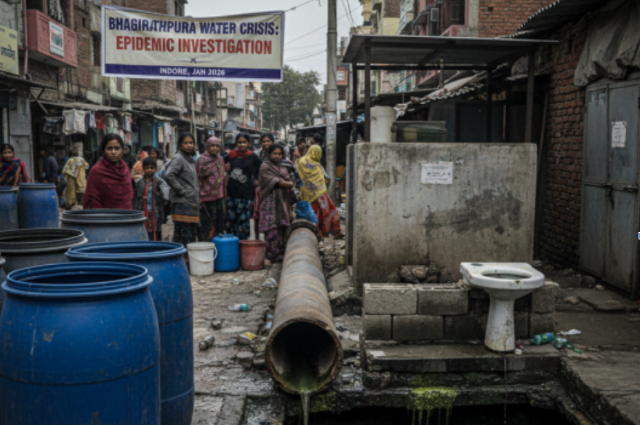
As of January 1, 2026, Indore, a city that has repeatedly been celebrated as India’s cleanest city, found itself facing a public health crisis that quietly unfolded into a large scale emergency. What began as scattered complaints of vomiting, stomach pain, and diarrhea in the Bhagirathpura area soon revealed a much deeper and more dangerous problem. By the time authorities acknowledged the scale of the situation, over 2,000 residents had already fallen ill with symptoms linked to acute gastroenteritis, and hospitals across the city were struggling to manage the sudden influx of patients. Official figures and local reports confirmed that between seven and ten people had lost their lives, among them a six month old infant, making it clear that this was not a routine seasonal illness but a failure that directly affected lives. More than 150 patients were admitted to government and private hospitals, with at least 30 reported to be in serious condition, turning Bhagirathpura into the centre of an outbreak that shook the city’s reputation for cleanliness and civic management.
Initial investigations pointed toward a single but severe cause, contamination of the drinking water supply. The Indore Municipal Corporation began examining the water infrastructure in Bhagirathpura after medical professionals raised concerns that nearly all patients were presenting identical symptoms consistent with waterborne disease. What they discovered was a glaring example of infrastructure neglect. A major drinking water pipeline was found to be leaking directly beneath a toilet constructed at a police check post. This toilet, shockingly, had been built without a mandatory safety or septic tank, allowing raw sewage to flow unchecked into the surrounding ground. Over time, the leakage from the damaged water pipeline and the absence of proper sewage containment created a direct mixing point where sewage entered the drinking water supply. Residents had unknowingly been consuming contaminated water for days, possibly weeks, before the outbreak reached a visible and alarming scale.
The structural lapse was not a sudden or unavoidable accident but the result of prolonged administrative delay. Internal documents and municipal records revealed that a tender for laying a fresh water supply line in Bhagirathpura had been issued as early as August 2024 under the AMRUT scheme. Despite being flagged as necessary, the project remained stalled for more than a year due to funding delays and bureaucratic inertia. During this period, temporary fixes and routine inspections failed to detect or address the growing risk beneath the surface. It was only after deaths were reported that work began in haste on December 30, 2025, exposing how reactive rather than preventive the system had become. Residents later stated that complaints about water quality, foul smell, and discoloration had been raised multiple times, but no decisive action was taken until the situation escalated into a health emergency.
As the outbreak spread, the response from authorities shifted from denial to damage control. On December 31, 2025, the Madhya Pradesh High Court, Indore Bench, intervened after petitions highlighted the severity of the situation. The court ordered the state government and the Indore Municipal Corporation to ensure an immediate supply of clean drinking water and to provide free medical treatment to all affected residents. A status report was demanded within days, putting pressure on officials to act transparently and quickly. In
parallel, Chief Minister Mohan Yadav announced an ex gratia compensation of two lakh rupees for the families of those who died, acknowledging the human cost of the failure. While compensation offered some relief, it also raised uncomfortable questions about whether financial aid could truly address a tragedy that could have been prevented through basic safety measures and timely action.
Accountability measures followed under intense public and judicial scrutiny. A Public Health Engineering in charge sub engineer was dismissed from service, while an assistant engineer and a zonal officer were suspended for negligence. A three member committee headed by an IAS officer was formed to conduct a high level inquiry into how the contamination went undetected and why corrective measures were delayed despite visible warning signs. These actions signaled an attempt to restore public trust, but they also highlighted a deeper issue within urban infrastructure management. The Bhagirathpura outbreak exposed how even cities with strong cleanliness rankings can suffer from hidden vulnerabilities when maintenance, oversight, and accountability are treated as secondary concerns. Clean streets and public rankings mean little if the most basic necessity, safe drinking water, is compromised by avoidable lapses.
The gastro outbreak of 2026 stands as a reminder that urban health crises are rarely caused by a single failure. They are the result of layered neglect, delayed decisions, and systems that prioritize paperwork over people. In Bhagirathpura, a leaking pipeline, an improperly constructed toilet, and a stalled tender together created conditions for an epidemic. What makes this incident particularly unsettling is that every stage of the failure was preventable. Early intervention, routine infrastructure audits, and swift execution of approved projects could have saved lives. As Indore works to contain the outbreak and repair its water supply, the larger lesson remains clear. Public health safety cannot be reactive. It demands constant vigilance, timely investment, and accountability at every level, because when water fails, the consequences are immediate, widespread, and irreversible.