
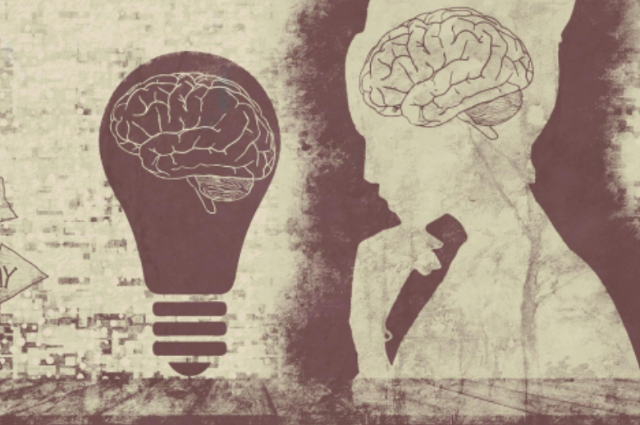
“Autism is not a puzzle to be solved, nor a problem to be fixed. It is a mind that dances to its own rhythm, perceives colours where others see black and white, and listens to melodies unheard by most.”
Imagine a world where the background hum of a refrigerator sounds like a roaring aeroplane, where a simple tag on your shirt feels like sandpaper scratching your skin, and where every unexpected noise can feel like a hammer striking your skull. For most people, these are minor irritations easily ignored, but for someone on the autism spectrum, they are a daily storm of sensations, overwhelming and impossible to filter out. Autism is often misunderstood as a disorder, a deviation from what is considered “normal.” Still, in truth, it is a different way of processing the world, a unique operating system that simply functions differently. If most of us run on a certain set of instinctive rules for life and interaction, autistic people navigate with a different set of codes, requiring careful understanding rather than correction.
At its core, autism is a neurodevelopmental condition that affects how a person perceives the world, processes information, communicates, and interacts socially. While medical definitions can describe it as a spectrum of developmental differences, the essence of autism is far simpler to grasp: it is a mind
that experiences reality differently. To explain it more plainly, imagine two people watching the same movie. One might focus on the plot and characters while barely noticing the background music, the lighting, or minor details in the scenery. The other might see every colour, hear every note, feel every texture, and interpret every gesture, leading to a richer yet sometimes overwhelming experience. Neither is wrong; they are simply processing the same reality in different ways.
A moment that captures this beautifully is the simple act of sitting in a café with a friend on the spectrum. You notice them flinch at the sound of a blender or grimace at the texture of the chair’s cushion, while you, completely unaware, continue sipping your coffee. In that instant, you realise that the world for them is not muted and filtered like it is for you; it is vivid, intense, and unrelenting. This does not mean something is broken, nor that they are less capable of navigating life. It simply means their mind has its own language, its own rhythm, and its own logic. Understanding autism requires stepping into this different perspective without judgment, realising that what may seem like avoidance, discomfort, or rigidity is actually a response to a world that can feel too loud, too fast, or too chaotic.
One of the most striking aspects of autism is sensory processing, often called the “volume control” of the brain. Most people’s brains have a filter that allows them to ignore background noise and minor irritations, letting them focus on what matters. In autistic individuals, this filter functions differently. Everyday stimuli. sounds, lights, textures, or movements. can become amplified, creating what is called sensory overload. A humming fridge may seem deafening, a buzzing fluorescent light unbearable, and even a tag on a shirt can feel painful. Conversely, some autistic people actively seek intense sensory input, spinning in circles, flapping their hands, or pressing their bodies against surfaces to find comfort and grounding. These reactions are not arbitrary or attention-seeking. They are the body and mind’s natural mechanisms to cope with a world that often feels overwhelmingly intense. Recognising this is essential for empathy, as what seems trivial to one person can be a source of distress for another.
Social interaction is another area where autistic people navigate differently, often requiring what can be described as “manual translation” of unwritten social rules. While most people instinctively understand sarcasm, subtle expressions, or implied meanings, autistic individuals often must consciously learn these patterns. This does not make them insensitive or incapable; it simply means that decoding human interaction takes effort and energy. Directness is often preferred, with honesty prioritised over social niceties, and this can sometimes be misinterpreted as bluntness. Prolonged socialising can drain what is called a “social battery,” leaving them exhausted after interacting even with close friends or family. Understanding this perspective helps explain why autistic individuals may appear withdrawn or selective in their social engagement. Their challenges are not rooted in indifference, but in the extraordinary effort it takes to navigate a world designed for different wiring.
Amid these challenges, autistic people often possess remarkable strengths, particularly in their focus and routines. The world can feel chaotic and unpredictable, which makes stability and predictability invaluable. Many develop intense passions, known as Special Interests, which allow them to gain expert-level knowledge in specific fields. This hyper-focus can lead to extraordinary achievements, from coding and mathematics to arts and sciences. Routine is not rigidity for its own sake; it is a coping mechanism that allows them to function at their best and find comfort in consistency. Far from being a limitation, these focused talents are unique strengths that should be nurtured and celebrated.
Autism cannot be simplified into a straight line from “low-functioning” to “high-functioning.” It is more like a colour wheel or a complex soundboard with sliders controlling speech, motor skills, sensory processing, and social abilities. One person may be a brilliant coder yet struggle with bright lights or loud noises, while another may be non-verbal but deeply empathetic and emotionally perceptive. This spectrum highlights that each autistic individual is unique, with strengths and challenges that do not fit neatly into preconceived categories. Labels like “high-functioning” or “low-functioning” fail to capture the richness of human diversity and can obscure the real value and capability of autistic minds.
Two case studies illuminate these perspectives beautifully. The first is Temple Grandin, an autistic woman who revolutionised animal science through her unique way of thinking. Her mind, wired differently, allowed her to visualize animal behavior in ways others could not, leading to innovations in livestock handling and animal welfare. Grandin’s story demonstrates that what society often views as limitations can become extraordinary strengths when understood and supported. The second example is the hyper-focus phenomenon, a trait common in autistic individuals who develop an intense passion for a subject. Studies show that people with hyper-focused interests often achieve expert-level knowledge, creativity, and problem-solving abilities that surpass their neurotypical peers in niche areas. These examples remind us that autism is not a deficit, but a different approach to thinking and perceiving that can enrich the world in unexpected ways.
For those seeking deeper insight into autism, one highly recommended book is “NeuroTribes” by Steve Silberman, which traces the history, science, and social implications of autism. It provides both factual knowledge and human stories, making it a valuable resource for understanding the logic and mindset of autistic individuals.
Understanding autism ultimately requires a shift in perspective. It is not a problem to solve or a condition to fix. It is an invitation to appreciate the beauty of difference, to respect a mind that perceives the world uniquely, and to foster environments where these minds can thrive. It teaches patience, empathy, and the importance of valuing every individual’s way of seeing the world. By focusing on sensory realities, social translation, deep focus, and the spectrum of abilities, we gain a holistic understanding of what it means to live with autism. Each mind on the spectrum is a lens to a world that is at once more vivid, more detailed, and sometimes more challenging, reminding us that diversity in perception is not a limitation, but a source of richness.
In everyday life, recognizing these differences can change the way we interact, work, learn, and build relationships. It allows parents, teachers, colleagues, and friends to provide meaningful support while celebrating unique strengths. A small act of patience, a moment of understanding, or a willingness to see the world through an autistic lens can profoundly impact an individual’s ability to navigate challenges and achieve success. It also reminds us that communication, honesty, and empathy are universal needs, and the ways we meet these needs may vary dramatically from person to person.
Autism is a different logic, a different rhythm, and a different lens. It challenges society to question assumptions, to look beyond the surface, and to embrace the complexity of human experience. By understanding sensory overload, social effort, deep focus, and the multidimensional spectrum, we can appreciate the mind not as deficient, but as uniquely designed to perceive, interpret, and contribute in ways that often surprise and inspire. Temple Grandin and countless others demonstrate that embracing difference can lead to innovation, insight, and a more compassionate understanding of human diversity.
In conclusion, autism teaches us that understanding requires effort, empathy, and openness. It is a reminder that there are many ways to be human, many ways to perceive, and many ways to contribute. By observing, learning, and appreciating the autistic mind, we enrich not only the lives of those on the spectrum but our own perception of the world. Differences are not problems, they are gifts waiting to be understood, celebrated, and applied. The logic of autism is not an enigma, but a reflection of the infinite ways the human mind can engage with life, inviting us all to listen more carefully, see more deeply, and embrace the diversity that makes humanity vibrant and resilient.
. . .
References:
- Silberman, Steve. NeuroTribes: The Legacy of Autism and the Future of Neurodiversity. Grandin, Temple. Thinking in Pictures: My Life with Autism.