
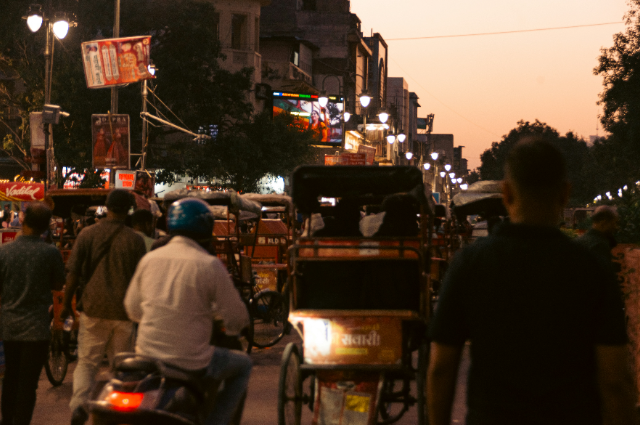
Whenever we step out of our homes. Whether it’s a temple, a railway station, a bus stop, or any crowded public place, seeing beggars has become almost routine. It’s so normal that most of us don’t even pause to question it. We give a coin, maybe some food, and walk away believing we’ve helped someone who cannot help themselves. For a long time, begging symbolised one simple thing: need. A hungry person. A family that needs food. Someone with no other option left. And the act of giving was seen as kindness, nothing more, nothing less.
But lately, something has shifted. Not with everyone. Not with all beggars. But with some.
In recent years, stories have emerged that completely clash with what begging has traditionally represented. People who are not starving. People who own houses, assets, and vehicles. People who can feed themselves and their families comfortably, and yet continue to beg. That is how the idea of “crorepati beggars” entered public conversation, and it shocked many. Not because poverty disappeared. But because the meaning of poverty was being questioned.
When begging turns into a system.
This phenomenon does not mean that beggars as a whole are wealthy. That would be an unfair and dangerous generalisation. What it highlights instead is a real but influential pattern. where begging is no longer a last resort for survival, but a calculated occupation. In many Indian cities, a small group of individuals has turned begging into a stable income source, and over time, into a full financial system. This didn’t happen overnight. It grew quietly, slowly, and mostly unnoticed.
At the core of this phenomenon are three overlapping realities.
The street economy
Certain places in India generate constant cash flow. Railway stations, temples, market streets, religious gatherings, festivals, and tourist-heavy areas operate almost like informal economies. High footfall means continuous donations. A person begging in such locations can earn anywhere between ₹1,000 and ₹2,500 a day, sometimes more. That amount often crosses what many informal workers earn, even after long hours of physical labour.
The “job” of begging in these spaces requires minimal effort, no qualifications, no paperwork, and no social accountability. The returns, however, can be surprisingly high. Over time, this turns begging into something predictable. Reliable. Safe.
From survival to habit
What starts as survival often becomes a habit. Once a person realises that begging brings quicker returns with fewer expectations and less effort, leaving that routine begins to feel risky. even when their financial condition improves. The streets become familiar. The routine feels controlled. There is no boss, no deadlines, no pressure to upskill or change. Slowly, the idea of “I need this to survive” shifts to “why should I stop?” And that psychological shift is powerful.
The social cost
When stories of wealthy beggars go viral, public trust erodes. People begin to hesitate before helping anyone on the street. Suspicion replaces empathy. This directly harms those who are genuinely disabled, abandoned, or starving. people who do not have assets, savings, or safety nets. It also strengthens organised begging networks that exploit others, including children and the elderly.
What was once a spontaneous act of kindness turns into a moral dilemma. Crowds create opportunity. Large-scale religious and cultural events further amplify this pattern. For example, during the Maha Kumbh last year, the sheer volume of visitors was. including people from outside the country, created an enormous opportunity for street-level earnings. Many beggars gathered there, knowing that crowds increase generosity. Some made more money in a few weeks than others earn in months.
This does not mean everyone there was dishonest, but it shows how predictable crowd psychology has become. And within this broader reality, a few individual stories stood out.
Bharat Jain: When routine becomes revenue
Bharat Jain’s story went viral not because he begged, but because he never stopped begging, even after becoming financially secure. For decades, he was seen outside Mumbai’s busiest places. Chhatrapati Shivaji Maharaj Terminus and Azad Maidan. To commuters, he looked like just another man trying to survive in a city that rarely shows mercy. What people didn’t notice was the consistency. Same spots. Same hours. Same silent routine.
According to reports by The Economic Times and The Times of India, Jain earned between ₹2,000 and ₹2,500 a day. Over the years, this daily cash flow quietly added up, eventually placing his net worth at an estimated ₹7.5 crore, a figure that led several outlets to label him the “world’s richest beggar.” With almost no living expenses, food often comes from temples or donations. Most of his income remained untouched. Instead of spending impulsively, he invested. He bought a 2BHK flat in Parel worth over ₹1 crore and later acquired two shops in Thane that generate steady rental income. Hindustan Times reported that his family lives a middle-class life, runs a stationery business, and sends their children to private schools, while Jain himself continues to beg. What makes this story unsettling is not the money. It’s the choice. Even after achieving financial stability, Jain continued begging because it remained the easiest and most convenient income source. Survival had turned into a habit. And habit had turned into comfort.
Mangilal: When sympathy becomes capital
Mangilal’s case surfaced during Indore’s “Beggar-Free City” campaign in early 2016. He appeared to be an elderly, disabled man begging near Sarafa Bazaar, a familiar sight that rarely invites suspicion. Officials initially treated him like any other homeless individual. But verification revealed a very different reality. Reports from The CSR Journal and The New Indian Express revealed that Mangilal owned three houses, three auto-rickshaws, and even a Swift Dzire car with a hired driver. Unlike Bharat Jain, Mangilal had gone a step further; he turned begging into informal finance.
According to News24, Mangilal used his daily alms to run a high-interest money-lending business in the local jewellery market. Traders borrowed small amounts quickly and repaid with steep interest, a system completely outside formal banking, but highly profitable.
What disturbed authorities most was the use of a fake disability to gain trust. This was not passive begging. It was strategic deception. A carefully constructed reality designed to sustain income. while taking resources away from those who genuinely needed them.
Who really pays the price?
The real damage is not just ethical. It is structural. When such cases come to light, it becomes harder for people to trust anyone asking for help. Genuine beggars, people without homes, people living on the streets, people who cannot afford even one meal a day. suffer the most. Charities, community kitchens, and foundations also face backlash. Donations drop. Verification becomes stricter. Help becomes conditional. And all of this originates from something that once began as pure kindness. A person wanting to help another human being survive.
Where do we go from here?
This issue cannot be reduced to a simple judgment. Begging is not black or white. It exists at the intersection of poverty, psychology, opportunity, and social behaviour. The problem is not generosity. The problem is unchecked systems that reward deception. Helping should not disappear, but it needs to become conscious. Supporting verified NGOs, community kitchens, and rehabilitation programmes matters more than ever. Compassion needs direction, not withdrawal. Because at the end of the day, kindness should not be punished. Poverty should never become a business strategy.
References
- The Times of India: “Meet Bharat Jain, the world’s richest beggar”
- Hindustan Times: “Mumbai’s wealthiest beggar owns two flats, shops and earns ₹2,000 daily”
- BBC Hindi: “Bheekh maangna ek business kaise ban gaya?”
- India Today: “How professional beggars make thousands every day”
- The Wire: “India’s Begging Economy and Its Hidden Networks”
- The Economic Times: “Meet Bharat Jain, the world’s richest beggar with a net worth of Rs 7.5 crore”