
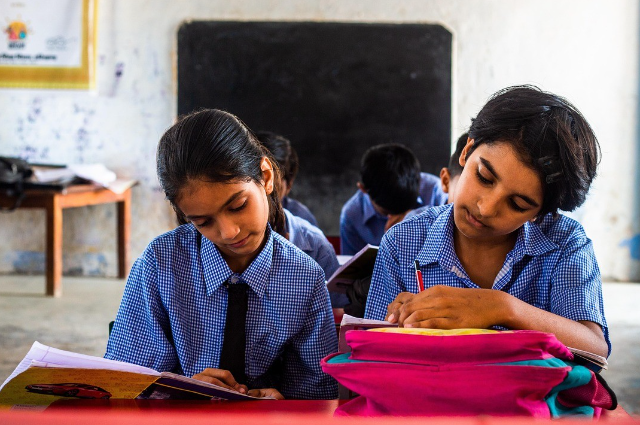
Image by Swastik Arora from Pixabay
In early August 2026, a silent yet devastating protest outside the gates of the historic ‘Government Seth Anandilal Poddar Senior Secondary School for the Deaf’ on Jawaharlal Nehru Marg in Jaipur laid bare a systemic crisis. Over 100 hearing- and speech-impaired students, communicating through sign language, handwritten notes, and placards, staged a sit-in to demand basic human rights: safe classrooms, clean drinking water, functional toilets, and protection from harassment. The immediate catalyst was a falling piece of ceiling plaster that struck a student inside a classroom with visibly cracked, hazardous walls, a structural failure that finally broke the silence of the school's 583 enrolled children and 282 hostel residents. The outrage forced administrative action.
Yet the protest in Jaipur is not an isolated administrative failure; it is a symptom of a broader crisis across India's public education system. According to official data from the Ministry of Education's Unified District Information System for Education Plus (UDISE+), a staggering number of public schools across the country still lack fundamental infrastructure. Nationally, thousands of government institutions operate without functional, separate toilets for girls, while a significant percentage lack clean drinking water systems or structural safety certificates. The crisis is compounded for disabled students: despite the mandates of the ‘Rights of Persons with Disabilities (RPWD) Act, 2016’, less than 30% of Indian schools feature basic accessibility infrastructure like ramps or handrails, and a critical nationwide shortage of certified Indian Sign Language (ISL) educators leaves vulnerable students isolated within the very classrooms meant to empower them.
This investigative feature examines the systemic vulnerabilities of India's public education infrastructure, utilizing the 2026 protest at Jaipur's Seth Anandilal Poddar School as its primary case study. It explores how institutional apathy, poor infrastructure maintenance, and administrative failure intersect to compromise student safety, a crisis magnified for children with disabilities.
THE JAIPUR SILENT PROTEST
On Wednesday, August 5, 2026, years of unheeded complaints at the Government Seth Anandilal Poddar Senior Secondary School for the Deaf, located on Jawaharlal Nehru Marg in Jaipur, culminated in a breaking point. A chunk of concrete plaster detached from a classroom ceiling and struck a student. The incident occurred inside a building already marked by deep structural fissures, dilapidated walls, and leaking roofs across its 17 classrooms. For the 583 enrolled students, including 282 hostel residents, the structural collapse was the final straw in a long history of institutional neglect.
By midday on August 5, over 100 hearing- and speech-impaired students gathered outside the main campus gate to stage a silent sit-in. Without chanting slogans or giving speeches, the students used Indian Sign Language (ISL), handwritten notes, and placards to air their grievances.
According to reports published by Scroll.in and ‘India Today’, the key demands highlighted by the students included:
- Severe Sanitation Deficits. Toilets had deteriorated to an unusable, unhygienic state, forcing students into degrading conditions daily.
- Water Shortages & Contamination. Acute scarcity of clean drinking water left students without adequate hydration during summer heatwaves.
- Institutional Exploitation. Students alleged that campus staff charged them personal fees simply to make phone calls home to their parents or to arrange transport for emergency medical care.
- Safety & Harassment Allegations. Female students raised serious allegations of harassment against a male staff member.
- Unusable Transportation & Campus Maintenance. The designated school bus had fallen into complete disrepair, and heaps of uncleared garbage accumulated across campus grounds.
The protest brought attention to a critical staff deficit. Although the school had 76 sanctioned teaching posts for its 583 students, ground reports revealed that only around 25 teachers reported for duty on any given day. Students alleged that many absent teachers used political and ‘VIP influence’ to secure favorable postings elsewhere while retaining their positions.
Furthermore, despite being a specialized institution for hearing-impaired children, there was a severe shortage of educators proficient in Indian Sign Language (ISL), effectively cutting off basic communication between students and administration.
As media coverage intensified, officials from the Rajasthan Education Department and local political representatives arrived at the premises. A formal inspection conducted by the District Education Officer verified the students’ complaints, confirming unfit sanitation facilities, severe water shortages, structural hazards, and trash accumulation. The state government executed immediate disciplinary measures:
- Principal Bharat Joshi was suspended with immediate effect.
- Following the preliminary inspection led by Chief Block Education Officer Mukul Kavia (Jaipur East) under Joint Director Manju Sharma, the Rajasthan Education Department placed one teacher and a class IV employee under Awaiting Posting Orders (APO) status pending further investigation. This step removed them from student contact while an independent inquiry committee investigated the harassment and extortion allegations.
- The Education Department constituted a special committee to outline structural repairs, address staffing shortfalls, and oversee long-term campus rehabilitation.
The fallout extended into the political sphere later that month. On August 20, 2026, Rajasthan Leader of Opposition Tikaram Jully, along with opposition MLAs, attempted to inspect the Poddar School campus. They were blocked by heavy police deployment enforcing a newly issued Education Department order that prohibited unauthorized entry, photography, and videography inside government schools without prior administrative approval, a directive criticized by the opposition as an attempt to restrict public oversight of failing infrastructure.
IS JAIPUR THE ONLY INCIDENT? A DEEP DIVE INTO HOW INSTITUTIONAL NEGLECT SPANS THE INDIAN CLASSROOMS
No. Let's start with the answer ‘no’. Jaipur is definitely not the only isolated incident; the matter in question goes far deeper than just Jaipur.
The collapsing plaster and filth in Jaipur are not anomalies; they are representative of a systemic crisis across India's primary and secondary educational institutions. According to official data from the Ministry of Education's ‘Unified District Information System for Education Plus’ (UDISE+), infrastructure metrics nationwide highlight widespread deficits in basic facilities. Over 15% of government schools nationwide lack fully functional, separate toilets for girls, while thousands more operate with unmaintained facilities. This gap is a primary driver of adolescent female dropouts across rural India. Roughly 8% to 10% of rural government schools lack a reliable supply of clean, piped drinking water, forcing children to consume untreated groundwater or go without adequate hydration during school hours. However, reducing this to a purely rural primary school dilemma obscures a much darker reality that institutional neglect around basic sanitation and safe drinking water extends directly into tier 2 cities, higher education institutions, and urban university hubs.
This systemic failure follows students also into top-tier postgraduate programs and off campus housings. For instance, my own daughter's experience studying for her Master's in Bolpur, West Bengal, illustrates how pervasive this institutional apathy is. A toxic combination of poor drinking water quality, where dead insects have been found in water filters, unsanitary campus conditions, and unhygienic off-campus accommodation such as unaffiliated Paying Guests operating with zero municipal oversight took a severe physical toll. She returned home suffering from stomach ulcers, severe urinary tract infections (UTIs), worsening anxiety disorder, and chronic hormonal disruptions. Her experience underscores a vital truth: whether it is a primary school in rural Rajasthan, a residential PG in a university town, or a state university campus, the complete disregard for basic health, clean water, and female hygiene infrastructure is a nationwide crisis affecting students at every stage of India's educational pipeline.
Thousands of government school buildings also operate without structural safety clearance. More than 15% of state-run schools lack a basic, functional grid electricity connection, leaving classrooms unlit and unventilated during peak summer temperatures.
The physical decay observed at the Poddar School mirrors recurring, hazardous conditions across multiple states:
Bihar
Unmonitored construction quality & corrupt contracts. At least 12 students were injured when a two-storey balcony collapsed at the National DAV Public School in the Udakishunganj block of Madhepura district. Local authorities revealed that the school management was operating inside a heavily degraded, 100-year-old former sugar mill building. Security concerns over the state of the building had been repeatedly flagged prior to the accident but were ignored by school administrators. Three students were left in critical condition, prompting a regional investigation into administrative negligence. Also, a structural breakdown inside a classroom at Mukundi Chowdhury High School in Kadirabad, Darbhanga district, triggered a major emergency where nearly two dozen students and a teacher were injured. A sizable portion of a classroom's concrete roof abruptly fell during school hours. Because Bihar had recently suffered multiple earthquakes, the falling debris caused absolute panic among the students, who mistook the collapse for an active tremor and triggered a violent stampede.
Another event was the Khagaria School Boundary Wall Collapse. Though the school itself was closed on the day of the incident, a newly constructed boundary wall at a primary school in Chandi Tola of Khagaria district caved in, killing six workers and injuring several others. The boundary wall had been built only eight months prior. While an excavator was digging a public drain immediately adjacent to it, the shallow, poorly planned foundation of the wall gave out instantly. Recent ground reports from areas like Madhubani outline government institutions where the roofs of mid-day meal kitchens are severely fractured, exposing students to water damage and mold. In places like the Forbesganj District School in Araria, large student bodies are forced to cram into just two functional rooms because the rest of the school building has been declared an unrepaired, hazardous zone on the verge of collapsing entirely.
Uttar Pradesh
Dangling overhead high-tension power lines. Bears a very high risk of electrocution hazards on premises. In fact, several catastrophic incidents have already taken place inside and directly around school campuses in Uttar Pradesh. For example, a 7-year-old student named Anshu Diwakar was playing on the grounds of a government primary school in the Manauna region of Manipur. The child accidentally touched a faulty, poorly insulated submersible water pump operating inside the school premises. He was instantly electrocuted and died on the spot. Another incident reports that an 18-year-old female student, Kajal Bind, entered the washroom of a public/coaching library facility in the Suryawan area. She stepped directly onto loose, bare live wires that were left completely scattered across the wet floor. She suffered a fatal shock and died shortly after. The occurrence causing the most number of casualties might be the one that took place in Balrampur. In July 2019, a loose 11-volt high-tension wire fell onto a tree at a primary school in Nayanagar, Uttar Pradesh, causing a mass electrocution that hospitalized over 50 children. Even just days ago, a major hazard was reported in Deoria (Siswa Pandey Gram Sabha), where an active high-tension line dropped and is currently hanging only 5 to 6 feet off the ground directly in front of a primary English medium school.
Tamil Nadu
Delayed allocation of municipal repair funds. Funding delays have consistently pushed back structural upkeep. For instance, delays in releasing the composite school grant forced institutions to face the monsoon season without crucial pre-rain structural reinforcements. This led to critical vulnerabilities, such as unaddressed water seepage, waterlogging, and weakened roofs. The critical state of these infrastructures is underscored by a recent August 2026 Public Works Department (PWD) audit, which declared over 150 government school buildings in the Tiruchy district alone as unsafe for use, forcing emergency class relocations. Minor infrastructure works and sanitation services have borne the brunt of fiscal stalls.
During prolonged multi-crore standoffs regarding central fund disbursements, school administrators were forced to entirely suspend daily sanitation, deep cleaning, and basic toilet repair operations. In a prominent instance, budget constraints forced the rejection of funding to strengthen 1200 out of 1700 high priority school toilets flagged for critical repair, leaving students with broken, unusable, or unhygienic facilities. According to a comprehensive infrastructure assessment released by the School Education Department, accumulated backlogs have left government schools across the state facing a massive ₹3,742 crore shortfall to build basic, functioning toilets, classrooms, and drinking water facilities. The regular flow of academic routines has been significantly compromised. Underfunded schools have struggled to cover basic monthly operating costs, causing delays in settling routine electricity bills and buying vital laboratory supplies.
Furthermore, key teacher training programs were completely halted, and the hiring of vital non-permanent staff collapsed. Because the funds tied to these initiatives arrived late or not at all, contractual teachers went months without pay, or schools simply operated without essential teaching personnel. The freeze on educational allocations heavily disrupted the implementation of the Right to Education (RTE) Act. Because the government experienced severe delays in reimbursing private and aided schools for their mandatory 25% quota of underprivileged students, private school associations were forced to take the matter to the Madras High Court via contempt petitions. Legal representatives argued that the delays made it unfeasible to admit new batches of lower-income students, effectively putting the future and continuity of vulnerable students in jeopardy. To actively address these long-standing maintenance lapses, the state government recently announced a three-tier, colour-coded safety system (Red, Yellow, Green) for all educational buildings. Red-tagged buildings are now immediately sealed and barred from academic use, while MLAs are being given direct access to constituency safety data to ensure that future funds are deployed fast enough to repair ‘Yellow’ structures before they turn into physical disasters.
Madhya Pradesh
Lack of plumbing, water lines, and janitorial staff. According to reports from bodies like the Comptroller and Auditor General (CAG) and UDISE+, structural deficits such as toilets constructed without running water and schools operating without dedicated cleaning staff regularly impact students’ education, safety, and dignity. The absence of functional plumbing heavily drives adolescent girl dropout rates. A Lok Sabha report highlighted that over 10000 girls in Madhya Pradesh quit school permanently due to poor safety and a lack of proper toilets. Without privacy, doors, or running water, adolescent girls routinely skip classes during their menstrual cycles. Over time, these recurring absences result in severe learning gaps, ultimately leading to permanent withdrawal from the school system.
Also, because many government schools operate with zero budget or staff for toilet maintenance, school administrations have repeatedly forced children to step in as janitors. This directly takes away from their instructional time. Schoolgirls at a primary secondary school in Chakdevpur village were photographed with brooms in hand, cleaning toilets and washing school floors. Relatives revealed that the school administration routinely forced the girls to perform these chores. In Khandwa district, two boys were filmed scrubbing toilets. A student revealed that the school principal offered them 5 additional exam marks in exchange for cleaning the bathrooms. Another highly publicized incident occurred where a local schoolteacher attended school intoxicated, defecated on the school grounds, and forced students to clean up after him.
Unsanitary plumbing forces students to either hold their urine for hours or practice open defecation, leading to immediate medical crises that disrupt their schooling. In Balaghat district, a health check seminar revealed that 26 schoolgirls in a single cluster were diagnosed with Reproductive Tract Infections (RTIs/UTIs). Health experts directly cited unusable, unhygienic school toilets as the primary source of the infections. In Jhabua district, students at the Government Middle School in Semaliya Bada raised an uproar because the lack of plumbing and running water caused such a severe foul stench that nearby classrooms became unbearable to sit in, deeply hurting everyday learning concentration. In the Makroniya area, students aged under 11 were caught on film being forced to wash their mid-day meal plates in a pit of dirty stagnant water because the school had no clean running water source for utensils. Similar incidents have emerged from Khandwa, where students were documented washing lunch plates in outdoor drains due to a total lack of plumbing infrastructure.
These crises of necessities extend directly into student health and residential welfare.
The national PM POSHAN (Mid-Day Meal) scheme, designed to guarantee nutritional security for over 100 million children, is frequently compromised by weak oversight. Regular reports from states like Bihar, West Bengal, and Maharashtra highlight incidents of food poisoning caused by unhygienic preparation, poor food storage, and contaminated water supplies. In many districts, caterers and local administrators fail to meet the mandated daily caloric and protein thresholds due to inflation, delayed fund disbursements, and siphoning off food grains.
Residential welfare institutions including Kasturba Gandhi Balika Vidyalayas (KGBVs) and State Social Welfare Hostels frequently operate under degrading conditions. They include overcrowded dormitories where students sleep on bare concrete floors without basic bedding or mosquito nets, inadequate perimeter fencing, absent security personnel, and unlit common areas that compromise the physical safety of female boarders, and a total absence of dedicated healthcare personnel, leaving sick students reliant on underfunded staff for basic medical transport and care.
To exemplify further, institutional negligence regularly cascades into acute medical emergencies for students across the country. A prime example of this systemic vulnerability was seen in Assam, where over 50 students from Baghpuri Gandhi Smriti Primary School in Mangaldoi were rushed to nearby healthcare facilities after a mid-day meal left them suffering from severe food poisoning. In another shocking instance of acute negligence in Assam's Nagaon district, nearly 200 students at Jarbagan LP School fell ill, with preliminary investigations pointing to contaminated food, and harrowing local reports alleging that the meal had been cooked in phenyl instead of cooking oil.
State-run residential institutions, which are meant to be safe havens for marginalized communities, routinely fail basic safety standards. This was tragically demonstrated when 14 residential students at the Howraghat Eklavya Model Residential School in Assam's Karbi Anglong district were hospitalized after being served tainted dinner that emitted a foul odor.
Whether through contaminated water, toxic meals, or crumbling structural walls, these recurring mass hospitalization events across Assam, Rajasthan, West Bengal, and beyond prove that student health and safety are treated as an afterthought in the nation's public education infrastructure. To make matters worse, this physical neglect is trapped behind rigid administrative coercion, most notably the mandatory 75% attendance rule enforced across almost every educational institution in India. Under the constant threat of debarment, lost academic years, or administrative penalties, students are routinely forced to sit inside hazardous, unhygienic, and structurally compromised classrooms regardless of severe illness, unsafe campus conditions, or deteriorating health. The system aggressively prioritizes mechanical seat-time compliance over physical safety, leaving students fettered between the risk of bodily harm and the guaranteed destruction of their academic futures.
THE MULTIPLIED VULNERABILITY (SPECIAL NEEDS AND MARGINALIZED STUDENTS)
While physical neglect impacts all students across the board, the crisis multiplies exponentially for children with disabilities (Children With Special Needs, or CWSN) and marginalized learners. What manifests as an inconvenience or an unhygienic inconvenience for a neurotypical or non disabled student becomes an absolute barrier to fundamental human rights, physical safety, and basic bodily autonomy for a disabled child. The systemic indifference of state apparatuses transforms public educational institutions from spaces of empowerment into environments of acute vulnerability and silent isolation.
Under Section 16 of the Rights of Persons with Disabilities (RPWD) Act, 2016, state-funded and recognized educational institutions are legally mandated to provide barrier-free, inclusive education. The law explicitly obligates administrators to:
- Ensure physical premises (buildings, campus grounds, sanitation units) are completely accessible.
- Provide reasonable accommodation and tailored individual support through accessible learning tools and trained educators.
- Ensure that transport and residential facilities are built to universal design standards.
Yet national data demonstrates a near-total collapse of compliance at the execution level. According to official national data from the UDISE+, the physical accessibility metrics for Children With Special Needs (CWSN) across Indian schools reveal a severe implementation gap. While roughly 79% of public schools nationwide report having ramps on their premises, a closer examination shows that only about 55% of those ramps are equipped with essential handrails, rendering them unsafe and practically unusable for children with severe mobility impairments. The sanitation crisis for disabled students is even more acute: a mere 35.6% of schools have constructed CWSN-friendly toilets, and when accounting for running water, functional plumbing, and regular maintenance, that figure drops to a stark 33%. In practice, nearly two-thirds of Indian schools completely lack functional, accessible sanitation facilities for special needs students, reducing statutory mandates to what disability rights advocates call mere ‘compliance theatre.’
As child rights advocates and education policy analysts frequently highlight, installing a ramp without a handrail or fitting a Western-style toilet bowl inside a locked, dirty closet with step access only isn't ‘inclusion’; it's, as mentioned before, ‘compliance theatre’. When a school lacks a functional, accessible toilet, nonverbal or mobility-impaired children are systematically forced to restrict their fluid intake during school hours, resulting in chronic kidney issues, severe dehydration, and high dropout rates, particularly among adolescent girls with disabilities. The structural collapse of special education in India is directly tied to a staggering shortage of qualified professionals. The Right to Education (RTE) benchmarks and Supreme Court directives mandate dedicated special educators in every school enrolling CWSN, yet across states like Uttar Pradesh, Rajasthan, Bihar, and West Bengal, thousands of sanctioned special educator positions remain permanently vacant or are filled by uncertified ad-hoc staff without foundational training in ISL or Braille. In specialized institutions like Jaipur's Seth Anandilal Poddar School, hearing-impaired children are routinely instructed by teachers who cannot comprehend or communicate via standard ISL. This leaves children unable to ask basic academic questions, report physical illness, or convey feelings of insecurity.
“When a child cannot speak or sign to their teacher, their complaints do not exist on record. The system takes advantage of their silence, treating their lack of verbal communication as an administrative green light for neglect.” This was a statement given from a Disability Rights Activist during the 2026 Jaipur sit-in.
For students with physical or sensory disabilities, institutional abuse rarely begins with extreme incidents; it operates as a daily routine of institutional microaggressions and safety hazards. Dilapidated infrastructure poses heightened risks to sensory-impaired children. A falling plaster ceiling, open drain, or unbarricaded construction pit, hazardous for any child, becomes an immediate physical threat to a visually impaired or hearing-impaired student who cannot hear warning calls or navigate unlit corridors. The absence of accessible grievance channels creates an environment ripe for exploitation. As exposed in the Jaipur protest, hostel staff frequently extort money from disabled boarders just to allow them to call home. Female disabled students occupy the most vulnerable position within this hierarchy. According to studies on institutional care in India, non-verbal girls face significantly higher risks of sexual harassment and physical abuse due to the absence of independent, accessible complaint mechanisms such as anonymous ISL video reporting tools or accessible POCSO cells. When staff members are the perpetrators, the lack of communication channels leaves victims entirely isolated, unable to seek protection until mass public action forces the issue into the light.
MODELS OF WORKING SYSTEMS
Systemic neglect remains the default reality across much of India's public education landscape, sure. But isolated state models, specialized non-governmental institutions, and local administrative initiatives prove that safe, inclusive, and high-functioning public schooling is entirely achievable. These exceptions provide clear blueprints for structural reform.
Over the past decade, the Delhi state government prioritized public education infrastructure through targeted fiscal allocation and administrative accountability, raising education spending to nearly 20-25% of the state budget. Schools were systematically upgraded with modern classroom designs, well-lit corridors, functional sanitation blocks, and dedicated janitorial staff. The institutionalisation of active School Management Committees (SMCs) comprising parents, teachers, and local civic leaders allowed for real-time monitoring of campus safety, sanitation maintenance, and necessities, removing single-point administrative bottlenecks.
Kerala- Kerala leads the country in executing the mandates of the RPWD Act 2016 through its KITE (Kerala Infrastructure and Technology for Education) and inclusive education programs. Public schools in Kerala feature high rates of barrier-free design, incorporating compliant ramps, tactile paths for visually impaired students, and CWSN-friendly sanitation facilities. Unlike states with massive vacancies, Kerala regularly trains and deploys certified special educators across mainstream schools, ensuring that disabled students aren't isolated within the classroom.
Odisha- Odisha's model residential schools in semi-urban and rural areas feature strict infrastructure safety protocols, secure perimeter fencing, and monitored nutritional standards, serving as a functional alternative to deteriorating social welfare hostels.
Delhi- Specialized organizations like the Amar Jyoti Charitable Trust in Delhi operate fully integrated schools where children with and without disabilities study together. These institutions feature universal design architecture, dedicated ISL interpreters, integrated therapy centers, and accessible, transparent grievance redressal mechanisms for female students.
The success of these isolated models proves that reforming India's public education system requires moving past passive policy declarations and implementing structural, enforceable mechanisms on the ground. First and foremost, state governments must establish decentralized, unencumbered maintenance funds. When a school principal or administrative committee has to steer months of bureaucratic red tape just to repair a collapsing ceiling plaster, fix a broken water filter, or clean an overflowing sewage line, institutional neglect becomes inevitable. Empowering local School Management Committees (SMCs) and school heads with direct, ring-fenced micro budgets ensures that critical infrastructure hazards and sanitation breakdowns are addressed immediately, long before they turn into acute safety risks or spark student protests.
In addition, structural safety and accessibility must be integrated into the initial blueprint of every public institution rather than treated as an afterthought. Architecture across all state schools must adhere strictly to universal design principles from day one, ensuring that barrier-free access, safe electrical conduits, and CWSN-friendly sanitation blocks are standard baseline requirements rather than costly retrofits.
Equally critical is the institutionalization of mandatory community- and student-led safety audits. Top-down inspections by district education officers frequently fail because administrators are alerted in advance, allowing failing schools to temporarily mask operational deficits. True accountability requires continuous, transparent oversight driven by parents, local community leaders, and the students themselves, supported by accessible, independent grievance channels specifically designed for nonverbal and disabled children.
Finally, India's educational framework must legally decouple student welfare from administrative discretion. Access to clean drinking water, functional sanitation, nutritional security, and physical safety cannot remain dependent on the goodwill or efficiency of individual school principals. They must be categorized as strict, non-negotiable legal entitlements, backed by clear statutory frameworks that impose direct administrative penalties and legal liability on negligent officials when those basic human standards are breached.
POLICY, BUDGETING AND THE PATH FORWARD
The root cause of India's deteriorating educational infrastructure is a systemic failure of fiscal prioritization and administrative execution. Decades after the 1966 Kothari Commission recommended allocating 6% of India's Gross Domestic Product (GDP) to public education, a target explicitly reaffirmed in the National Education Policy (NEP) 2020, national spending remains stagnant at approximately 2.7% of GDP.
This macro level shortfall manifests at the school level as chronic budget starvation. While total budgetary allocations under flagship central schemes like ‘Samagra Shiksha’ and ‘PM POSHAN’ have increased in nominal terms, the vast majority of education outlays are consumed by operational overheads, primary staff salaries. Infrastructure repair and utility upkeep are consistently relegated to leftover balances. Compounding the problem is bureaucratic inefficiency. Allocated state funds for capital expenditure frequently sit unspent due to complex procurement procedures, delayed sanctioning from public works departments, and rigid fund utilization guidelines. School administrators face a binary trap: either tread a cumbersome bureaucracy for months to fix a collapsing ceiling or operate illegally by collecting informal levies from students, as alleged during the Poddar School crisis.
To move beyond reactive suspensions and establish a safe, dignified learning environment for all students, structural reform must target four specific operational areas:
- Enact mandatory statutory safety codes, similar to building and fire safety laws, specifically tailored for educational institutions. School headmasters, district education officers, and local municipal engineers must be held personally and legally accountable under civil and criminal statutes for structural collapses or unhygienic conditions on school grounds.
- Bypassing traditional procurement bottlenecks requires establishing direct, ring-fenced micro-grants disbursed straight to School Management Committees (SMCs). Placing funds under the joint administration of school leaders and elected parent representatives enables immediate repairs for broken water systems, leaking roofs, or compromised electrical wiring.
- Rigorously enforce Section 16 of the RPWD Act (2016) by linking state educational grants directly to accessibility compliance. Every institution enrolling children with special needs must maintain a certified ratio of specialized educators and ISL interpreters. Accessible grievance channels, including non-verbal reporting tools and video-based ISL helplines, must be instituted across all residential and special schools.
- Replace internal administrative inspections with mandatory bi-annual safety, hygiene, and accessibility audits conducted by independent civic organizations, architectural experts, and disability advocacy groups. Audit scores should be publicly published to ensure community oversight and administrative transparency.
The silent protest in Jaipur exposed the real cost of administrative indifference; children were forced, in a way, to take to the streets simply to ask for safe roofs, clean water, and basic human dignity. The quiet revolt of over 100 deaf and speech-impaired students made clear that institutional neglect can no longer be hidden behind bureaucratic silence. Without structural budget expansion, strict legal accountability, and an uncompromised commitment to universal safety, India risks compromising the health, safety, and potential of its youth long before they ever step out of the classroom.
CONCLUSION
The silent revolt of the hearing- and speech-impaired students in Jaipur exposed the absolute baseline of what has gone wrong in Indian education, a system so degraded that children are forced to take to the streets simply to ask for the most basic of their rights. Yet, as damning as these structural failures, physical safety risks, and basic necessity deficits are, this investigation has not even remotely scratched the surface of the crisis. Beyond the physical decay lies an equally pervasive, invisible catastrophe: the total neglect of student mental health of all backgrounds and ages. Across India's primary schools, residential hostelling systems, and high-pressure higher education institutions, the psychological toll of public education remains almost entirely unaddressed. Students navigate overcrowded, unsafe, and highly coercive environments under the oppressive weight of rigid academic metrics like the mandatory 75% attendance rule, all while lacking access to basic counseling, trauma-informed care, or psychological support structures. For disabled, nonverbal, and marginalized students, this trauma is compounded by systemic isolation, fear of unpunished harassment, and the complete absence of safe emotional outlets.
If India cannot guarantee the bare minimum of rightful physical safety, unpolluted water, and structural security inside its classrooms, it remains light-years away from safeguarding the psychological well-being of its youth. Addressing crumbling infrastructure is merely the first, most superficial step; until institutional empathy, physical safety, and mental healthcare are treated as fundamental human rights, the silence reverberating from campuses like Seth Anandilal Poddar Senior Secondary School will continue to indict the entire nation.
Despite the weight of these shortcomings and failures, surrender, however, is not an option. Hope in public education does not live in passive waiting or empty administrative assurances, it is forged through relentless civic engagement, unwavering advocacy, and the refusal to let the quietest voices be ignored. The brave students in Jaipur proved that even when deprived of speech, courage cannot be silenced, and their actions act as a stark reminder for us that change is always possible when communities demand accountability. Transforming these legitimate expectations into lived reality requires every parent, educator, citizen, and policymaker to remain active, vigilant, and uncompromising. Only then will a real change take shape, as Mahatma Gandhi had said,
“We but mirror the world. All the tendencies present in the outer world are to be found in the world of our body. If we could change ourselves, the tendencies in the world would also change. As a man changes his own nature, so does the attitude of the world change towards him. This is the divine mystery supreme. A wonderful thing it is and the source of our happiness. We need not wait to see what others do.”
REFERENCES
- https://aninews.in
- https://nhrc.nic.in
- www.iocus.org
- https://www.ptinews.com
- https://www.thehindu.com
- https://education.economictimes.indiatimes.com
- https://www.deccanherald.com
- India.com
- https://www.indiatvnews.com
- https://www.bhaskar.com
- https://www.newindianexpress.com
- https://www.careers360.com
- https://www.indiatoday.in
- https://www.dtnext.in
- https://tnprivateschools.com
- https://www.thenewsminute.com
- https://news.abplive.com
- https://www.bhaskarenglish.in
- https://newsbits.in
- https://www.darpanmagazine.com
- https://www.freepressjournal.in
- https://www.ndtv.com
- Scroll.in
- https://udiseplus.gov.in
- https://socialjustice.gov.in
- https://www.indiabudget.gov.in
- https://prsindia.org
- newindianexpress.com
- dashboard.udiseplus.gov.in
- swachhindia.ndtv.com
- pmposhan.education.gov.in
- pratidintime.com
- pragnews.com
- isignal.in
- forbesindia.com
- pib.gov.in
- YouTube (NortheastLiveYT, Know_Why_Official_2026)