
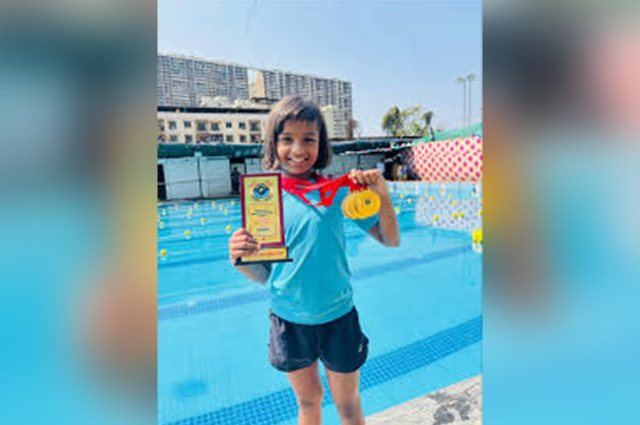
History has repeatedly shown that human limits are not fixed boundaries, but fragile assumptions shaped by habit, fear, and convention. Every so often, an individual emerges who does not merely break a record but unsettles our collective understanding of what is possible. Such moments force society to pause and reconsider long-held beliefs about age, strength, discipline, and resilience.
In a world that often equates endurance with adulthood and discipline with years of experience, the story of Sara Abhijeet Vartak stands in quiet defiance. At an age when most children are still learning the grammar of routine, she undertook a feat that tests the physical and psychological limits of seasoned athletes: a 36-kilometre open water swim from Dharamtar Jetty to Mumbai's Gateway of India, completed in nine hours and thirty-two minutes. Such a vast magnitude of this accomplishment cannot be understood merely through numbers.
But Sara's achievement invites a much deeper inquiry beyond just admiration. It raises fundamental questions about human potential, the role of disciplined training in childhood, and the ethical frameworks within which exceptional talent is nurtured. Is endurance an inherited trait, a cultivated skill, or a convergence of environment, guidance, and inner resolve? Her swim becomes a lens through which we can examine not only the physiology of extreme endurance at a young age, but also the cultural and social systems that make such achievements possible and/or problematic.
This article situates Sara Abhijeet Vartak's journey within a broader intellectual and sporting context. By tracing her background, training, and historic swim, and by engaging with the scientific, psychological, and societal dimensions of child athletic excellence, it seeks to move beyond spectacle.
EARLY LIFE AND BACKGROUND
Family and origins
Sara Abhijeet Vartak's early life is rooted in the coastal geography of Maharashtra. Growing up in the Panvel-Alibaug belt, she was surrounded by tidal rhythms, fishing communities, and an everyday familiarity with open water. This environmental proximity is significant; research on early athletic specialization consistently shows that natural exposure often precedes formal training in endurance sports, particularly swimming. In Sara's case, the sea was not introduced as an arena of competition, but it was part of her childhood environment.
Her family played a decisive role in transforming this familiarity into disciplined engagement. Unlike narratives of coerced excellence, available accounts point to sustained parental involvement marked by supervision, logistical support, and emotional anchoring rather than pressure. Both parents remained closely involved throughout her training and were physically present during her historic swim, a detail that underscores the importance of stable familial scaffolding in high-risk youth sports. Sports psychology literature identifies this form of ‘supportive containment’ as critical, which in essence means that children who undertake physically demanding pursuits perform better when family involvement emphasizes safety and consistency rather than outcome fixation.
Introduction to swimming
Sara's introduction to swimming occurred at an unusually early age, consistent with patterns observed among elite open water athletes worldwide. Initial exposure was informal, which included basic water familiarity, floating, and breath control, before any notion of endurance or distance entered the picture. This gradual acclimatization is crucial since long-distance swimmers typically develop hydrodynamic comfort and respiratory efficiency years before structured endurance training begins.
As her comfort in water became evident, local trainers and coaches recognized an uncommon capacity for sustained movement without panic or exhaustion. Importantly, her early sessions were not centered on speed or competition but on time spent in water. This aligns with a lesser-known principle in endurance pedagogy, that is, ‘aerobic tolerance develops more safely in children through duration rather than intensity’. By prioritising time over pace, Sara's early swimming avoided many risks associated with premature athletic specialization, such as overuse injuries or psychological burnout.
Childhood training and preparation
Sara's training evolved gradually into a structured yet age-sensitive regimen. Under the guidance of experienced open water coaches, her preparation combined pool training for stroke efficiency with controlled exposure to open water conditions. Sessions focused on rhythm, bilateral breathing, and stroke economy— techniques that minimize energy loss over long distances. Unlike adult endurance programs, her training volume was carefully modulated, with rest cycles built in to protect musculoskeletal development.
A critical and frequently overlooked element of her preparation was mental conditioning. Coaches emphasized calmness under unfamiliar conditions like waves, currents, and extended periods without visual reference points. For a child, this psychological training is as vital as physical endurance. Studies in sports neuroscience indicate that early exposure to controlled exposures, when properly supervised, can strengthen emotional regulation rather than impair it. Sara's ability to maintain composure during long swims suggests such training was applied with notable care.
Nutrition and recovery were treated as foundational rather than supplementary. Hydration strategies, simple carbohydrate intake during long sessions, and sleep regularity were prioritized. Collectively, these elements reveal that Sara's achievement was not the product of raw talent alone, though it surely was present, but of an ecosystem that balanced ambition with responsibility.
THE HISTORIC 36 KILOMETRE OPEN WATER SWIM
Event details
The 36-kilometre open water swim undertaken by Sara Abhijeet Vartak stands as a defining moment not only in her personal journey but also in the contemporary history of Indian endurance swimming. Unlike regulated pool competitions, open water swims are inherently non-standardised. Geography, weather, tidal mechanics, and logistical precision keep varying. Sara Vartak's swim was conducted under close supervision, with escort boats, safety personnel, and coaches monitoring every phase. The event was not framed as a race per se, but as an endurance crossing, where completion itself constituted the achievement.
Distance and route
The route extended from Dharamtar Jetty on the Raigad coast to Mumbai's Gateway of India, a crossing that traverses the open waters of the Arabian Sea before entering the highly trafficked Mumbai Harbour. This stretch is historically significant in Indian open water swimming. This stretch had also been used for endurance challenges by seasonal adult swimmers like Mihir Sen (1960s), due to its length, unpredictable currents, and changing salinity levels.
The same route has been repeatedly used across decades by adult open water swimmers affiliated with Maharashtra's aquatic and long-distance swimming circuits, often as qualifications or challenge swims rather than competitive races. The Maharashtra State Amateur Aquatic Association (MSAAA) and associated long-distance swimming groups have historically recognized the Dharamtar-Gateway as an endurance benchmark because swimmers must contend with cross currents from the Ulhas River outflow, salinity shifts near the harbour, and lateral drift caused by tidal convergence.
This route traverses the Arabian Sea's inner channels, including shipping lanes, estuarine currents, and tidal convergence zones. This stretch is particularly demanding due to its non-linear current patterns. Unlike straight ocean crossings, the Dharamtar-Mumbai route forces swimmers to contend with lateral drift; swimmers often cover several additional kilometres unknowingly due to sideways pull from tides, meaning the actual distance swum can exceed the mapped 36 kilometres.
The region is influenced by semi-diurnal tides, producing two high and two low tides daily. During peak tidal shifts, lateral current speeds can reach 2 to 4 knots (3.7-7.4 km/hr), and such a force is strong enough to negate forward swimming if not timed precisely. Navigation, therefore, becomes as critical as physical endurance. Escort boats constantly adjust headings to compensate for drift, ensuring the swimmer maintains a viable trajectory towards the destination rather than being pulled towards open sea or industrial ports.
The route also intersects areas of ‘variable water depth’, from shallow coastal shelves to deeper channels near Mumbai's harbour, where water movement becomes unpredictable due to underwater topography and vessel displacement.
Time and performance
Sara completed the crossing in 9 hours and 32 minutes, a duration that places the swim firmly within elite endurance parameters even by adult standards. For context, many experienced open water swimmers average between 3.5 and 4 kilometres per hour in long-distance sea swims under favorable conditions. Maintaining a consistent pace for over nine hours requires finely tuned stroke economy, metabolic efficiency, and mental resilience. Maintaining forward motion for over nine hours requires tens of thousands of continuous arm rotations, with stroke counts often exceeding 25,000-30,000 strokes depending on efficiency and cadence. Any inefficiency compounds exponentially over such durations.
Energy expenditure during marathon swims can exceed 600-800 calories per hour, even at conservative pacing. This necessitates in-water nutrition, typically liquid carbohydrates administered every 30 to 45 minutes, without allowing the swimmer to stop or hold onto a vessel. Timing feeds too late risks hypoglycemia; too early disrupts rhythm and breathing. For a child swimmer, metabolic regulation over this duration is particularly complex, making the successful completion of the swim physiologically extraordinary.
Notably, her pace remained consistent across later stages of the swim, a phase where most endurance athletes experience pronounced fatigue, stroke degradation, and psychological strain.
Conditions and challenges
The Arabian Sea presents a unique combination of challenges distinct from colder open water environments. Water temperatures typically range between 26°C and 28°C, which, while reducing hypothermia risk, significantly increases the likelihood of thermal fatigue and dehydration. Prolonged exposure to warm saline water accelerates electrolyte loss and cardiovascular strain, particularly over multi-hour efforts.
Surface conditions are rarely stable. Even on relatively calm days, swimmers face short interval chop, wave interference with breathing cycles, and saltwater ingestion, which can lead to nausea and throat irritation. Visibility is limited; swimmers often cannot see more than a few metres ahead, increasing cognitive load as they rely on escort signals rather than visual landmarks.
Marine traffic is yet another adversity to overcome. The Mumbai Harbour region is among the busiest in India, requiring precise coordination with support boats to avoid wake turbulence from passing vessels. Ship wakes can abruptly alter water motion, propelling swimmers to adjust stroke timing and breathing mid-cycle.
Psychologically, the challenge is profound. Open water marathon swimming involves extended periods of ‘sensory monotony’, broken only by physical discomfort and environmental unpredictability. There are no spectators, no immediate feedback, and no milestones visible for hours. Maintaining motivation, orientation, and emotional regulation under such conditions is widely recognized as one of the most difficult aspects of the sport.
Official recognition and records
Following the successful completion of the swim, Sara Abhijeet Vartak received widespread recognition from local authorities, swimming associations, and community organizations. She was ceremonially bestowed the title ‘Sagarkanya’, literally translating to ‘Daughter of the Sea’.
Local administration and sports bodies acknowledged the swim as one of the longest documented open water swims completed by a child of her age on the western coast of India. While formal international age category records for such distances are rare, owing to ethical restrictions on youth endurance events, the swim has been independently verified through escort boats, time logs, and continuous observation by trained supervisors. These verification measures are critical in open water swimming, where GPS drift, tidal displacement, and environmental variations can otherwise distort distance claims.
Media reports and official commendations emphasized the unprecedented nature of the achievement, combining distance, route complexity, age, and uninterrupted completion places Sara in a category almost without precedent. Coaches involved in the swim highlighted that the route is typically attempted only by highly conditioned adult swimmers, many of whom require multiple attempts to complete it successfully. The fact that Sara completed the swim on her first major attempt adds a further layer of distinction.
Beyond titles and accolades, the recognition of Sara Abhijeet Vartak's swim has entered a broader cultural register. Community receptions, felicitation ceremonies, and public acknowledgements framed her not only as a record holder but as a symbol of disciplined preparation and responsible mentorship in youth sport.
Support team
While Sara's swim was an individual effort, it was underpinned by an exceptionally coordinated and disciplined support system. At the core of this system were her coaches, Kishor Patil and Suraj Lokhande, both experienced in endurance swimming preparation. Their role extended much more than training; they were responsible for route planning, tidal analysis, swimmer pacing strategy, and real-time decision making during the swim.
A dedicated escort boat accompanied Sara throughout the entire 36-kilometre stretch. This vessel served multiple functions, such as ensuring maritime safety, monitoring her physiological condition, and managing nutrition and hydration. Every 20 to 30 minutes, Sara was given carefully measured carbohydrate solutions and fluids using non-contact feeding methods, ensuring she never stopped swimming. These feeds were calibrated to prevent hypoglycemia, which is a major risk during prolonged endurance swims, especially in children.
Medical oversight was constant. Trained observers monitored signs of hypothermia, muscle cramping, dehydration, and cognitive fatigue, conditions that can escalate rapidly in open water. Her stroke consistency, breathing rhythm, and body alignment were continuously assessed from the escort boat. Any deviation would have resulted in immediate termination of the swim, as a protocol for the ‘safety-first’ framework, within which the attempt was conducted.
Equally critical was her family's role. Her parents, Vaishnavi Vartak and Abhijeet Vartak, were not passive spectators but active participants in logistical planning, safety approvals, and recovery coordination. Their presence throughout the event provided psychological grounding. Sports psychology research consistently shows that familiar emotional anchors significantly reduce anxiety and dissociation during long-duration physical stress, particularly in children.
TRAINING, PHYSIOLOGY, AND MENTAL STRENGTH
Training discipline
Sara Abhijeet Vartak's training discipline reflects a model increasingly advocated in pediatric sports science but rarely implemented with such rigor: developmentally appropriate specialization. Her preparation emphasized technical mastery and metabolic efficiency rather than brute workload. Training cycles were periodized into low-load, medium-load, and consolidation phases, allowing physiological adaptation without cumulative fatigue. Pool sessions prioritized stroke symmetry, catch efficiency, and breathing cadence, which were micro adjustments that, over hours, conserve measurable amounts of energy. Coaches deliberately avoided early peak conditioning, understanding that premature performance maximization in children correlates strongly with burnout and musculoskeletal injury later in adolescence.
A notable feature of her discipline was ‘training monotony control’. Sessions varied in environment, duration, and cognitive demand to prevent psychological fatigue, an underrecognized limiter in youth endurance development. This aligns with longitudinal studies showing that children who experience variability in training maintain motivation longer and display superior motor learning retention.
Endurance building
Endurance building was rooted in ‘aerobic base expansion’, not speed thresholds. Sara's conditioning leveraged the natural pediatric advantage of efficient oxygen utilization at submaximal intensities. Her heart rate targets remained largely within Zone 2 equivalents, promoting mitochondrial proliferation and capillary density without stressing anaerobic pathways. Scientific data indicate that children recover faster from aerobic exertion than adults, allowing frequent low-intensity sessions with minimal residual fatigue.
Open water endurance was developed incrementally. Initial sea sessions were short and technique-focused, gradually extending in duration only after physiological markers like stable breathing, stroke integrity, and post-swim recovery remained consistent. Fueling strategies were rehearsed extensively; carbohydrate intake during swims followed predictable intervals to stabilize blood glucose levels, a critical safeguard given children's lower glycogen reserves. This nutritional conditioning alone can account for significant reductions in perceived exertion during ultra-endurance efforts.
Safety and supervision
Safety and supervision formed the structural backbone of Sara's training ecosystem. Every endurance session was governed by predefined termination criteria, a professional standard more common in elite adult endurance programs. Indicators such as altered stroke mechanics, delayed response to verbal cues, or changes in breathing rhythm triggered immediate intervention.
Medical literacy informed all planning. Training loads were calibrated to protect epiphyseal growth plates and connective tissues, which are particularly susceptible to repetitive stress in swimming. In open water, escort support ensured constant visual monitoring, hydration delivery, and rapid extraction capability. Importantly, authority to abort a session rested solely with supervising adults, eliminating performance pressure.
Child physiology in endurance sports
Sara's performance exemplifies how endurance feats in children are possible within physiological constraints, not in defiance of them. Pediatric physiology favors aerobic metabolism: children produce less lactate at given workloads and can clear it more rapidly, making them well-suited for prolonged, steady-state activity. However, they are also more vulnerable to hypoglycemia, dehydration, and thermal imbalance.
Her training exploited aerobic strengths while compensating for vulnerabilities. Load intensity was kept low enough to avoid an endocrine stress response that can disrupt growth hormone regulation. A major concern in open water, which is thermoregulation, was managed through continuous movement, controlled feeding, and monitoring for early hypothermia signs. This balance demonstrates that extreme endurance in children is not inherently unsafe, but highly conditional on scientific restraint and supervision.
Psychological dimension
The psychological dimension of Sara's swim is arguably its most exceptional component. Sustaining purposeful movement for over nine hours in open water requires attentional endurance, emotional regulation, and tolerance for sensory monotony. Psychological preparation focused on process-oriented attention rather than outcome fixation. She was trained to attend to immediate cues like breathing rhythm, arm entry, and body alignment, which reduced cognitive load and anxiety.
A key technique employed was ‘temporal segmentation’. Instead of conceptualizing the swim as a 36-kilometre ordeal, it was cognitively divided into short, manageable intervals anchored to feeding schedules and verbal check-ins. Neuropsychological studies show that such segmentation significantly lowers perceived exertion and delays central fatigue.
Equally important was the emotional environment surrounding her training. The absence of coercion, public pressure, or punitive reinforcement allowed intrinsic motivation to dominate. This aligns with self-determination theory, which identifies autonomy and emotional safety as critical to sustained engagement and resilience in young athletes.
SOCIAL IMPACT AND MEDIA RESPONSE
Social media buzz
Sara Abhijeet Vartak's 36-kilometre open water swim did not remain confined to sporting circles; it rapidly entered the digital public sphere, where its impact multiplied. Short form videos of her swimming across the Arabian Sea, escorted by safety boats, circulated widely on Instagram reels, YouTube shorts, and regional Facebook pages, accumulating hundreds of thousands of views within days. This visual contrast was striking: a seven-year-old child sustaining a steady, disciplined stroke in waters typically reserved for adult endurance athletes. This imagery proved unusually powerful in an online environment saturated with performative athletic content.
Unlike typical viral sports clips that emphasize speed or spectacle, Sara's footage resonated because of its duration and persistence. Viewers repeatedly commented on her calm demeanor, unbroken rhythm, and the sheer length of time spent in open water. Social discourse around the swim often shifted from amazement to reflection, with users questioning prevailing assumptions about childhood capability, discipline, and resilience.
Regional language media amplified this reach further. Marathi news portals and community pages shared detailed accounts of the swim, ensuring that the story penetrated beyond elite sports audiences into households where swimming is rarely discussed as a serious pursuit. In this way, social media functioned as a democratizing force, introducing endurance sport into mainstream cultural conversation.
Public inspiration
The public response to Sara's achievement extended beyond admiration into ‘aspirational identification’, particularly among parents, educators, and young athletes. Her swim became a reference point in discussions about early talent development, discipline, and the constructive role of mentorship. Swimming academies and local sports groups reported increased inquiries from families seeking structured, safety-oriented training for children.
What made Sara's story especially resonant was its departure from narratives of innate genius. Public discourse emphasized preparation, patience, and gradual progression rather than extraordinary physical gifts. This framing aligned her achievement with values of perseverance and responsibility, making it accessible rather than intimidating. In sociological terms, her swim functioned as ‘model achievement’, an example that inspires emulation without encouraging recklessness.
Educators and sports psychologists also cited the swim as a case study in intrinsic motivation.
Local and national recognition
At the local level, Sara Abhijeet Vartak was welcomed as a figure of communal pride. Upon completing the swim at the Gateway of India, she was received by supporters, officials, and members of the local swimming community. Regional media conferred upon her the title ‘Sagarkanya’, a designation historically reserved for swimmers who demonstrate exceptional command over open seas.
At the national level, Sara's swim contributed to a growing recognition of open water swimming as a serious athletic discipline in India. While pool swimming has long dominated institutional support, her achievement drew attention to endurance swimming as a domain worthy of investment and scientific oversight. In this sense, the recognition she received extended beyond personal accolades; it subtly reshaped the visibility of an entire sport.
CHALLENGES AND CRITICISMS
Physical limits and safeguards
While Sara Abhijeet Vartak's achievement is extraordinary, the participation of children in extreme endurance activities raises well-documented physiological and safety concerns that warrant rigorous scrutiny. Youth athletes are undergoing continuous biological development. Bones, muscles, growth plates, endocrine systems, and thermoregulatory mechanisms are still maturing, which makes them inherently different from adults metabolically and biomechanically. Children's bones, for example, are structurally weaker than their ligaments and tendons during growth spurts, increasing the risk of fractures and growth plate injuries under excessive repetitive strain. Early specialization in a single sport increases ‘overuse injuries and stress responses’, a finding confirmed across multiple pediatric sports injury reviews.
Endurance events like long-distance open water swimming also present unique environmental stressors. Exposure to prolonged cold, hypothermia, and heat strain can disrupt thermoregulation, an area where children have limited physiological reserves compared to adults. Studies on open water swimming show that thermal homeostasis can be significantly challenged in long swims, increasing the risk of dehydration, heat stress, and cardiovascular strain. Additionally, systematic reviews of swimming fatalities point to rare but real risks of cardiac arrhythmias triggered by cold shock responses, an autonomic nervous system conflict that can overwhelm even strong swimmers.
Medical and sports medicine literature highlights that pediatric endurance athletes are at elevated risk for ‘overtraining syndrome’, ‘nutritional deficiencies’, ‘sleep dysfunction’, and ‘energy imbalance syndrome’ such as RED-S (Relative Energy Deficiency in Sport). Inadequate recovery, caloric shortfalls, and intensive training can impede healthy development, compromise immune response, and increase vulnerability to both acute injury and chronic conditions.
Further complicating the safety picture is the lack of mapped, evidence-based guidelines for pediatric endurance thresholds. Unlike established competitive swim distances for adults (e.g., FINA-regulated 10 km races with strict environmental limits), there are no universally accepted physiological safeguards for children undertaking multi-hour open water swims. This gap places the onus on coaches, parents, and medical professionals to approximate safe practice through careful monitoring.
Media sensationalism vs sportsmanship
Another layer of criticism stems from how endurance feats by children are portrayed and amplified in the media ecosystem. Scientific literature on youth sport culture points out that mainstream and social media often emphasize dramatic narratives and emotional reactions over thoughtful discussion of potential risks and developmental implications. Media coverage tends to favor spectacular angles of young ages, extreme distances, social virality, without proportionately contextualizing the safety protocols, medical oversight, or long-term developmental considerations that make youth athletic participation sustainable and ethical.
This dynamic is part of a broader critique of modern youth sport ecosystems, where early specialization and performance narratives can be shaped by adult expectations, commercial incentives, and media attention rather than child-centric development models. Research on early specialization shows that focusing year-round on a single sport increases the risk not only of physical injury but also of psychological burnout, motivation decline, identity foreclosure, and mental health strain. Systematic reviews of pediatric sports participation highlight that high expectations tied to media visibility can amplify stress responses in young athletes, sometimes resulting in social isolation, self-worth tied exclusively to performance, and elevated anxiety when athletic success becomes publicly scrutinized.
Critics argue that sensational media framing can overshadow essential aspects of sportsmanship culture like respect for safe development, balanced lifestyle, intrinsic motivation, and the child's right to a childhood beyond athletic achievement. Youth sports scholars stress that sport participation should prioritize well-being, enjoyment, and holistic growth rather than spectacle and notoriety.
FUTURE PROSPECTS AND LEGACY
Sara's sports career path
At this stage, Sara Abhijeet Vartak's sporting future cannot and should not be framed through the narrow lens of medals, rankings, or accelerated professionalization. From a long-term athlete development perspective, the most responsible trajectory for her career lies in measured progression rather than escalation. Sports science consensus strongly advises that exceptional early endurance capacity should be consolidated through technical refinement, diversified movement skills, and gradual exposure to higher competitive demands only after key stages of physical maturation.
In practical terms, this means that Sara's immediate future is likely to focus on skill consolidation rather than distance expansion. Stroke efficiency, navigation skills, pacing intelligence, and open water awareness can be refined without increasing training volume or swim length. As she approaches adolescence, structured participation in age-appropriate national and international open water events, under strict medical and regulatory oversight, could offer competitive exposure without compromising developmental health. Sara's immediate sporting future is likely to involve controlled participation in age-appropriate swimming events, both in pool and open water formats. Shorter open water distances, monitored national-level competitions, and technique-focused pool races would allow continued physiological development without excessive load accumulation. Experienced in endurance preparation, coaches Kishor Patil and Suraj Lokhande are expected to shift emphasis from ultra-distance feats to stroke refinement, aerobic base maintenance, and psychological sustainability.
Pertinently, Sara's demonstrated ability suggests suitability not only for ultra-distance swims but also for strategic open water formats, such as timed endurance swims and regulated long-distance races. These formats emphasize tactical intelligence and environmental adaptation over sheer mileage, aligning well with sustainable athlete development models. Should she choose to continue in competitive swimming, her foundation positions her uniquely at the intersection of endurance, resilience, and technical economy; qualities that often mature into elite performance during late adolescence or early adulthood.
Inspiration for other young athletes
Perhaps Sara Abhijeet Vartak's most enduring legacy will lie not in records but in redefining how excellence in childhood sport is imagined. Her story disrupts two entrenched narratives simultaneously:
- The belief that children must be shielded entirely from physical challenges.
- And the opposing belief that extraordinary achievement requires sacrifice of well-being.
- What her journey demonstrates is a third possibility, which is one where ambition, safety, and joy coexist.
For young athletes, particularly girls, her achievement carries symbolic weight. Endurance sports have historically been framed as domains requiring masculine strength or adult toughness. Sara's swim shows that discipline, patience, and adaptability are as powerful as brute force. In this sense, she becomes a counter-symbol to early dropout culture, where children abandon sports due to pressure, injury, or loss of intrinsic motivation.
Her impact also extends to parents and coaches. The visibility of her carefully supervised training model offers an alternative to outcome-driven youth sports systems. Rather than asking “how fast?” or “how far?” Her story encourages questions like “how sustainable?” and “at what cost?” This shift in discourse may inspire more families to pursue process-oriented development, emphasizing long-term well-being over early recognition.
At a community level, Sara's swim has already sparked renewed interest in swimming as a life skill and endurance discipline. Increased enrollment inquiries at swimming academies and grassroots programs suggest that her achievement has functioned as a catalyst, normalizing commitment and discipline without glorifying excess. In this way, her influence radiates outward, shaping attitudes toward youth sport participation beyond her individual career.
Potential sponsorship, training opportunities
With recognition comes opportunity, but more importantly, responsibility. Corporate sponsorships, institutional backing, and advanced training facilities are likely to become available as Sara's profile grows. In India, young athletes who achieve national visibility often attract interest from sports foundations, public sector undertakings, and private wellness brands, particularly those aligned with health, education, or water safety initiatives.
However, contemporary athlete welfare frameworks stress that sponsorships involving minors must prioritize educational continuity, psychological well-being, and autonomy. The most constructive partnerships would therefore be those that support long-term development: funding for coaching education, access to sports medicine services, nutritional counseling, and academic flexibility, rather than performance-driven incentives.
Advanced training opportunities such as exposure camps, national swimming programs, or international youth exchanges could also play a role in broadening Sara's experience. Such programs would introduce her to diverse training philosophies and competitive cultures while preventing insularity. Yet experts caution against excessive international competition at a young age, noting that early overexposure correlates with burnout rather than sustained excellence.
Handled judiciously, these opportunities could help Sara develop not only as an athlete but as a knowledgeable participant in sport, one who understands her body, her limits, and her choices.
Ethical frameworks in youth sport caution against premature commercialization, noting that sponsorship pressure can distort motivation and accelerate unhealthy specialization.
The most appropriate sponsorship opportunities for Sara would be those aligned with developmental integrity rather than performance escalation. Brands and institutions that emphasize sports education, child welfare, aquatic safety, or long-term athletic development could play a constructive role. Such partnerships can fund recovery resources, nutritional guidance, academic flexibility, and international exposure without imposing unrealistic performance expectations.
CONCLUSION
Sara Abhijeet Vartak's 36-kilometre open water swim is, on the surface, a remarkable athletic feat. But to view it solely through the lens of endurance or records is to miss its deeper significance. Her journey compels us to confront fundamental questions about human potential, childhood development, and the ethics of excellence. It reveals that extraordinary achievement doesn't arise from defying biological limits, but from understanding and working patiently with them.
At seven years old, she conquered the sea through patience, rhythm, and an uncommon harmony between body, mind, and environment. The title ‘Sagarkanya’ (Daughter of the Sea) bestowed upon her is therefore not symbolic excess; it acknowledges a relationship built through discipline rather than domination.
Her journey reveals an essential truth often lost in narratives of prodigy: exceptional outcomes are rarely accidents. They emerge from ethical coaching, vigilant safety, informed physiology, and emotional security. In an era where childhood achievement is increasingly commodified and amplified, Sara's story offers a corrective— proof that excellence can be cultivated without exploitation, and ambition pursued without erasure of childhood.
Ultimately, her legacy may not be measured by distances swum or records set, but by the standard she establishes.
REFERENCES
- Navarashtra
- YouTube
- Vardhmancareerplace.com
- Marathi News Esakal
- Swimswam
- Indiatimes
- Shethepeople
- Indiatoday
- Lokmat
- Ndtv
- The quint
- Jagran
- Kalingatv
- Magzmumbai
- Aajtak
- Latestly
- 4thnation
- Bhaskar
- Price, T., Cimadoro, G., & Legg, H. (2024), ‘Physical performance determinants in competitive youth swimmers: a systematic review.’
- Ratel, S., Blazevich, A., et al. (2018). ‘Metabolic and fatigue profiles are comparable between pre-pubertal children and well-trained adult endurance athletes.’
- SpringerLink
- ScienceDaily
- Nature
- PMC
- PubMed
- Wikipedia
- ERIC
- MDPI