
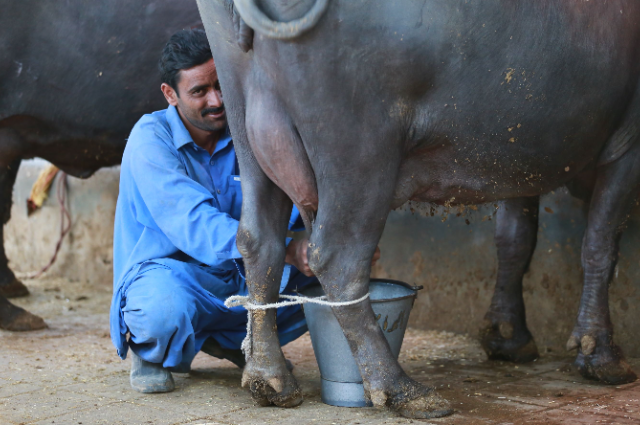
In a newly independent India of the 1940s, milk was scarce, and farmers were at the mercy of middlemen. In Gujarat’s Kaira (Anand) district, colonial-era dairies like Polson held a de facto monopoly, paying farmers only pennies for their milk. In 1946, galvanised by leaders like Sardar Vallabhbhai Patel, local farmers decided they’d had enough. They pooled their resources to set up a cooperative, Amul, which vowed to pay fair prices and process their milk. Into this ferment stepped a young dairy engineer, Dr Verghese Kurien, assigned in 1949 to run Anand’s creameries. Persuaded by cooperative pioneer Tribhuvandas Patel to stay and help, Kurien transformed Amul from a small union of farmers into a national phenomenon.
Kurien’s cooperative model – one farmer, one vote; shared ownership of processing plants; and direct links from village to market – ignited the White Revolution in India. Over the next two decades, India went from importing powdered milk to becoming the world’s largest milk producer. Millions of smallholders gained regular income, women found new roles, and rural economies diversified. This article revisits that story. It explains how the Amul cooperative and Operation Flood (the government-backed milk program of the 1970s) worked in practice, analyzes the economic and social impacts on India’s villages, and considers who benefited (and who didn’t). We examine policy support and institutional factors, and we assess the critiques and limits of the model – from political interference in cooperatives to rising competition from private dairies. Finally, we look at the present day: how climate change, supply-chain innovation, and evolving markets test the White Revolution’s legacy. Along the way, real-life episodes – from Kurien’s own reluctance to leave Anand, to the iconic grassroots film Manthan funded by farmers, to today’s women-led milksheds – humanise the narrative. In reflecting on this remarkable social innovation, we seek lessons on what cooperatives can (and cannot) do for rural development.
From Monopoly to Amul: The Birth of a Cooperative
By the 1940s, farmers around Anand were trapped by a dairy monopoly. The Polson dairy processed village milk into butter, but kept farmers poor while selling heavily salted butter to British troops. Resentment grew. On 14 December 1946, in a symbolic act of farmers’ revolt, Sardar Patel helped launch Amul (Anand Milk Union Ltd), the first farmers’ cooperative. Over the coming years, the cooperative built its own creamery and began paying higher prices for fresh milk. One famous anecdote: Polson’s salted butter was so dominant that housewives thought fresh, unsalted Amul butter was “not normal.” But after a taste shift, demand flipped – illustrating the power of marketing and quality once farmers had control.
Young Verghese Kurien arrived in Anand in 1949 expecting only to serve out a government bond term and return to city life. Instead, he found spirited farmers determined to run their own milk society. “Kurien decided to stay on for a few more days… and the rest that happened is now history,” notes Amul’s official biography【3†L85-L93】. Under Kurien’s management, and with guidance from Anand’s Gandhian leader Tribhuvandas Patel, Amul professionalised quickly. Engineers and managers were hired, and farmers were trained in hygiene and record-keeping. Most importantly, the basic governance rule was clear: the milk producers – not outside companies or politicians – owned the cooperative. Kurien later recalled that Amul “organised the dairy farmers in the villages as part of cooperatives and linked them to the milk consumers directly, eliminating the need for middlemen”. By the mid-1950s, Amul had captured a significant share of local markets and inspired other districts.
A key turning point was the funding of the 1976 film Manthan (“Churning”). Half a million farmers each contributed ₹2 to produce a movie based on their experience setting up a milk cooperative. The film, starring Smita Patil and Naseeruddin Shah, dramatised how villagers in Gujarat overcame caste divisions and economic hardship to build a dairy union. It was a hit and spread the cooperative idea across India. Meanwhile, success in Anand prompted the Central Government to create the National Dairy Development Board (NDDB) in 1965 and to launch Operation Flood in 1970. Operation Flood would replicate Amul’s “Anand pattern” in new regions, building a national milk grid from villages to cities.
The Cooperative Model: Linking Village to Market
At its core, the Amul model was a three-tier cooperative structure. First, village-level dairy cooperative societies were formed, each comprising local milk producers. Farmers pooled daily milk at village collection centres. These societies handled procurement and ensured quality control: milk was tested for fat content and cleanliness right where it was collected.
Second, village societies were federated into district-level unions. Each district union (or “milk union”) received milk from dozens or hundreds of village societies. The union operated pasteurisation and processing plants to convert raw milk into products like pasteurised milk, butter, yoghurt, and cheese. Crucially, the unions were owned by the member societies, which in turn were owned by the farmers. Councils of elected farmers governed both the village and union boards.
Third, above the district unions sat state or national federations. For Gujarat, the apex body was GCMMF (Gujarat Co-operative Milk Marketing Federation), which created and sold the brand “Amul” across India. This federation handled the marketing, branding, and distribution to retail outlets – tasks beyond the capacity of individual cooperatives. Importantly, profits (after reserves) flowed back to the unions and societies.
A simple flow diagram captures this supply chain:
In practice, this meant a farmer brings raw milk to her village society’s collection centre each morning. The society tests the milk and pays the farmer on the spot. The milk is channelled to a nearby union plant where it is cooled and processed into dairy products. The state/national federation (Amul, in Gujarat’s case) sells these products in shops and cities, and uses the revenue to pay the union. The unions then remit dividends to the societies, and villages invest in animal health, fodder, and community services.
This vertically integrated chain removed layers of middlemen. Where earlier unscrupulous agents or private dairies might have taken most of the value, now that value was returned to farmers. Village co-ops provided inputs (like cattle feed or veterinary aid) and farming advice, often subsidised. Many dairy services – artificial insemination, medical camps, training – were organised through the cooperative network. The result was a “democratic enterprise” at the grassroots: technologies and profit in farmers’ hands. By linking even remote producers to urban markets, the cooperatives achieved economies of scale in packaging and marketing that individual smallholders could never manage alone.
Impact on Rural Livelihoods
The numbers tell a dramatic story. Between 1970 (start of Operation Flood) and 1998, India’s annual milk output multiplied many times over. By the late 1990s, India had surpassed the United States as the world’s top milk producer. In the last decade alone, production grew from about 146 million tonnes (2014–15) to 239 million tonnes (2023–24). Per-capita availability also rose by nearly half, meeting a nutritional goal for many families.
Equally important were the income gains for rural producers. At the start of Operation Flood, an estimated 4.25 million farmers were participating. By the mid-1980s, that had expanded to more than 14 million across 130 milksheds. (Today roughly 80 million farmers are involved in dairy in some way, with nearly 17 million in co-ops.) Surveys have shown that cooperative members typically achieve higher milk yields, market a greater share of their milk, and earn significantly more than similar non-members. One study in Assam found dairy co-op participation raised farm income and employment without reducing home milk consumption. Anecdotally, many smallholders invested the extra money in children’s education, house repairs, or small businesses.
The social impact ran deeper. Dairy co-ops created steady cash income even for marginal farmers who did not own tractors or large fields. Because milk sales were daily and not tied to harvest seasons, families had a reliable cash flow. In Gujarat, irrigation and input costs had kept many farmers on the financial edge; dairying gave them a buffer. Cooperative meetings and democratic elections also built community organisation. Villagers who had once felt powerless over pricing or hamlet disputes now sat on boards and made decisions. The tri-tone Amul slogan “Tell me how much you make from a cow, and I’ll tell you your social status” underlined that dairy wealth was becoming a key measure of success in rural Gujarat.
The industry also spawned employment beyond the farm. Plant operators, drivers, packagers, quality testers, and marketing staff were all hired by unions and federations. Cold storage and transportation jobs grew. Some analysts suggest Operation Flood became one of India’s largest rural employment programs of its era. In sum, the cooperative revolution turned hundreds of thousands of small farmers – including sharecroppers and landless who could own a buffalo – into entrepreneurs in their own right.
Women and Dairy: Gender Dimensions
No survey of the White Revolution is complete without acknowledging women’s role. Dairy work – milking, household handling of milk – has long been women’s responsibility. In India’s cooperatives, women stepped from the shadows into leadership, though often informally at first. Today, about 70% of the dairy workforce in India is female, working as milk collectors, animal health workers, and farm managers. Many cooperatives in Gujarat and elsewhere register women as members in their own right, allowing them to vote in society elections. The NABARD and NDDB have actively encouraged women’s dairy cooperatives, in some cases setting up village co-ops run entirely by women.
There are many micro-stories. For example, rural women trained under the NDDB’s A-HELP program now act as village-level veterinarians and extension agents. Women’s self-help groups often combine dairy and finance, doubling income sources (for instance, processing milk into yoghurt for sale). Winning milk sales have even challenged caste and gender norms: in Manthan, the heroine runs the cooperative against patriarchal odds, echoing real cases where marginalised women gained confidence from the model. Anecdotal accounts mention that after the 1970s, families in Gujarat waited on doorsteps every morning not just for cash but to see the cooperative records – a symbol of women, alongside men, taking pride in their part of the enterprise.
That said, women in cooperatives still face constraints. Leadership positions (chairperson of a union, etc.) remain mostly held by men. The cooperative slogan “Amul takes milk from everywhere but gives back dividends everywhere” rang true economically, but social barriers meant the division of labour often still fell along old lines. As one government minister noted recently, dairy co-ops could be a springboard for women’s entrepreneurship, but “in practice, many incentives and supports were needed before women fully took on management roles”. Contemporary policy emphasises this: today the NDDB promotes women-led milk villages and has launched pilots of all-women cops, recognising that dairy offers an exceptional entry point for gender equity in rural economies.
Policy, Institutions, and the “Milk Grid”
Behind the Amul miracle lay strong institutional support. One key was the 1965 founding of the National Dairy Development Board (NDDB). Prime Minister Lal Bahadur Shastri had commissioned the White Revolution, and Kurien became NDDB’s first chairman (1965–98). NDDB’s mandate was to replicate the “Anand pattern” nationwide: it used Operation Flood as a vehicle. Armed with World Bank loans and a trust fund of skimmed milk powder from the EU, Operation Flood (1970–96) poured investment into building cooperatives and their infrastructure. Each phase of Flood expanded the network:
Phase I (1970–80) linked 18 milksheds (major dairy regions) to urban markets.
Phase II (1981–85) increased coverage to 136 milksheds. By 1985, India had 43,000 village dairy societies and 4.25 million producer members, up from near zero before 1970. This produced more milk powder domestically and weaned India off imports.
Phase III (1985–96) added 30,000 more cooperatives, taking the total to ~72,000 societies. It also introduced high-yield cattle breeds, artificial insemination services, and extensive member education. By 1988, 173 milksheds were active, and women’s cooperative societies had grown substantially.
Funded by foreign grants (in Phase I) and by farmer revenues later, Operation Flood was called “a dairy development program, but in fact a development program”. It built or modernised thousands of chilling centres, processing plants, and later refrigerated trucks (the “National Milk Grid” connected producers in hinterlands to city markets). Thanks to this policy backing, rural India gained a durable marketing infrastructure that simply did not exist for most other crops.
At the policy level, the Indian government originally protected cooperatives. High import duties on milk products, restrictions on large private dairies, and support for veterinary services ensured that the co-ops flourished. (In the 1970s, outside of Amul, there were only a couple of small private dairies like Nestlé.) This protection helped build trust among farmers. But after 1991’s economic liberalisation, dairy markets opened up. The government delisted dairy processing, and in the following decades, corporate milk companies multiplied. Today, big private players like Hatsun, Heritage, and others handle millions of litres daily. Official reports now note that the private sector’s capacity has, at times, surpassed that of the cooperatives.
Governance issues also surfaced. While the founding vision was “one member, one vote,” political interference crept in. Several state federations saw government-appointed directors or politically connected chairs. For example, in Gujarat during the 1990s, both ruling and opposition parties tussled for control of cooperative boards, needing their own loyalists as chairs of unions. This undermined fairness: analysts found that in many states, board decisions (like setting procurement prices) could be swayed by electoral motives, not farmers' interests. Even in well-managed Amul, state governments tried to nominate board members; an oft-cited court case (which Amul won) showed how fraught elections could become.
These issues highlighted a core tension: cooperatives are supposed to serve members, but they also became powerful local institutions. As Amul’s veteran chair Amrita Patel has said, “State governments treat dairy co-ops as their private institutions because they are vote banks”. Subsidies became political tools (for instance, Karnataka doubled milk subsidies after an election victory, triggering calls for other states to follow suit). Such politics did help farmers in the short term (more per-litre payouts), but they risked unsustainable public spending and disruptions if subsidies fell or politics changed.
To address these problems, new legal experiments emerged. In 2002–03, the Companies Act was amended to allow producer companies – hybrid entities where farmers could form shareholding companies that retained cooperative principles (like one vote per farmer) but operated under company law. The idea was to give cooperatives a business edge while protecting farmer control. Gujarat’s AMUL was among the first to try such a model. These reforms suggest that while the core cooperative ethos remains, Indian dairy has needed adaptation to stay resilient in a competitive market.
Challenges and Critiques
No story of the White Revolution is only celebratory. Critics point out several limitations. One major issue was that not all farmers benefited equally. By design, only those with milch animals and enough feed could join. Landless labourers or families without cattle were largely excluded. Even among the “have cows,” richer farmers gained more: they supplied more milk and held more cooperative shares. In the 1980s, sociologists noted that the poorest could not always afford a buffalo or cope with fodder shortages, so dairy co-ops did not erase rural poverty. Kurien himself later cautioned that dairying was a single-sector uplift, not a panacea for decades of inequality.
Another critique is marketisation and competition. The co-op model worked spectacularly under 1970s conditions, but its village-centric ethic did not easily scale beyond dairy in India. Attempts to apply the same framework to other commodities (like edible oils) met mixed results. Moreover, as noted, cooperatives now compete with well-capitalised firms. Private dairies do not share profits back to farmers or provide veterinary and breeding services. They compete on marketing and sometimes poach the best entrepreneurs. This means cooperatives must up their game: GCMMF (Amul) has responded with aggressive branding (Amul now exports butter to dozens of countries) and expanding product lines. But some smaller federations have stagnated, partly due to governance issues and partly because private players lure away board talent with higher salaries.
Environmental critics have also raised sustainability concerns. Dairy expansion can strain water and fodder resources, and methane emissions from cattle contribute to climate change. While cooperatives have often improved animal husbandry practices, India's project of raising milk output means more grazing and feed crops. Today, as extreme heat threatens milk yield, questions arise whether the model sufficiently addresses climate resilience (see next section).
In fairness, many of these challenges have long been acknowledged within the movement itself. Kurien and his colleagues never claimed dairy alone would eliminate all rural ills. But the revolution’s architects did insist it would deliver “economic justice with people’s participation”. On that measure, co-ops mostly delivered – yet vigilance is needed to keep that promise in changing times.
Contemporary Relevance: Climate, Competition, and Reform
Today India’s dairy network faces new tests. Climate change is a pressing one. Studies warn that by mid-century, rising temperatures and drought risk reducing India’s milk output by 20–30%. Small herds suffer under heat stress and lack of fodder. Indian policymakers and experts now emphasise that cooperatives can serve as platforms for adaptation. For example, a recent initiative argues that cooperatives can aggregate demand for climate-smart solutions – bulk purchases of cooling systems, climate-resilient feed, or veterinary technologies – which individual farmers could not afford alone. In other words, just as they pooled milk, co-ops might pool resources for sustainability.
Supply chain modernisation is another frontier. The old “hand-cranked” diary is giving way to digital management. NDDB’s real-time milk collection software, automated chilling stations, and logistics algorithms now help co-ops reduce waste and ensure quality. In a way, the cooperative networks are akin to social enterprises that could be quick to adopt any tech that benefits members.
Yet the liberalised market means corporate players are prominent. Giants like Nestlé and Britannia dominate the urban market share in processed milk and snacks, and Amazon and Flipkart sell milk products online. This competition pressures cooperatives to professionalise marketing and branding even further. The Gujarat model has been successful – Amul’s turnover is reported in the tens of thousands of crores – but others lag in building consumer brands. The concern among many is: can a farmer-run enterprise maintain the agility of a startup or the budgets of multinationals?
As noted earlier, governance reforms have been tried. Producer companies are one path. The newest Cooperatives Act (2022) and upcoming rules are also meant to grant dairy co-ops more autonomy and scale. Additionally, some states are pushing for “one million litres per day” dairies (industrial scale) that combine cooperatives with private sector practices. The hope is to retain farmer control while attracting investment.
Ultimately, the cooperative model remains central to India’s food security strategy. At a World Food Day event in 2026, the UN’s International Dairy Federation highlighted that “India’s cooperatives secure nearly a quarter of global milk supply” thanks to that legacy network. The lessons of Kurien’s model – that income security can come from farmer ownership – are now being applied to honey, dairy-waste energy, and even digital apps for goat farmers.
Lessons and Reflections
The White Revolution was one of India’s great post-independence success stories, built not by foreign capital but by the resolve of millions of villagers. It showed that democratic ownership and professional management were not incompatible: farmers could be savvy entrepreneurs if given tools. It disrupted dated social structures (even bridging caste lines around a cooler of milk) and made nutrition affordable.
Yet the story of Amul also shows the limits of technical fixes. Cooperatives did not address land hunger, illiteracy, or all inequality, though they helped many households. Their future depends on vigilance: keeping politics out of milk, encouraging youth to run co-ops, and adapting to global changes (from climate to cloud computing).
For rural development today, perhaps the biggest lesson is this: let the producers themselves lead. The Anand pattern worked because the ultimate vote and profit belonged to the milk producers. External programs worked only when they respected that. As one expert put it, “India’s dairy sector is a proving ground for scalable adaptation strategies” – meaning that when farmers organise collectively, they can meet challenges in concert.
Verghese Kurien often quipped, “Cooperatives are not charity; they are self-help.” His life’s work gives rural India a powerful template: that even in a globalising era, villages can hold their own markets and stake a claim in their own prosperity. Whether that template extends beyond dairy – to pulses, grains, or even data – is a question for new white revolutions to tackle. What is certain is that millions of Indian farmers, armed with nothing more than cows, milk cans, and collective courage, changed their destiny once. The challenge now is to carry that legacy forward under new skies.
References:
- (Sources include Amul and NDDB archives, Kurien’s speeches and biographies, seminal studies of dairy co-ops, and recent government and academic reports.)
- National Dairy Development Board (NDDB), Operation Flood overview (NDDB website).
- Gujarat Cooperative Milk Marketing Federation, Dr Verghese Kurien biography (Amul Dairy site).
- Verghese Kurien, speech excerpts (World Food Prize, NDDB, Amul).
- Ruth Heredia, The Amul India Story (book); and M.S. Meenakshi, Verghese Kurien: The Man Who Brought Milk to a Million Homes (book).
- K. Mansingh, India’s Milk Revolution (cooperative studies, 1991).
- Aditya Chakravorty, “Manthan and the Milk Revolution,” Economic and Political Weekly (case study).
- A. Sardana et al., Impact of dairy cooperatives on rural incomes (Indian Journal of Agri. Economics).
- Government of India, PIB press release on India’s dairy sector (2025).
- Environmental Defence Fund (EDF), “India’s Dairy Industry and Climate” (2025).
- Centre for Economic and Social Studies (CEEW), “Cattle rearers’ survey” (2024) – climate risk data.
- Manthan: The Churning (1976 film, based on the dairy cooperative movement).
- Down to Earth, “India’s new milky way” (2021) – critical analysis of co-ops vs private sector.