
History often repeats itself, not because injustice is forgotten, but because truth is deliberately silenced. In an ever-changing world, one reality remains constant: the need for courage to bring the truth to light. Too often, truth is buried beneath power, wealth, and social status; at times, it is suppressed simply because standing up requires strength that many hesitate to summon. With every passing day, it becomes easier to disguise falsehood as reality than to confront the discomfort of truth.
In today’s society, it is not always the one who is right who will be believed, but the one who appears powerful. Truth no longer demands proof; it demands influence. Status can reshape narratives, and monetary power can turn lies into accepted versions of reality. Does this mean we should surrender to power and privilege? Certainly not.
Yet, the painful truth is that justice often tests patience before it reveals itself. Perhaps it is not the absence of truth, but a test of faith—faith in oneself, faith in righteousness, and faith in truth, when pursued with courage and endurance, will ultimately prevail. History has shown us that truth may be delayed, but it is never defeated.
Truth may be delayed, tested, and buried under power, but it never loses its way. Introduction to Jallianwala Bagh.
This struggle between power and truth is not new. History bears witness to moments when authority attempted to rewrite reality and silence conscience. One such moment unfolded in 1919, where unarmed voices were met with bullets, and truth was buried beneath colonial power. What followed was not merely a massacre, but a deliberate attempt to justify injustice, suppress facts, and portray brutality as discipline.
Yet, even in the shadow of fear and authority, truth refused to disappear. It waited for courage, the courage to challenge an empire and expose reality. That courage was embodied by those who chose conscience over position and truth over silence, proving that even the mightiest power cannot erase the truth when met with moral bravery.
His Contribution in Exposing the Truth of Jallianwala Bagh
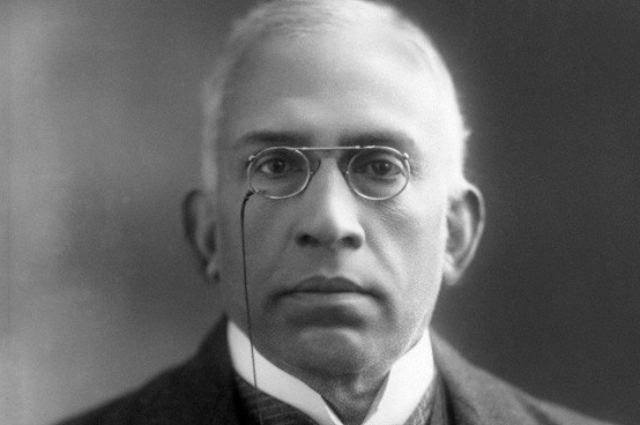
Born into a time when British authority defined justice in India, Shankaran Nair was a man shaped by law, discipline, and intellect. Trained as an exceptional lawyer, he initially worked within the British legal framework, often assisting the colonial administration in complex cases. His sharp legal mind and integrity earned him respect, eventually leading to his appointment as a member of the Viceroy’s Executive Council—one of the highest positions an Indian could hold under British rule.
For years, Nair believed that reform and justice could be achieved from within the system. However, this belief was shaken when he came face to face with the reality of the Jallianwala Bagh massacre. The British narrative sought to portray General Reginald Dyer as a disciplined officer acting in the interest of order. As the truth behind the incident began to surface, Nair encountered evidence, testimonies, and accounts from survivors and families of victims—stories that revealed not control, but cruelty; not discipline, but deliberate violence against unarmed civilians.
What Nair witnessed was not a mere lapse in judgment, but a systematic attempt to justify mass murder under the shield of authority. Disturbed by the distortion of facts and the moral blindness of the colonial government, he refused to accept the official version of events. His conscience no longer allowed silence.
Choosing truth over privilege, Nair resigned from the Viceroy’s Executive Council, a decision that shocked both British officials and Indian society. He did not stop there. Using his legal knowledge, writings, and influence, he openly criticised British rule and exposed the injustice of Jallianwala Bagh before the public. Through legal arguments and fearless expression, he challenged the moral legitimacy of an empire that claimed justice while practising oppression.
Shankaran Nair’s courage lay not in protest but in sacrifice. He gave up power, position, and security to stand with truth. At a time when speaking against the British invited isolation and retaliation, he proved that true bravery is not found in authority, but in the willingness to confront it.
True courage is choosing conscience over comfort, even when power stands against you. Comparing with Today’s scenario Courage to unveil the brutal truth is not born in comfort. It was demanded in 1919, and it is demanded even today.
History changes its faces, uniforms, and battlegrounds, but truth remains equally dangerous to uncover. From the blood-soaked soil of Jallianwala Bagh in 1919 to the sterile corridors of a government hospital in 2024, one thing remains constant: Power resists truth and truth demands courage.
What happened at R. G. Kar Medical College was not merely a crime; it was a test of conscience. A test for institutions, for governance, for justice and for a society that often mourns loudly but protects weakly.
War may change its language, but injustice always hides behind silence. On the night of 8 August 2024, a 31-year-old postgraduate resident doctor completed a gruelling 36-hour shift at R. G. Kar Medical College and Hospital, Kolkata. After dinner with colleagues, she rested in a seminar room on campus. The next morning, 9 August, her body was discovered in a semi-nude condition, bearing severe injuries. She was later declared dead. Shockingly, the college authorities initially informed her family that it was a case of suicide, a claim that would soon unravel. An autopsy confirmed the truth: rape, brutal sexual assault, and murder by strangulation.
When truth knocks too loudly, institutions often pretend not to hear. Medical Findings, Early Investigation and the post-mortem report revealed extensive injuries, including genital trauma, facial wounds, and a fractured thyroid cartilage, clear evidence of violent assault and strangulation.
An unnatural death case was registered only after the autopsy, raising serious questions about procedural delays.
Initial findings and the extent of injuries led to speculation about gang rape, though this was later ruled out by the Central Bureau of Investigation, clarifying that the reported sample weight was misinterpreted data, not evidence of multiple perpetrators.
Justice delayed is not an error; it is often a choice
On 10 August, Sanjay Roy, a civic volunteer attached to Kolkata Police, was arrested.
However, public confidence in the investigation eroded rapidly. Within three days, the Calcutta High Court transferred the case to the CBI, stating that the local police investigation “did not inspire confidence” and warning of possible destruction of evidence.
When doctors protest, it is not rebellion; it is a cry for survival.
The incident triggered unprecedented protests. Junior doctors across West Bengal went on a 42-day strike, demanding; A transparent investigation and accountability for institutional failures.
Hospitals across India witnessed suspended OPDs and elective surgeries. The movement soon transformed into a national call for workplace safety, especially for women doctors.
The system trembles most when the truth refuses to stay buried. The spotlight soon shifted to the hospital administration. Former principal Sandip Ghosh resigned amid allegations of evidence tampering, delayed FIR, and financial irregularities. His immediate reappointment elsewhere sparked outrage.
Subsequent investigations led to: Arrests of senior officials, Raids by the Enforcement Directorate, Suspension of officials and Multiple polygraph tests.
The case expanded from a single crime to a systemic failure.
On 18 August, the Supreme Court of India took Suo moto cognizance.
The Court criticised delays and mishandling, ordered central security forces at the hospital, constituted a National Task Force for doctors’ safety and directed protection for peaceful protesters.
The Court reaffirmed that workplace safety is not a privilege; it is a right. Punishment may end a case, but justice demands closure.
On 18 January 2025, Sanjay Roy was convicted of rape and murder and sentenced to life imprisonment.
The court declined the death penalty, stating it did not qualify as the “rarest of rare” case.
The verdict dissatisfied the victim’s family, medical professionals, and the public; many questioned whether the entire truth had truly surfaced.
Laws can be written overnight, but trust takes generations to rebuild
The case led to: Introduction of the Aparajita Bill in West Bengal, Nationwide debates on women’s safety, Creation of hospital safety protocols, a renewed call for institutional accountability
Yet, beyond laws and verdicts, the incident left behind a haunting question: How many truths are still waiting for someone brave enough to unveil them?
“From 1919 to today, the battle has never been about time; it has always been about courage. Courage to stand against power and courage to let the truth breathe.”
From 1919 to today, the faces of injustice have changed, but its language remains painfully familiar. At Jallianwala Bagh, truth was silenced by bullets and authority, until brave voices dared to challenge an empire. In 2024, in West Bengal, truth once again struggled to breathe, this time under the weight of power, influence, and societal silence surrounding a heinous crime. The distance between these two moments is more than a century, yet the demand they make of us is the same.
Truth has never survived on its own; it survives through courage. It survives when voices refuse to be lowered, when fear is confronted, and when justice is pursued despite resistance. The strength that once exposed colonial brutality is the same strength required today to stand with victims, to question authority, and to demand accountability. As long as power seeks silence, truth will continue to need brave voices. And as history reminds us, progress is not born from comfort but from courage.
Empires fall, times change, but the need for brave voices never ends.