
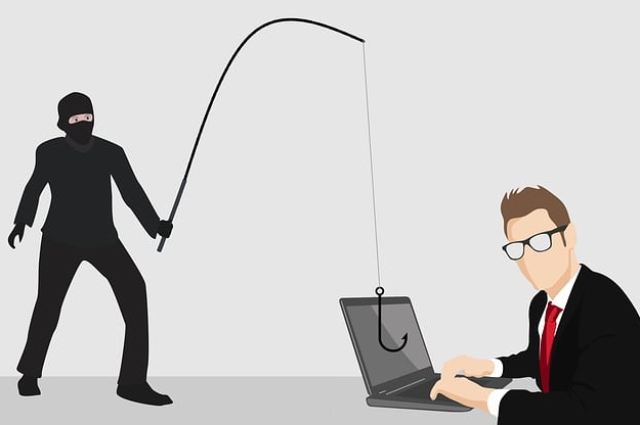
Image by Tumisu from Pixabay
The message arrived late at night, when the world was quieter, and defences were lower.
It didn’t look suspicious. It never does.
“Are you still awake?”
Three words. Polite. Familiar. Almost caring.
The phone rested warm in the hand, glowing softly in a dark room. Outside, the city slept. Inside, trust stirred—slowly, naturally. This was someone who remembered small details, who listened, who asked about the day. Someone who said take care and meant it convincingly enough to feel real.
Trust online rarely announces itself as trust. It enters disguised as attention.
Across the country, in another home, a middle-aged man scrolled through his banking app, checking his balance for the third time that evening. He had received a call earlier—calm, professional, reassuring. “There has been suspicious activity,” the voice had said. The accent was right. The vocabulary was right. The confidence was right. He followed instructions not because he was careless, but because he had been careful his entire life. Careful people trust systems.
Elsewhere, a teenager deleted a post after a flood of comments turned cruel. Screenshots had already been taken. A private message followed. Then another. Then, a threat disguised as a joke. Silence became safer than protest.
None of them thought they were doing something risky. None of them believed they were inviting harm. They were only doing what humans have always done—responding to familiarity, authority, affection, and reassurance.
The internet did not invent deception. It perfected its delivery.
Online, trust moves faster than reason. Platforms are designed to reward openness, to encourage sharing, to make strangers feel closer than neighbours. A profile picture replaces a face. A blue tick replaces verification. A well-worded message replaces years of knowing someone. The boundaries that exist in physical spaces dissolve quietly behind screens.
What makes this new economy of trust so profitable is not technology alone, but timing. Messages arrive when people are tired. Calls come when panic is easiest to manufacture. Relationships are built when loneliness is most honest. By the time suspicion appears, belief has already done its work.
We are often told that victims of cybercrime “should have known better.” But knowledge does not immunise emotion. Education does not erase vulnerability. And intelligence does not prevent trust—it only changes the reasons for it.
In today’s digital world, trust is no longer a virtue that protects. It is a currency that is traded, extracted, and monetised—quietly, efficiently, and at a scale never seen before.
And the cost is rarely just money.
The First Breach of Trust
Rakesh was forty-six when trust cost him his savings.
A clerk in a private firm, living in a rented two-room flat, Rakesh had done everything “right.” He paid his bills on time, avoided risks, never touched gambling apps, never clicked on suspicious links—at least, not knowingly. When the call came from what appeared to be his bank’s official number, he answered calmly.
The voice on the other end was polite, professional, unhurried. It knew his name. It knew the last four digits of his account. It warned him of “unusual activity” and assured him this was a routine verification. Rakesh listened, reassured by the familiarity of the language. After all, this is how banks speak—measured, technical, confident.
By the time the call ended, ₹78,000 was gone.
It took him three hours to realise he had been scammed. It took him three days to accept it. It took him weeks to tell his family.
Rakesh’s story is not unusual. That is what makes it terrifying.
Nineteen-year-old Ananya lost something different.
A first-year college student, newly independent, she had downloaded a dating app out of curiosity more than intent. The profile that matched her was respectful, well-written, and almost gentle. They spoke for days—about books, exams, and insecurities. He never rushed. He never crossed boundaries. That, she later realised, was the hook.
When he finally asked for a video call, she trusted him.
The screenshots came later. The threats followed immediately after.
Ananya did not lose money at first. She lost sleep. She lost her appetite. She lost the confidence to open her phone without fear. When the blackmail escalated into demands, she stopped attending classes. She did not tell her parents—not because she did not trust them, but because shame had been engineered into her silence.
Cybercrime doesn’t always steal currency. Sometimes it steals control.
Then there is Meera, a thirty-two-year-old homemaker who believed she was helping her husband.
The message said their electricity connection would be disconnected within two hours due to “pending verification.” A link followed. The logo looked familiar. The language sounded official. Meera clicked—not out of carelessness, but urgency. The household ran on routines, and disruption meant panic.
Within minutes, her phone froze. Notifications flooded in. Transactions happened faster than comprehension.
By the time her husband returned home, the account was empty.
Meera replayed the moment again and again in her head, convinced that intelligence could have saved her. But cybercrime does not prey on ignorance alone. It preys on responsibility, on care, on the instinct to protect.
What connects these stories is not age, education, gender, or profession.
It is trust.
Cybercriminals do not begin with hacking systems.
They begin by studying people.
They learn how banks speak.
How lovers reassure.
How authority sounds calm.
How urgency silences doubt.
They weaponise emotional reflexes that society praises—obedience, politeness, fear of inconvenience, desire for connection. The crime succeeds not because victims are foolish, but because they are human.
And humanity, online, has become predictable.
The scale of this betrayal is staggering. Reports and data tell us that cybercrime is increasing year after year, but numbers often fail to capture what is actually being lost. Behind every statistic is a hesitation before answering a call. A pause before trusting a message. A long-term erosion of digital confidence.
Victims often blame themselves more than the system. Many never report the crime, convinced that the loss was their own fault. This silence allows the cycle to continue—quietly, efficiently, profitably.
Trust, once broken, rarely returns in full.
This is the true cost of online deception:
Not just drained accounts, but fractured belief.
Belief that institutions will protect us.
Belief that platforms are neutral.
Belief that good faith is safe.
In the digital economy, trust has not disappeared.
It has simply changed hands.
And it is being sold back to us—at a price.
Crime Without Criminals—How the System Works
Cybercrime does not look like a crime anymore.
There are no masks, no dark alleys, no visible threat. There is instead a calm voice, a familiar logo, a verified-looking profile, and a message written in near-perfect grammar. The danger is not hidden—it is normalised.
What makes modern cybercrime powerful is not technology alone, but design.
Behind every scam is a structure that mimics legitimacy. Call centres operate with scripts refined through trial and error. Fake websites are tested for visual similarity. Social media profiles are aged, curated, and populated with believable histories. Dating scams involve weeks of emotional investment before a single demand is made.
This is not random fraud.
This is industrial deception.
At the lowest level are the operators—people who make the calls, send the messages, and initiate contact. Many of them are replaceable. Some are trained. Some are coerced. Some are simply desperate. They follow instructions, read scripts, and escalate when required.
Above them are the designers—those who build fake platforms, clone websites, purchase leaked databases, and test response rates. They understand user behaviour better than most product teams. They know which words trigger urgency, which colours suggest authority, which promises delay suspicion.
At the top are the coordinators—invisible, insulated, often operating across borders. They rarely interact with victims. Their work is logistical: laundering money through layers of accounts, cryptocurrencies, shell platforms, and digital wallets that disappear before law enforcement can react.
This hierarchy ensures one thing above all else:
No single point of accountability.
One of the most dangerous myths about cybercrime is that it targets the careless.
In reality, it targets the predictable.
Human beings respond consistently to certain triggers:
Fear of loss
Desire for approval
Respect for authority
Need for connection
Pressure of urgency
Cybercrime is built around exploiting these reactions at scale. The success rate does not need to be high. If even one out of a hundred responds, the system profits.
This is why scams continue even when awareness increases. Education helps—but it cannot eliminate instinct.
Social media platforms play a silent role in this ecosystem.
Public profiles provide age, location, profession, emotional state, and even vulnerabilities—grief posts, celebratory updates, loneliness disguised as humour. Scammers do not guess; they observe. Algorithms that encourage oversharing unintentionally supply raw material for manipulation.
A student posting about exam stress becomes a target for fake scholarship links.
A grieving widow becomes vulnerable to financial impersonation.
A young man expressing loneliness becomes a candidate for romance scams.
The platforms are not criminals—but they are enablers.
Dating apps, too, operate on trust by design.
They encourage emotional openness while offering limited verification. Profiles can disappear overnight. Conversations vanish without a trace. When exploitation occurs, the burden of proof rests almost entirely on the victim.
For many, reporting feels pointless. For others, it feels humiliating.
The system does not just fail victims—it quietly exhausts them.
Even banking security, despite improvements, relies heavily on customer vigilance. Automated alerts arrive after damage is done. Complaint mechanisms are complex. Recovery is uncertain. The message is subtle but clear: you should have known better.
This shifts responsibility away from institutions and onto individuals—exactly where cybercrime wants it.
Because when victims blame themselves, systems are never questioned.
Cybercrime thrives not because safeguards don’t exist, but because trust has been outsourced without protection.
We are expected to verify, judge, decide, and respond correctly—every time. Criminals need to succeed once. Victims must always.
This imbalance is not accidental.
It is profitable.
In the next section, we will confront the hardest question of all:
Why reporting fails—and why silence has become the most reliable accomplice.
Why Victims Don’t Speak—and Why the System Lets Them Stay Silent
Most cybercrimes are never reported.
Not because they are small.
Not because they are rare.
But because reporting itself often becomes another punishment.
For many victims, the moment they realise they have been deceived is not followed by anger—it is followed by embarrassment. A quiet, paralysing question begins to repeat itself: How did I not see this coming?
This internal interrogation is powerful enough to silence even those who know they are not at fault.
Consider Ravi (name changed), a middle-aged shopkeeper who lost his savings to a banking fraud. The call he received used official language, correct details, and even a number that appeared on his phone as “Bank Support.” When the money vanished, he didn’t tell his family for weeks. Not because they would blame him—but because he blamed himself.
“I run a business,” he later said. “If I couldn’t understand this, what does that say about me?”
The loss was financial.
The damage was personal.
This reaction is not unusual. Cybercrime preys on something deeply human: the need to appear competent.
In societies where financial stability is linked to dignity, being scammed feels like a moral failure rather than a crime committed against you. Victims internalise responsibility even when the deception was sophisticated and deliberate.
This self-blame delays reporting. And delay weakens evidence.
When victims do try to report, they often encounter another layer of discouragement.
Police stations are rarely equipped to handle digital crimes efficiently. Forms are confusing. Jurisdiction becomes unclear. Victims are asked to explain technical details they barely understand themselves. Some are questioned as though they invited the crime through carelessness.
“What were you doing online?”
“Why did you trust them?”
“Did you share the OTP willingly?”
These questions may be procedural, but they feel accusatory.
For women, the experience is often worse.
Neha (name changed), a college student, was emotionally blackmailed after a fake online relationship. Screenshots were threatened. Personal images were used as leverage. When she approached authorities, she was advised to “stay offline for a while” and “be more careful next time.”
The crime was digital.
The judgment was deeply personal.
She withdrew the complaint within days.
Cybercrime thrives in this gap between harm and help.
Institutions focus on prevention campaigns—posters, alerts, SMS warnings—but often neglect post-crime care. There is little psychological support. Financial recovery processes are slow and uncertain. Legal outcomes are rare and delayed.
What victims encounter is not justice—but fatigue.
There is also the problem of invisibility.
Cybercrime does not leave broken locks or visible injuries. Loss happens quietly, through screens and numbers. Because the harm is invisible, it is often minimised. Families move on. Employers advise silence. Communities discourage “making it public.”
Silence becomes the safest option.
Data reflects this reality clearly.
For every reported cybercrime, experts estimate that multiple cases go unreported. This underreporting distorts public understanding, weakens policy responses, and allows the cycle to continue uninterrupted.
Criminals rely on this silence.
Because a crime that is not reported might as well not exist.
Perhaps the most damaging outcome of this silence is isolation.
Victims believe they are alone in their experience. They don’t realise how common these crimes are, how professionally engineered they have become, or how many others have fallen in similar ways.
Isolation protects criminals far more effectively than encryption ever could.
Until reporting becomes simpler, safer, and free from judgment, cybercrime will continue to grow in the shadows.
Not because people are unaware, but because speaking up costs more than staying quiet.
In the next section, we will examine who is most at risk, and why cybercrime does not discriminate by intelligence, education, or age—but by exposure and emotional timing.
Everyone Is a Target—But Not Everyone Is Targeted the Same Way
Cybercrime does not search for fools. It searches for moments.
- A student is waiting for exam results.
- A woman navigating emotional isolation.
- A middle-aged man is anxious about finances.
- A retiree unfamiliar with new technology.
These are not weaknesses. They are human conditions—and cybercrime is engineered to locate them precisely.
Ayesha (name changed) was in her early thirties, working from home, scrolling through social media during quiet afternoons. A message arrived casually, friendly, unremarkable. The profile was convincing. Mutual interests appeared naturally. Conversations unfolded slowly, respectfully. Weeks passed before trust was even mentioned.
When money finally entered the conversation, it felt like help—not manipulation.
By the time she realised something was wrong, the relationship had already shaped her routines, expectations, and emotional safety. The loss was not just financial. It was relational.
“What hurt most,” she said later, “was realising the care I felt was never real—but the emptiness afterwards was.”
For Arjun, a final-year student, the approach was different.
It began with an email promising a paid internship. The language was formal. The deadlines were urgent. The attachments looked official. He filled out forms, shared documents, and clicked links because that is what ambition demands—speed, responsiveness, initiative.
When his identity details were misused, he was advised to be “more cautious online.”
No one acknowledged the pressure young people are under to secure opportunities early, to respond fast, to compete constantly.
Cybercrime feeds on this urgency.
Older adults are often framed as the most vulnerable—but vulnerability is not about age. It is about familiarity.
Suresh, a retired employee, trusted phone calls more than apps. When a calm voice explained a “security issue” with his pension account, he followed instructions carefully. He had spent a lifetime trusting institutions that once protected him.
Technology changed faster than trust did.
By the time his family intervened, the money was gone—and so was his confidence. He stopped answering unknown calls entirely. Isolation followed caution.
Women face a different layer of risk altogether.
Cyber harassment, emotional blackmail, and image-based exploitation thrive on social stigma. Many women do not report because exposure itself feels more dangerous than loss.
The crime succeeds not just through technology, but through cultural silence.
In these cases, harm is ongoing. Every notification becomes a threat. Every online presence feels unsafe.
What connects these stories is not ignorance.
It is timing.
Cybercrime succeeds when it intersects with emotional vulnerability—stress, hope, loneliness, ambition, fear. These are universal states, experienced differently but shared widely.
That is why awareness alone is not enough.
You cannot train people out of being human.
The most dangerous misconception is believing “this wouldn’t happen to me.”
Not because it’s arrogant—but because it assumes crime is predictable.
It isn’t.
Cybercrime adapts faster than public warnings. It evolves with platforms, trends, and language. It blends into everyday life until the line between safe and unsafe becomes impossible to see.
Platforms, Institutions, and the Cost of Convenient Blindness
Cybercrime does not exist in a vacuum.
It operates within systems designed for speed, growth, and engagement—often at the expense of safety. While individuals are repeatedly told to “stay alert,” the structures they rely on rarely face equal scrutiny.
This imbalance is not accidental. It is convenient.
Digital platforms thrive on trust.
Banks rely on user compliance.
Apps reward immediacy over caution.
Yet when trust is exploited, responsibility quietly shifts downward—to the user who clicked, responded, believed.
Social media companies have advanced tools for targeted advertising, behavioural prediction, and content moderation—yet fraudulent profiles, impersonation accounts, and scam pages often remain active for weeks. Reporting mechanisms are slow, opaque, and inconsistent.
Victims submit evidence.
Automated responses arrive.
The damage continues.
The question is not whether platforms can do better—but whether doing better aligns with their priorities.
Dating apps encourage vulnerability but offer limited accountability.
Verification badges create an illusion of safety without guaranteeing authenticity. Conversations disappear. Profiles vanish. When harm occurs, there is rarely a clear path to recovery or justice.
Users are advised to “be cautious,” while platforms continue to market emotional connection at scale.
The contradiction is obvious—but rarely addressed.
Banks, too, operate within a framework that prioritises transaction velocity.
Security warnings exist. OTP messages arrive. Yet scams evolve to work within these systems, not outside them. When fraud occurs, investigations often move slowly, while financial loss is immediate.
Customers are asked to prove deception.
Institutions are rarely asked to prove prevention.
The burden of evidence falls on those least equipped to carry it.
Law enforcement agencies face genuine challenges—jurisdictional limits, technical gaps, and understaffing. But the result for victims remains the same: delayed responses, unclear processes, and low conviction rates.
This creates a dangerous perception: cybercrime is low-risk for criminals.
And perception shapes behaviour.
What ties these failures together is not negligence alone, but diffused responsibility.
When everyone is partially responsible, no one is fully accountable.
Platforms point to user awareness.
Banks point to consent.
Authorities point to capacity constraints.
Meanwhile, cybercrime grows more sophisticated, more profitable, and more normalised.
Trust has become a shared resource—but protection remains fragmented.
And when protection is fragmented, exploitation thrives.
The question is no longer whether cybercrime can be stopped entirely.
It is whether systems can be designed to absorb human error instead of punishing it.
Because no society can function if trust becomes a liability.
In the final section, we will ask what comes next—not in terms of fear, but responsibility, reform, and realistic hope.
When Numbers Catch Up With Silence
Cybercrime isn’t abstract. It is measurable, fast-growing, and costly in ways that affect everyday life.
Official data shows that cybercrime in India has been rising steadily for years. According to the National Crime Records Bureau (NCRB), the number of reported cybercrime cases jumped 31.2% in 2023 compared with 2022, rising to 86,420 cases from 65,893 the year before. Nearly 69% of these incidents were linked to financial fraud.
This surge reflects both wider internet use and the growing sophistication of digital deception.
In the first four months of 2024 alone, more than 7.4 lakh cybercrime complaints were registered on the National Cybercrime Reporting Portal — an average of about 7,000 complaints per day — and total losses from cyber frauds exceeded ₹1,750 crore during that period.
These figures don’t capture the full reality. Many victims never report incidents due to shame, confusion, or scepticism about outcomes. As a result, official numbers remain a partial view of a much larger problem, but even this visible portion paints an alarming picture.
The rise in complaints spans multiple types of scams. Fake trading and investment app frauds, illegal lending schemes, algorithm manipulation, and dating app scams all registered significant numbers.
In other words, cybercrime isn’t happening somewhere else — it’s happening across platforms people use every day: financial apps, social networks, search engines, and messaging services.
Financial loss isn’t the only metric. The emotional toll is real and deep. A single fraudulent transaction can erase months — or years — of hard-earned savings. Delays in reporting and recovery efforts mean that victims often struggle to reclaim money long after the crime has occurred.
When people do report, they enter a procedural labyrinth that feels slow and uncertain. Investigation timelines stretch, evidence can be hard to compile, and the number of cases converted into formal charges remains low compared to complaints registered.
There are also striking regional patterns. Certain states — Karnataka, Telangana, Uttar Pradesh and Maharashtra — account for a significant proportion of reported cases, demonstrating that cybercrime is not evenly distributed but concentrated where connectivity is high.
This geographic variance highlights that access to technology alone does not prevent harm; it shapes the form that harm takes.
Perhaps the most troubling trend is that cybercrime is not an isolated issue affecting only the unaware or inexperienced. As the numbers show, educated, connected, and economically active Indians are increasingly targeted, not sidelined. The only reliable pattern is this: the more someone uses digital systems — whether for banking, relationships, jobs, or general communication — the more they are exposed to risk.
Awareness campaigns exist, but awareness alone has limits. The data suggests that even informed users fall victim because cybercriminals exploit psychological vulnerabilities — urgency, trust, pressure, and emotion — more effectively than any spam filter or warning label can protect against.
If trust has become the most profitable currency online, then protecting it requires more than awareness posters and cautionary SMS alerts.
It requires real structural accountability — from platforms, institutions, and regulatory systems that are currently reactive rather than preventive.
Because trust is not just a feeling.
It has a price.
And increasing numbers tell us exactly what that price is.
Author’s Note
Names and identifying details in this piece have been changed to protect privacy.
. . .