
In Indian schools, students are taught the laws of motion, chemical equations, and historical timelines with precision and rigour. Yet, one essential lesson often remains confined to textbooks rather than the real-life practice of civic responsibility. The recent incident involving Class 10 students littering a train coach during a school trip highlights a deeper issue that goes beyond a single act of negligence. It reflects a gap between theoretical knowledge and practical behaviour, raising important questions about how young citizens are being prepared for life outside classrooms.
Civic responsibility is not merely a chapter in social science; it is a habit, a mindset, and a reflection of one’s values. At the age of 15–16, students stand at a crucial stage where their actions begin to shape their identity as responsible individuals. However, when students casually throw waste in public spaces, ignore requests to maintain cleanliness, and respond with mockery instead of accountability, it signals a disconnect between education and character development.
The train incident serves as a mirror to society. These students did not act in isolation; their behaviour is often a product of their surroundings. When children grow up seeing adults littering streets, ignoring public property, or relying on others to clean up after them, they internalise these actions as acceptable norms. Schools, therefore, cannot be the only institutions held accountable. Families and communities play an equally significant role in shaping civic behaviour.
However, schools do hold a unique position of influence. They are not just centres of academic learning but also spaces where discipline, ethics, and social responsibility should be cultivated. Teaching civic sense should not be limited to memorising definitions or writing exam answers. It must be practised through everyday actions, keeping classrooms clean, respecting shared spaces, and understanding the consequences of one’s behaviour on others.
School trips, in particular, are powerful learning opportunities. They take students out of their controlled environment and place them in real-world situations where their behaviour reflects their upbringing and education. Before such trips, schools must emphasise not only safety rules but also civic duties. Students should be made aware that public spaces, whether trains, parks, or tourist destinations, belong to everyone, and maintaining them is a shared responsibility.
The reaction of the students in the incident, laughing off a polite request, reveals another concern: the lack of accountability and empathy. Civic responsibility is closely tied to respect for others. When individuals disregard the discomfort or inconvenience caused to fellow passengers, it indicates a failure to understand the impact of their actions. Empathy, therefore, must be an integral part of education. Students should be encouraged to think beyond themselves and consider how their behaviour affects society at large.
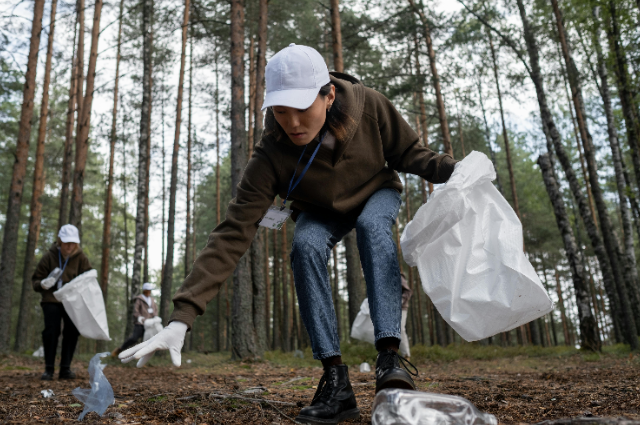
Public outrage over such incidents is understandable, but it should also lead to constructive solutions rather than mere criticism. Punitive actions may create temporary fear, but long-term change requires awareness and consistent reinforcement. Schools can introduce practical activities like cleanliness drives, community service, and group responsibilities that instil a sense of ownership among students. When students actively participate in maintaining their environment, they are more likely to value and protect it.
Moreover, strict enforcement of rules in public spaces is equally important. When littering goes unchecked, it silently reinforces the idea that such behaviour is acceptable. Visible consequences, combined with awareness campaigns, can help create a culture where cleanliness and responsibility are the norm rather than the exception.
The incident also raises a larger question about the purpose of education. Is it only to secure good marks and career opportunities, or is it to create responsible citizens? Academic excellence without civic awareness can lead to individuals who are skilled but lack social consciousness. True education lies in balancing knowledge with values, ensuring that students grow into individuals who contribute positively to society.
In conclusion, the behaviour of Class 10 students in this incident is not just a momentary lapse but a reminder of a broader systemic issue. Civic responsibility must move beyond textbooks and become a lived practice. Schools, families, and society must work together to nurture habits of cleanliness, respect, and accountability. Only then can we hope to build a generation that not only understands the laws of science but also respects the unwritten laws of coexistence?