
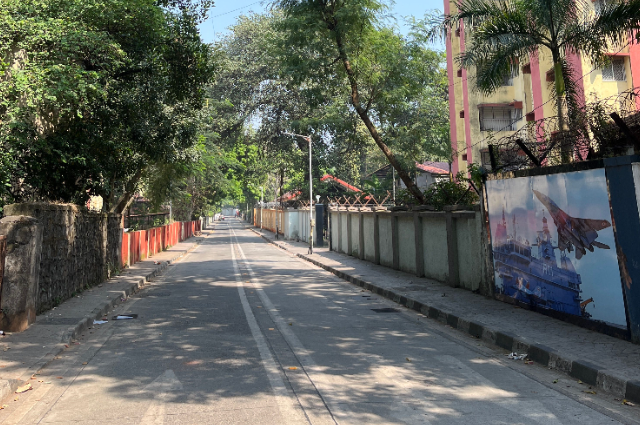
India is a country filled with traditions that have survived for centuries. Some are widely known and celebrated, while others quietly exist in everyday life, understood only by the communities that practice them. One such tradition recently became the center of an unexpected controversy in Mumbai, bringing attention to a practice that many Indians had never noticed before: the barefoot journeys of Jain monks.
The story began in a residential housing society in Mumbai. Residents were preparing for a visit from Jain monks, spiritual leaders who follow one of the world's oldest religions. To accommodate them, the society painted a white strip along a pathway. To an outsider, it looked unusual. Why would anyone paint a white line across the ground?
The answer was surprisingly simple.
Jain monks traditionally walk barefoot. Unlike most people, they do not wear shoes, sandals, or any form of footwear, regardless of weather conditions. This practice is rooted in humility, simplicity, and non-attachment to material possessions. Walking barefoot is considered a reminder of their spiritual commitment and a way of living with minimal impact on the world around them.
In India's scorching climate, however, roads and pavements can become extremely hot. Dark surfaces absorb heat and can become difficult to walk on during the day. White paint reflects sunlight and stays relatively cooler. The housing society painted the strip to create a more comfortable path for the monks during their visit.
What could have remained a small local arrangement soon exploded into a national discussion.
A Mumbai-based YouTuber noticed the painted strip and shared a video online. Instead of asking residents why the pathway had been painted, he criticised the action and described it using a highly provocative phrase that quickly attracted attention. Social media users rushed into the debate. Some supported his concerns, while others pointed out that he had misunderstood the purpose of the painted path.
Within hours, the issue spread across multiple platforms. Videos, screenshots, opinions, and arguments flooded timelines. Many people who had never heard about Jain monastic traditions suddenly found themselves discussing them.
As the controversy grew, law enforcement authorities reportedly became involved. The YouTuber found himself facing serious backlash, and according to reports, he also began receiving threats. Meanwhile, members of the housing society clarified that the white strip was merely intended to help visiting monks walk comfortably on a hot surface.
The reality turned out to be far less dramatic than the online debate suggested.
Eventually, the housing society repainted the area, the arguments faded, and public attention moved elsewhere. The entire episode lasted less than a week before disappearing from the headlines. Yet it left behind an important lesson about how quickly misunderstandings can spread in the digital age.
The incident also sparked curiosity about Jain monks and their way of life.
Many people were surprised to learn that Jain monks often travel long distances entirely on foot. Their journeys can span villages, towns, and even cities. They avoid unnecessary possessions and follow strict ethical principles centred on non-violence, self-discipline, and respect for all living beings.
For followers of Jainism, these practices are not symbolic gestures. They are expressions of deeply held spiritual values. The barefoot tradition, in particular, reflects a commitment to simplicity that has been maintained for generations.
What makes the Mumbai controversy interesting is how a small act of accommodation became a national conversation. A painted strip on the ground transformed into a debate about religion, public space, tradition, and social media responsibility.
In many ways, the story reflects a broader challenge facing modern society. Information travels faster than ever before, but understanding often moves much more slowly. A photograph or short video can generate strong reactions before the full context becomes known. By the time explanations emerge, opinions may already be firmly formed.
The Mumbai episode serves as a reminder that curiosity is often more valuable than outrage. A simple question, Why is this white strip here? could have revealed the answer immediately. Instead, assumptions fueled a controversy that consumed public attention for several days.
Today, the painted pathway is gone, the online storm has largely passed, and everyday life has returned to normal. Yet the incident achieved something unexpected: it introduced millions of people to a little-known Jain tradition.
Sometimes, the most interesting stories are not about conflict at all. They are about discovering the hidden customs that quietly exist around us. In this case, a white strip of paint on a Mumbai pathway became a window into a centuries-old practice of faith, discipline, and simplicity a tradition that many Indians had never noticed before.
References:
- Free press journal
- Pune pulse