
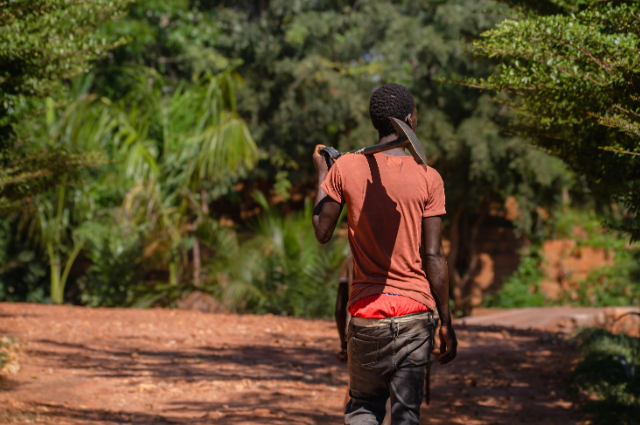
At dawn, India’s villages wake before the sun. Fields are ploughed, pumps are switched on, and hands sink into soil that has fed generations. Yet behind this timeless image lies a brutal modern truth: farming, once a symbol of stability and dignity, no longer guarantees survival. For thousands of Indian farmers and agricultural labourers each year, the land they nurture becomes a source of relentless loss, debt, and despair. The returns are ruined not just financially, but emotionally, socially, and existentially.
As of January 2026, farmer suicides remain one of India’s most painful humanitarian crises. Around 10,000 to 11,000 people connected to agriculture die by suicide every year, roughly one life lost every hour. These are not abstract numbers. They are fathers, mothers, sons, and daughters whose stories rarely travel beyond district borders. Their deaths expose a system where effort no longer matches reward, and where hope is steadily eroded by structural failure.
The Geography of Distress
The crisis is not evenly spread. It clusters in what journalists grimly call “suicide belts.” Maharashtra alone accounts for more than a third of the national toll, especially in Vidarbha and Marathwada regions, where cotton fields stretch endlessly, but prosperity does not. Karnataka follows closely, with drought-prone districts repeatedly pushed to the edge. Andhra Pradesh and Telangana, once buoyed by commercial crops, now face similar devastation, particularly in cotton-growing areas.
A troubling shift has also emerged: agricultural laborers those who work on land they do not own, now account for over half of these suicides. This signals a deeper unravelling. Even land ownership, long considered a safety net, is no longer enough. When farming collapses, it pulls everyone down with it.
Debt: The Invisible Noose
At the heart of the crisis lies indebtedness, a word that barely captures its cruelty. For many farmers, debt begins as a necessity for money for seeds, fertiliser, diesel, or irrigation. Formal banking systems often fail small and marginal farmers, pushing them toward informal moneylenders who charge crushing interest rates. A single crop failure can turn manageable borrowing into an inescapable trap.
Debt is not just financial; it is psychological. Every missed payment chips away at dignity. Every visit from a lender becomes a reminder of failure. In rural communities where honour and self-reliance are deeply ingrained, insolvency carries heavy stigma. For many, suicide becomes a tragic attempt to escape shame and protect family members from harassment.
When Nature Turns Unpredictable
Farming has always been risky, but climate change has turned uncertainty into chaos. Monsoons arrive late or all at once. Unseasonal rains flatten ready crops. Heatwaves scorch soil beyond recovery. Pests like the pink bollworm devastate cotton fields in days, undoing months of labour.
The farmer stands powerless between sky and soil. Modern inputs promise higher yields but also raise the stakes; hybrid seeds demand precise conditions, and fertilisers require water at the right time. When nature breaks its rhythm, losses multiply. Insurance schemes exist, but delayed payouts, complex paperwork, and exclusions often leave farmers stranded when they need help most.
Rising Costs, Falling Prices
Even when crops survive, profits often do not. The cost of cultivation has surged steadily: seeds, fertilisers, pesticides, electricity, and diesel all demand more money each year. Meanwhile, the prices farmers receive for their produce remain stubbornly low. Minimum Support Prices are announced with fanfare, but many farmers cannot access them due to inadequate procurement systems.
Market volatility adds another layer of instability. Global price crashes for crops like cotton and soybeans can wipe out earnings overnight. Farmers, disconnected from global markets yet fully exposed to their shocks, bear the consequences without protection. They sell at a loss, not because they choose to, but because storage, transport, and bargaining power are luxuries they do not have.
The Human Weight of Failure
Economic stress does not exist in isolation. It collides with life’s inevitable demands: medical emergencies, school fees, weddings, and ageing parents. In rural India, these expenses often come suddenly and without social safety nets. When combined with debt and crop loss, they become unbearable.
Mental health support in villages is scarce to nonexistent. Depression is rarely named, let alone treated. Men, especially, are socialised to endure silently. The farmer is expected to be resilient, to “manage somehow.” When he cannot, the sense of personal failure can be overwhelming. Suicide, in this tragic logic, appears as a final act of control in a life stripped of options.
Policy Responses: Relief or Illusion?
Governments have not been idle. Schemes like PM-KISAN provide direct income support, offering ₹6,000 a year to farmer families. Crop insurance programs promise compensation for losses. Loan waivers are announced before elections, bringing temporary relief and political applause.
Yet critics argue that these measures treat symptoms, not disease. The assistance often arrives late, is too small, or fails to reach the most vulnerable. Insurance payouts are delayed beyond relevance. Loan waivers reset debt without addressing why it accumulates. Minimum Support Price hikes look impressive on paper, but rarely translate into real income for small farmers.
What remains missing is a fundamental reimagining of agriculture as a viable livelihood rather than a political talking point.
Why Farming Doesn’t Pay Anymore
The tragedy of Indian agriculture is not that farmers are unproductive it is that the system extracts more than it gives back. Farmers absorb climate risk, market risk, and policy risk simultaneously. They operate as entrepreneurs without capital, insurance without certainty, and workers without wages.
Farming doesn’t pay anymore because value flows upward while risk flows downward. Corporations, intermediaries, and global markets are insulated; the farmer is exposed. The soil still yields crops, but the economic structure ensures that those who till it remain poor.
Beyond Numbers, Toward Dignity
Every statistic hides a story of effort unrewarded. Ending farmer suicides requires more than schemes and speeches. It demands investment in rural mental health, fair pricing mechanisms, accessible credit, climate-resilient farming, and non-farm employment options. Above all, it requires restoring dignity to farming, making it a profession where hard work leads not to despair, but to stability.
Until then, dawn will continue to break over fields worked by hands that carry both hope and fear. And the question will remain painfully unresolved: how did feeding a nation become a sentence to suffering for those who do it?