
In a system where a government officer’s career is often measured through promotions, postings and positions of authority, Arun Bhatia’s career tells a very different story. For him, public service became a long confrontation with a question that has troubled Indian administration for decades: what happens when an officer refuses to look away?
A former Maharashtra-cadre IAS officer, Bhatia built a reputation not by avoiding controversy, but by walking directly into it. Over a 26-year career, he was transferred 26 times, an extraordinary pattern that effectively turned the transfer order into a recurring feature of his professional life.
Educated at St. Stephen’s College and Cambridge, Bhatia entered the Indian Administrative Service with credentials that could have led to a conventional bureaucratic career. Instead, his name became associated with exposing irregularities involving powerful interests.
One of his early confrontations came in 1982, when he reportedly uncovered fraud in Dhulia’s Employment Guarantee Scheme. The episode established a pattern that would follow him throughout his career: investigate, expose, face resistance and, eventually, move on to another posting.
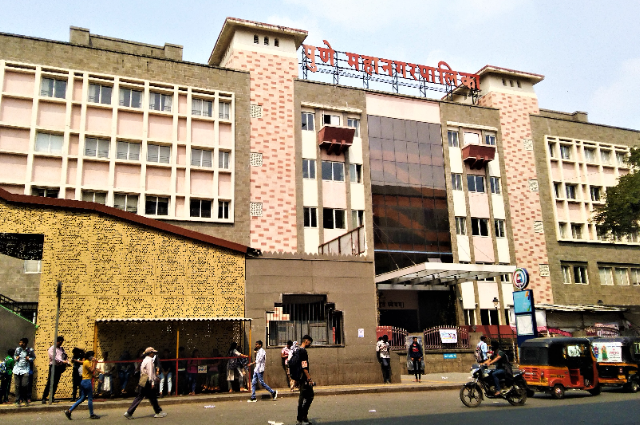
His later assignments brought him into even more sensitive territory. As Collector of Bombay, Bhatia became involved in exposing alleged land-related scandals involving senior IAS officers. Later, as Pune Municipal Commissioner, he took on illegal construction involving builders and politicians.
Municipal administration is rarely free from competing interests, but the combination of land, construction and political influence can make enforcement particularly difficult. For an officer determined to act against powerful beneficiaries, administrative independence can quickly become a liability.
For Bhatia, transfers became a recurring consequence.
Twenty-six transfers in 26 years is more than an unusual statistic. It represents a career in which continuity was repeatedly interrupted. An officer who is constantly moved cannot easily build long-term institutional reforms, develop teams or see ambitious projects through from beginning to end. Yet Bhatia's story also illustrates another possibility: a transfer can remove an officer from one battlefield without necessarily ending the fight.
When political pressure became particularly intense, Bhatia stepped outside the Indian administrative system for a period, taking up assignments with the United Nations. He spent roughly eight years working there, creating an unusual second chapter in a career already marked by confrontation.
What makes Bhatia especially notable is his willingness to speak openly about the institution he once served. Rather than portraying corruption as a problem caused by a handful of isolated individuals, he has publicly described the IAS itself as one of India's most corrupt institutions.
His criticism goes further. Bhatia has also acknowledged a frustrating reality of anti-corruption efforts: exposing an official does not necessarily mean that official will be punished. According to his public observations, some officials he exposed were protected despite allegations against them.
That distinction is crucial. Corruption is not sustained only by the person demanding or accepting an illegal benefit. It can survive through networks of influence, institutional silence and the protection of those with sufficient power to avoid consequences.
Eventually, Bhatia chose to leave the IAS and enter electoral politics. In 2004, he contested the Pune Lok Sabha constituency as an independent candidate. Without the organisational machinery of a major political party behind him, he nevertheless secured more than 60,000 votes.
The result did not transform him into a national political figure, but it demonstrated that his reputation as an outspoken bureaucrat had translated into a measure of public recognition.
Five years later, in 2009, Bhatia founded his own political party, the People's Guardian Party. The move represented the logical extension of his earlier career: if administrative power was constrained by political influence, perhaps political participation was another route to challenging the system.
His journey invites comparisons with D. Roopa Moudgil, another civil servant who became widely known for taking controversial stands against alleged wrongdoing and subsequently facing transfers. The two belong to different generations and different services, but the broader pattern is strikingly similar: an officer raises uncomfortable questions, powerful interests are disturbed, and the transfer becomes part of the story.
Bhatia's legacy, therefore, is not simply a list of postings or controversies. It is a question about the cost of institutional honesty.
A transfer order can change an officer's desk, office and city. It cannot automatically erase the questions that officer has raised. Bhatia's career remains a reminder that the real test of public administration is not how smoothly an officer fits into the system, but what happens when conscience and convenience point in opposite directions.
For Bhatia, they rarely pointed in the same direction. And that may be precisely why, decades after his first major confrontation, his story continues to attract attention.
References:
- Times of India
- Rediff
- People's Guardian Party