
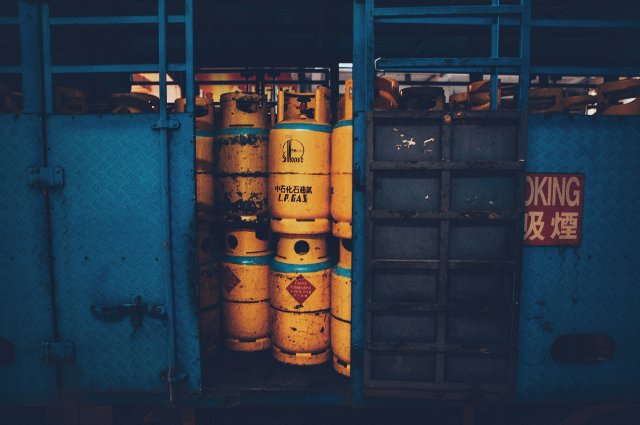
In an interconnected world, wars are no longer confined to borders; they ripple through oceans, economies, and everyday lives. The ongoing geopolitical tensions involving Iran, Israel, and the United States have triggered consequences far beyond the battlefield. Thousands of kilometres away, in India’s bustling cities and quiet households, the impact is being felt not through headlines alone, but through empty gas cylinders, rising prices, and silent kitchens.
At the heart of this crisis lies a narrow but vital waterway, the Strait of Hormuz. This strategic passage handles a massive share of global energy shipments, including liquefied petroleum gas (LPG). For India, which imports nearly 65% of its LPG requirement, amounting to roughly 25 million tons annually, the dependency is significant. More critically, over 80% of these imports pass through this chokepoint. When tensions escalated and disruptions began, even a modest 5% dip in global supply was enough to destabilise India’s tightly balanced LPG ecosystem.
What followed was not an immediate collapse, but a slow-burning crisis. Commercial LPG supplies, the lifeline of restaurants and small industries, began thinning in early March. Soon, the effects spilt into households, where delays in cylinder deliveries stretched from a routine one or two days to as long as a week. In cities like Mumbai, Bengaluru, and Kolkata, the shortage has become more than an inconvenience it is a disruption of daily life.
Restaurants, particularly small and mid-sized establishments, have been hit the hardest. In Mumbai alone, nearly one in five eateries has reportedly shut down temporarily due to the lack of cooking fuel. Kitchens that once bustled with activity now sit idle, not due to lack of demand, but because the flame that powers them is missing. In other cities such as Chennai and parts of Rajasthan, similar stories are unfolding, menus are shrinking, operating hours are being cut, and uncertainty looms large.
As with many shortages, the vacuum has given rise to a parallel, informal market. Prices have surged sharply. A domestic 14.2-kg cylinder has seen an increase of around ₹60, while commercial cylinders have jumped by over ₹110. But these official hikes tell only part of the story. On the ground, in places like Andheri, a suburb of Mumbai, desperate business owners have reportedly paid as much as ₹6,000 for a single commercial cylinder nearly four times its usual price. The black market thrives where supply falters, exposing the vulnerabilities in distribution systems and the desperation of those whose livelihoods depend on uninterrupted access.
The Indian government has not remained passive. Invoking the Essential Commodities Act on March 6, authorities moved swiftly to curb hoarding and regulate supply. Refineries were directed to maximise LPG output, and oil marketing companies were instructed to prioritise domestic distribution. Additionally, the LPG refill booking cycle was extended from 21 to 25 days in an attempt to manage demand more effectively.
Efforts have also been made to diversify import sources. By increasing procurement from regions outside the Strait of Hormuz from 55% to 70% and boosting domestic production by 10%, the government aims to reduce immediate pressure. Prime Minister Narendra Modi has assured citizens that sufficient stock exists to last between 12 and 16 weeks. Yet, on the ground, panic buying and hoarding suggest that confidence is fragile, and perception often outweighs policy.
Beyond households and restaurants, the crisis threatens to spill into industrial sectors. Textile processing units, many of which rely heavily on commercial LPG and lack viable alternatives, face the risk of halting operations. This, in turn, could trigger a cascade effect impacting employment, supply chains, and regional economies.
The National Restaurant Association of India has urged its members to adapt by conserving fuel, reducing menu complexity, and exploring alternatives like induction cooking. While such measures may offer temporary relief, they are not long-term solutions, especially for businesses already operating on thin margins.
What makes this crisis particularly striking is its invisibility in everyday discourse. Unlike power outages or fuel price hikes at petrol pumps, LPG shortages operate quietly, unfolding behind kitchen doors. Yet, their impact is deeply personal, affecting how families cook their meals, how businesses sustain themselves, and how cities function.
Ultimately, the situation remains fluid, tied closely to the evolving dynamics of the conflict in West Asia. It is a stark reminder that in today’s globalised world, local stability is often tethered to distant uncertainties. A disruption in a faraway strait can extinguish flames in Indian homes, underscoring a simple but profound truth: in the modern age, no crisis is truly distant.
Refrences
- The Hindu
- BBC News
- Economic Times